Elite travel designer Cookson Adventures has introduced a new concept called "Power Trips", a collection of short, high-intensity journeys designed for travellers who want to experience ambitious adventures in a limited amount of time.
The trips are built around long weekends or compact escapes, condensing experiences that would traditionally unfold over one or two weeks into just a few days. Cookson Adventures says the itineraries are designed to maximise time by removing complex logistics and arranging seamless access to locations, activities and experts.
According to the company, the concept responds to growing demand among ultra-high-net-worth travellers who want meaningful experiences but cannot always commit to longer holidays.
Nick Davies, managing director of Cookson Adventures, says: “While there continues to be strong demand for slower travel, many of our clients are extremely active and very intentional in how they spend their time. They’re looking for a seamless rhythm to the day – one that removes friction, complicated logistics, and waiting around, and replaces it with meaningful, high-impact experiences. Power Trips reflects that shift: a global collection designed to inspire, which can be tailored to clients wherever they are based in the world."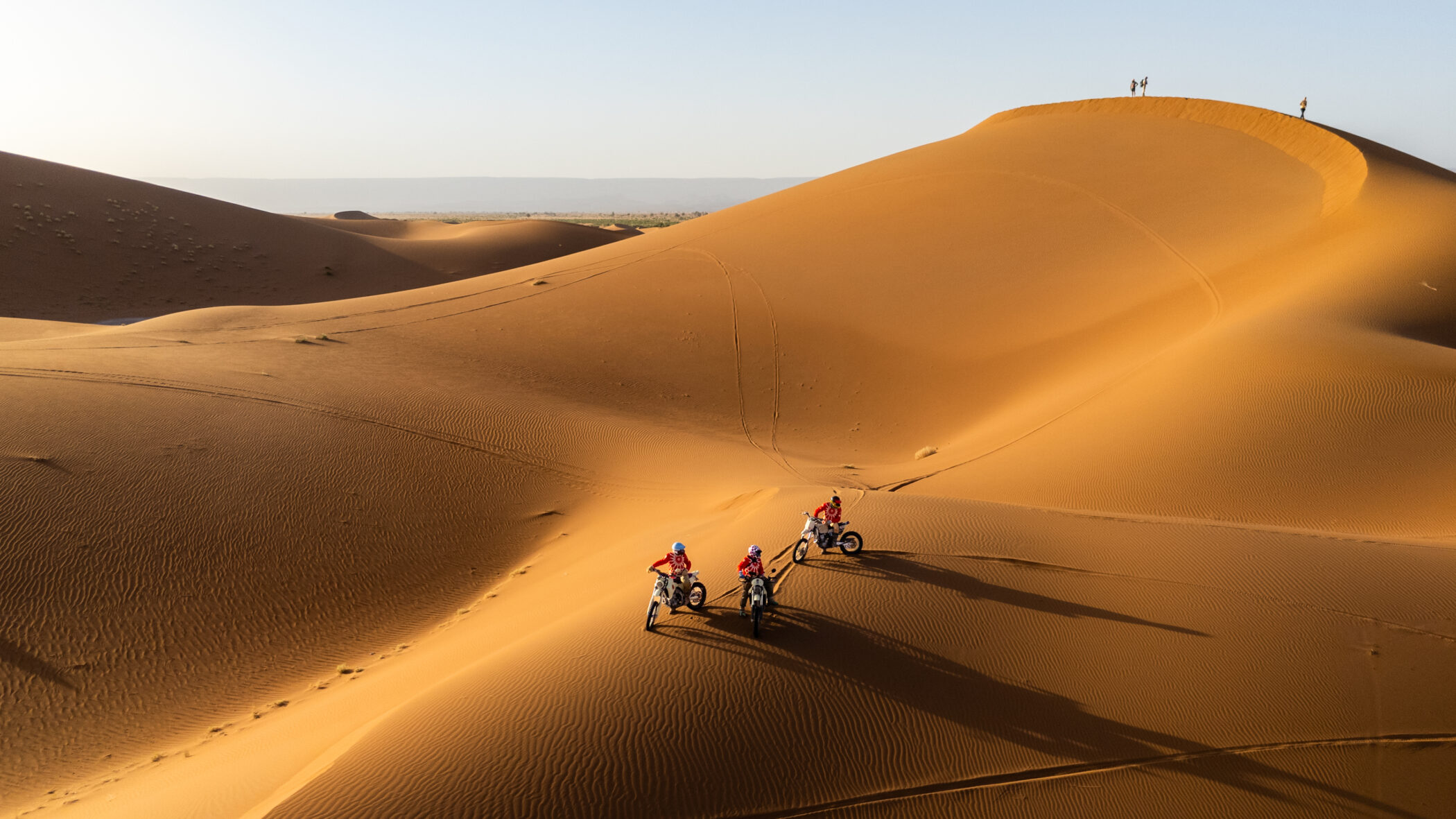
The collection includes several themed adventures across Europe, North America, North Africa and the Middle East. Each one focuses on a different type of exploration, ranging from cultural immersion to extreme outdoor activities.
One example is a desert expedition in Utah centred on electric vertical take-off and landing aircraft, known as eVTOLs. Guests pilot the aircraft across remote canyon landscapes, using them to connect between activities such as rappelling through slot canyons, mountain biking along desert tracks and boating through the winding waterways of Lake Powell. The journey is anchored by a temporary luxury camp positioned deep within the wilderness.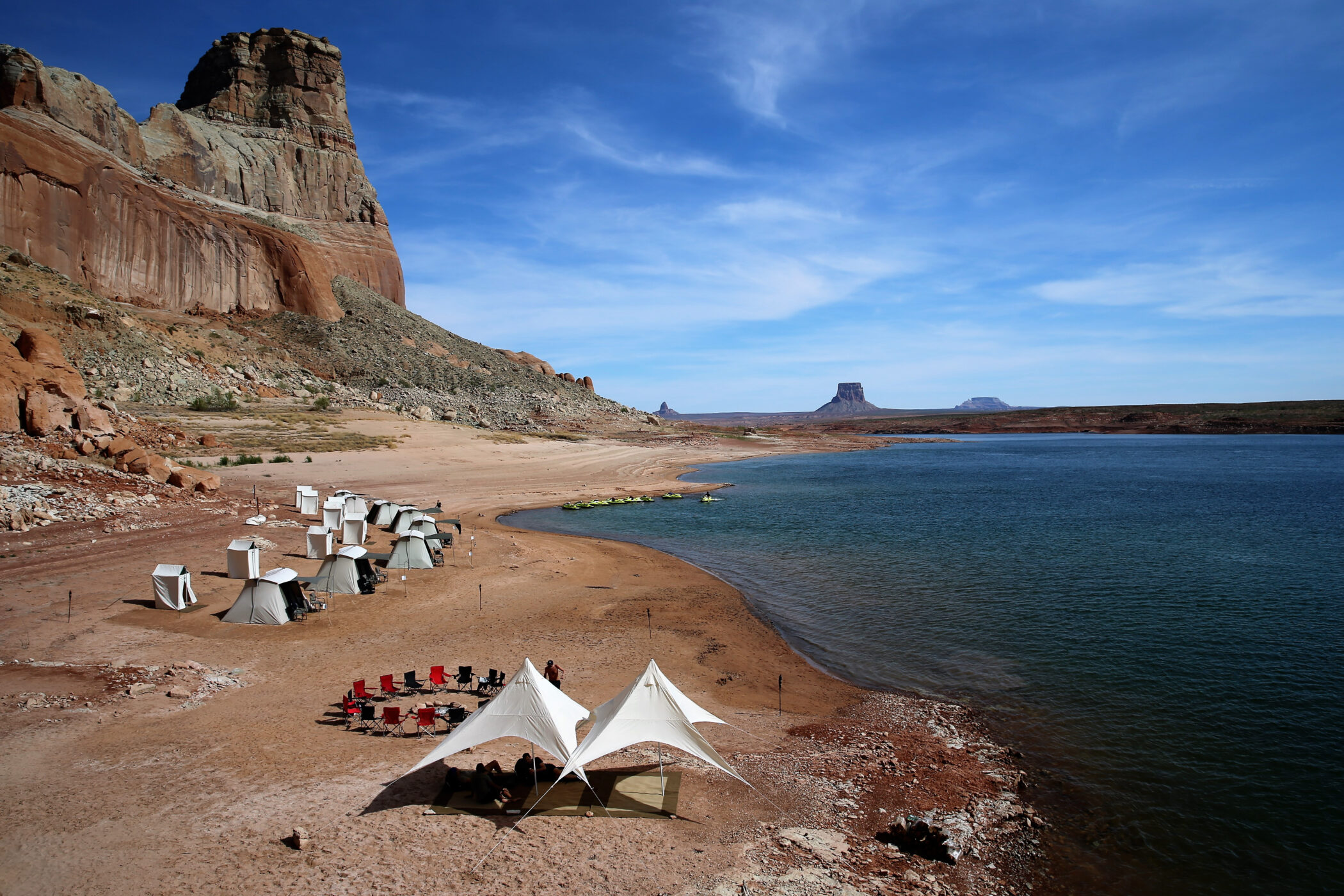
Another itinerary takes travellers to Georgia in the Caucasus mountains for a winter adventure. Activities include rafting on white-water rivers, zip lining across wide valleys and cycling across glaciers using fat bikes. The experience culminates with helicopter access to remote peaks for off-piste ski descents.
In Italy, a Tuscany-based Power Trip focuses on art, food and landscape. Guests stay in a private villa and use helicopter transfers to move between locations. Activities include cycling through the Apuan Alps, meeting the owner of a private sculpture park showcasing marble artworks and searching for truffles in woodland areas with trained dogs. The experience concludes with exclusive evening access to Florence’s Uffizi Gallery paired with a private dinner and guidance from art historians.
Elsewhere in the collection, Morocco becomes the setting for a multi-environment journey that combines the Atlas Mountains, Sahara desert and Atlantic coast. Travellers fly across mountain landscapes before arriving by camel at a private desert camp where an astronomer leads stargazing sessions. The itinerary then shifts to the coast for private surf lessons before concluding with curated experiences in the medina.
Cookson Adventures also offers a history-focused trip through the Greek islands that explores more than two thousand years of mythology and culture. Travellers move between islands by private yacht while visiting ancient temples and amphitheatres with specialist historians who explain the stories behind the sites.
In Iceland, guests can experience several extreme activities within a single day. These include diving between tectonic plates, skiing from mountain summits down to the sea and riding all-terrain vehicles across black sand beaches. The company can also arrange a temporary camp on a frozen lake designed for viewing the Northern Lights, complete with sauna and cold-water plunges.
Another itinerary in the Scottish Highlands draws inspiration from the television series The Traitors. Guests stay in private lodges while taking part in activities such as coastal boat safaris, paramotoring and trail running across remote landscapes. A live-action game led by professional actors forms the centrepiece of the experience, turning the Highlands into a stage for strategy and deception.
Cookson Adventures was founded in 2007 by explorer Henry Cookson and specialises in highly customised expeditions. The company is known for arranging complex travel logistics including the use of private yachts, helicopters and bespoke camps in remote locations.
With the launch of Power Trips, the company is adapting its expedition-style travel model for shorter journeys, while maintaining the same level of planning and specialist access.
Luxury tour operator Scott Dunn says the world’s wealthiest travellers are increasingly motivated by purpose when planning holidays, as demand for highly personalised journeys grows within its invitation-only Scott Dunn Private (SDP) membership.
The company is marking its 40th anniversary this year with a renewed focus on curated travel experiences designed for ultra-high-net-worth travellers. Its Scott Dunn Private division provides bespoke journeys and rare access to destinations, people and cultural experiences.
According to the company, bookings worth six figures have risen by 18% year-on-year, reflecting growing demand for complex itineraries that combine multiple destinations and deeper engagement with local cultures.
Jules Maury, head of Scott Dunn Private, says the motivations behind luxury travel are evolving. “When it comes to UHNW travellers, there really are no distinct trends in terms of the destinations they visit, however, our members are increasingly united by one common motivation: a desire to reconnect with their purpose. The 1% are seeking life-changing journeys and we are the conduits, be it pushing boundaries on a guided high mountain trekking expedition through New Zealand or participating as a family in biodiversity restoration projects in Costa Rica.”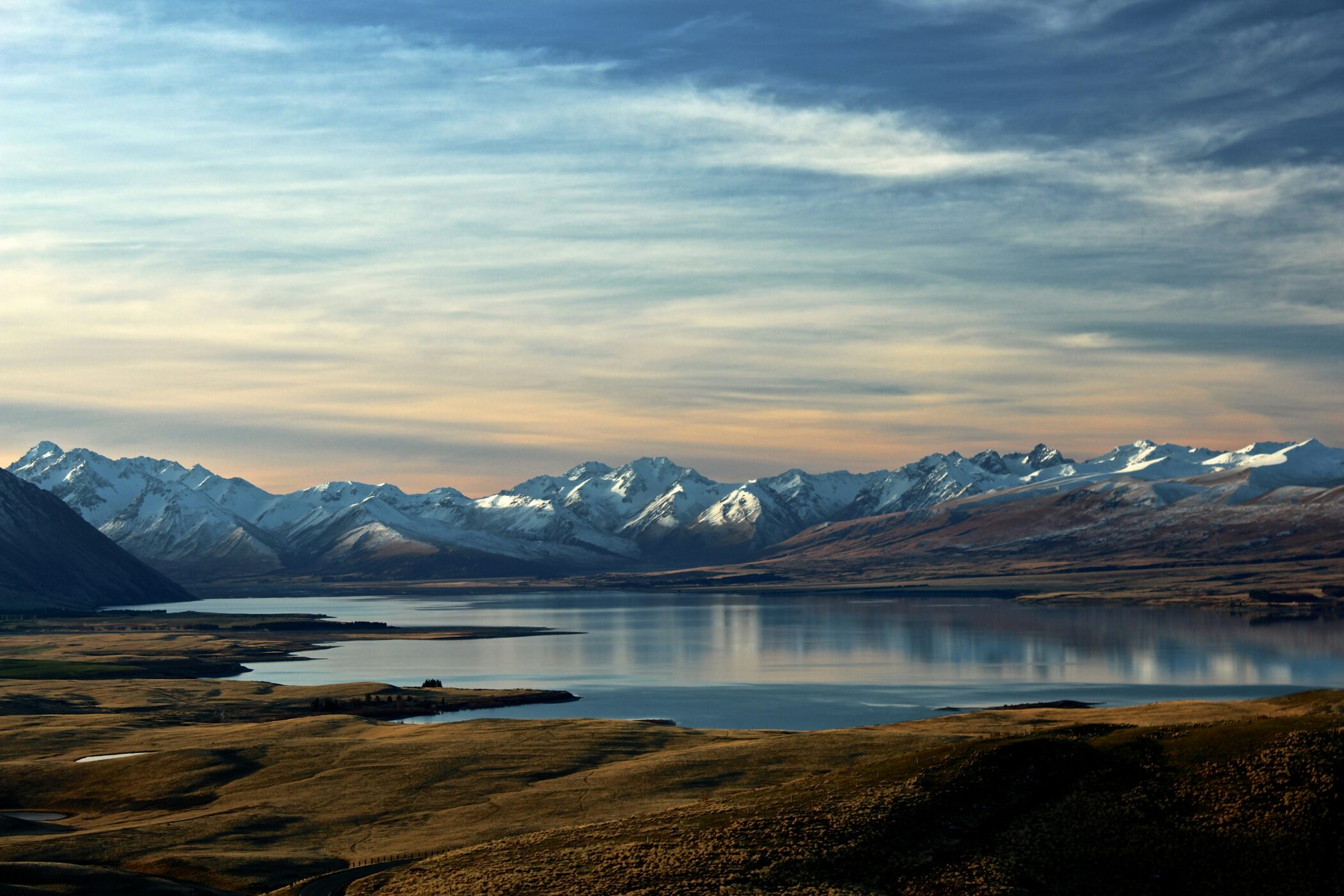
Rather than focusing on a small group of fashionable destinations, SDP members continue to travel across a broad global range. Italy, France, Japan and the Maldives remain consistent favourites, while the US also regularly ranks among the top five destinations. The popularity of the US is driven by bookings from both American members and travellers based in the UK visiting the country.
At the same time, several destinations are seeing rapid growth. Iceland, Portugal and South Africa have each recorded 100% year-on-year increases in bookings through Scott Dunn Private. Egypt is also expected to become a major focus for travellers in 2026, particularly because of the opportunity for highly exclusive access to historic sites.
Examples include private, after-hours visits to the Pyramids and the Sphinx, as well as the possibility of reserving the Grand Egyptian Museum for private experiences. The company says these types of arrangements reflect the level of access its members increasingly expect.
Scott Dunn Private is also introducing new journeys designed around this shift towards purposeful travel. One example is “Wild Connections: Alaska and Hawaii”, which combines wilderness exploration with cultural engagement.
The itinerary begins with four nights at Tutka Bay Lodge in Alaska’s Kachemak Bay, where travellers explore glacier-fed waters by kayak, hike across ancient ice reached by helicopter and sail in search of wildlife including bears and orcas. Guests also connect with local communities in the town of Homer.
From Anchorage, travellers continue to Hawaii via a six-hour direct flight or private charter. The journey then moves between several islands, including stays at The Ritz-Carlton Turtle Bay on Oahu, 1 Hotel Hanalei Bay on Kauai and Rosewood Kona Village on the island of Hawai‘i.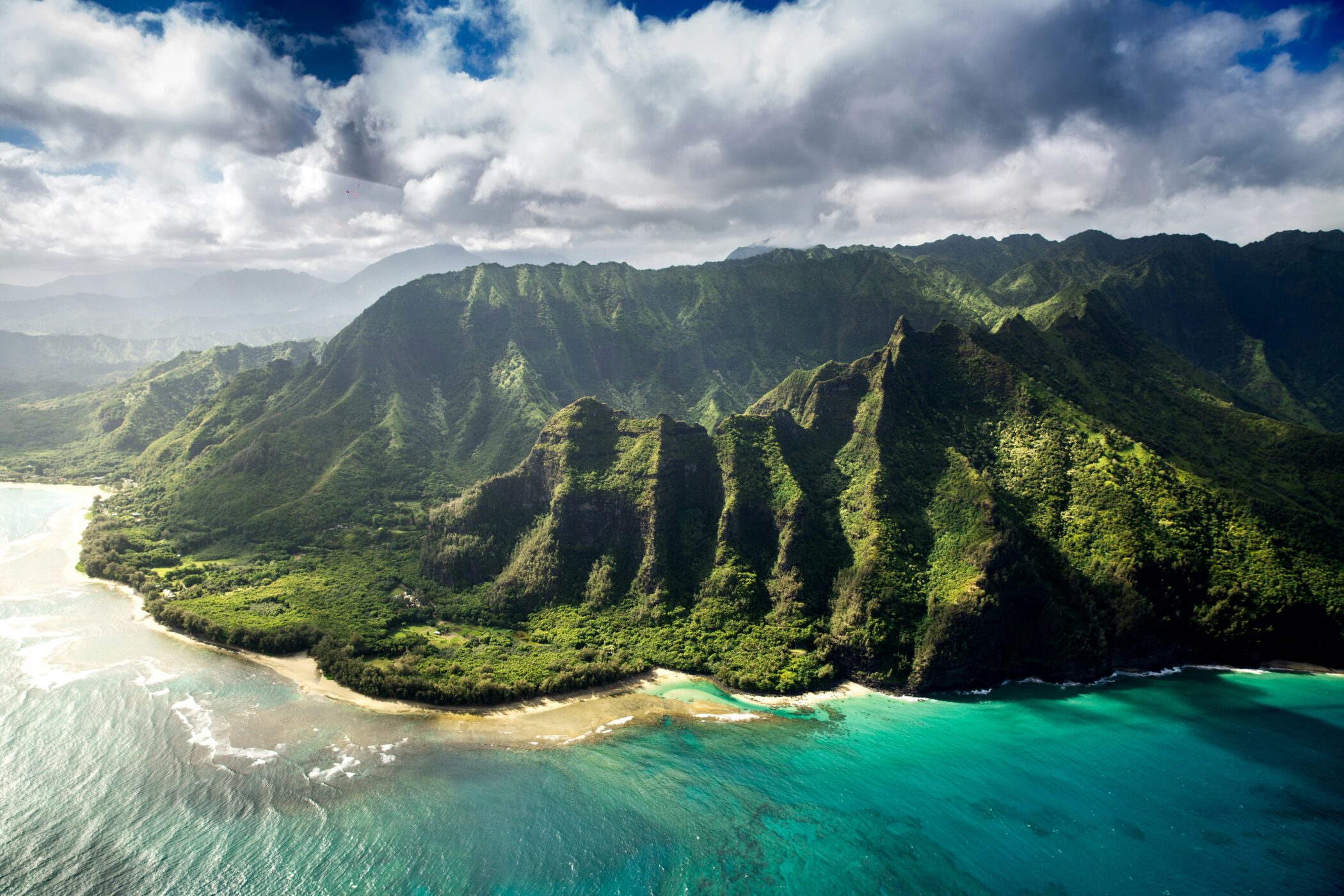
Experiences focus on partnerships with local organisations. These include gathering ingredients on a private farm to prepare a traditional imu feast that supports Men of PA‘A, sailing on a Polynesian canoe with proceeds funding educational programmes and learning about regenerative agriculture in Waipā Valley. The itinerary starts from £44,410 per person.
Another example is a “Grand Tour of Asia by Yacht and Train”, which combines luxury cruising with rail travel across several countries.
The journey begins in Tokyo, where travellers board the Ritz-Carlton Luminara yacht for a 12-night voyage stopping in Osaka, Nagasaki, Seoul and Shanghai before ending in Hong Kong. Guests then spend three nights at Rosewood Hong Kong, with experiences including a helicopter flight over the skyline and a Michelin-starred dinner at The Peninsula.
The itinerary continues in Singapore with a stay at Raffles Hotel before a three-night journey aboard the Eastern and Oriental Express through Malaysia, calling at Kuala Lumpur, Johor and Penang Island. The journey concludes at The Datai Langkawi, located within an ancient rainforest setting. Prices start from £42,150 per person.
Maury says interest in slower travel formats such as cruise and rail journeys is rising. “We’re seeing a sharp rise in interest among Scott Dunn Private members for luxury yacht-to-train journeys and cruise journeys – bookings for the latter jumped by 21% in 2025. The appeal lies in settling in once, travelling comfortably and avoiding queues or restrictive baggage rules that come with flying from place to place.” (Below is a picture of Aman's Amangati super yacht.)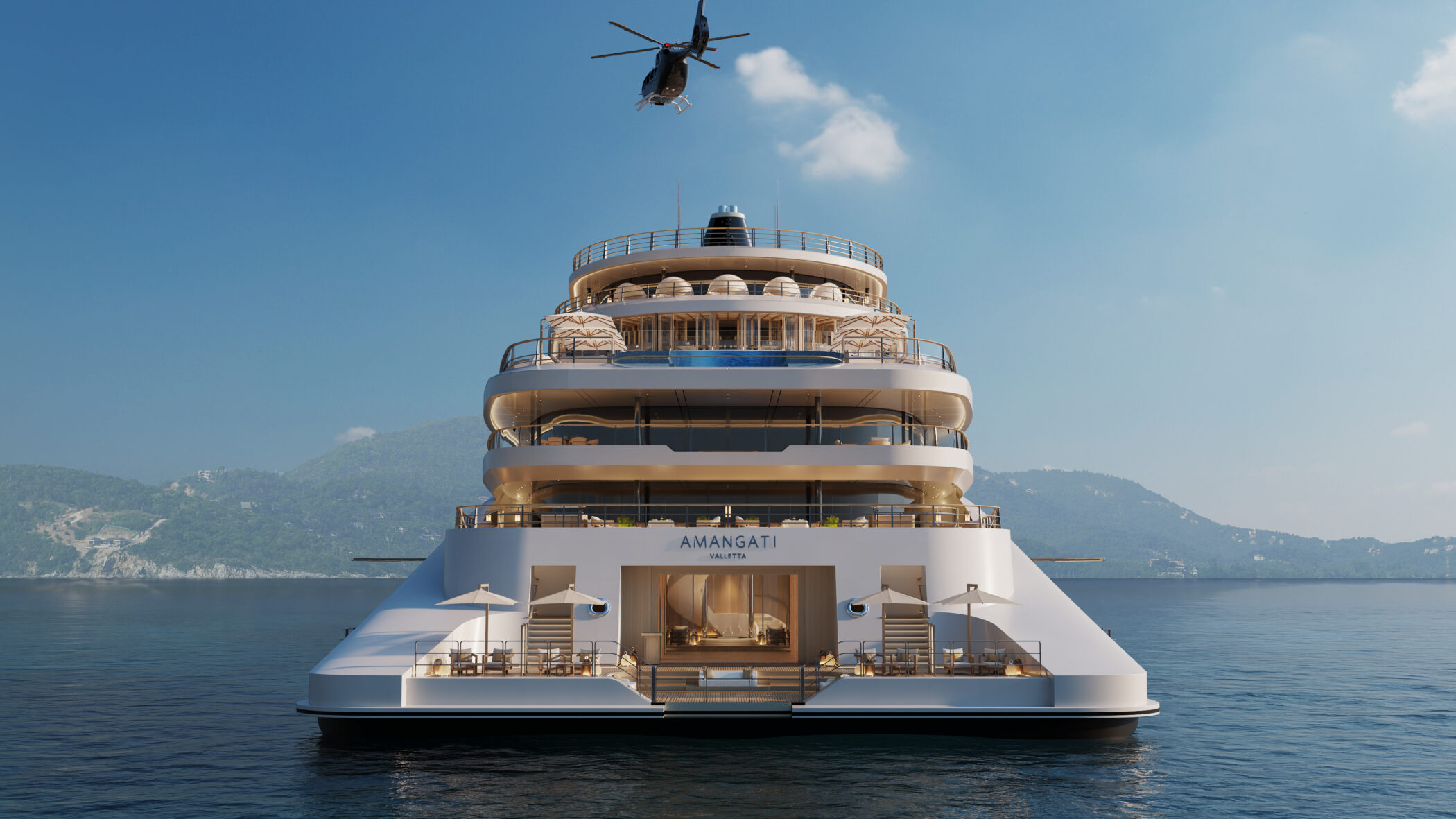
These journeys are supported by SDP’s “ACE” portfolio, which stands for access, connection and experiences. The programme offers members exclusive entry to cultural, sporting and creative events that are difficult to arrange independently.
Examples include playing golf at Augusta National with a former champion, accessing the pit lane during Formula 1 race day and attending matches at Wimbledon Centre Court. Cultural experiences range from visiting the Vatican Secret Archives to private appointments with fashion designers or craftspeople.
Maury says these experiences respond to a broader shift among wealthy travellers seeking meaningful travel rather than traditional luxury.
“In a world of AI search and overwhelming information, our members are seeking experiences that are thoughtful, relevant and meaningful to them and most importantly, reserved for the privileged few,” he says.
Scott Dunn Private’s expansion is being led by general manager Vicky Douglas and Maury, with the company continuing to grow its membership across the UK, US and Asia. A new office in Hong Kong opened last autumn to support demand from travellers in the Asia-Pacific region and to help co-ordinate increasingly international itineraries.
Every holiday we put together is designed personally for each individual client. Each of our team members has an average of 25 years of experience, and travels extensively to ensure they get under the skin of a destination, allowing us to offer the best experiences.
Our relationships with our supplier partners allow us to offer added value, and our dedicated concierge team acts as an extension of our service, offering clients a seamless experience from start to finish. They can arrange anything from VIP meet-and-greet airport assistance, to private beach dinners. We also have dedicated teams in Barbados, Antigua and Mauritius.
Our typical clients are high-net-worth individuals who are time poor and appreciate the finer details that make a holiday seamless. They rely on us to organise all their travel needs whether that be a UK staycation, cruise, or multi-centre itinerary. They typically live in the south-east of the UK and range from retired industry leaders or business owners to high-flying professionals. They are well-travelled and don’t like to compromise on service and cuisine.
Our client base is, however, evolving, and as we continue to expand our portfolio, we have seen the average age reduce, and more families travelling with us. This new and younger demographic is focused on value as well as service, with all-inclusive options becoming more popular.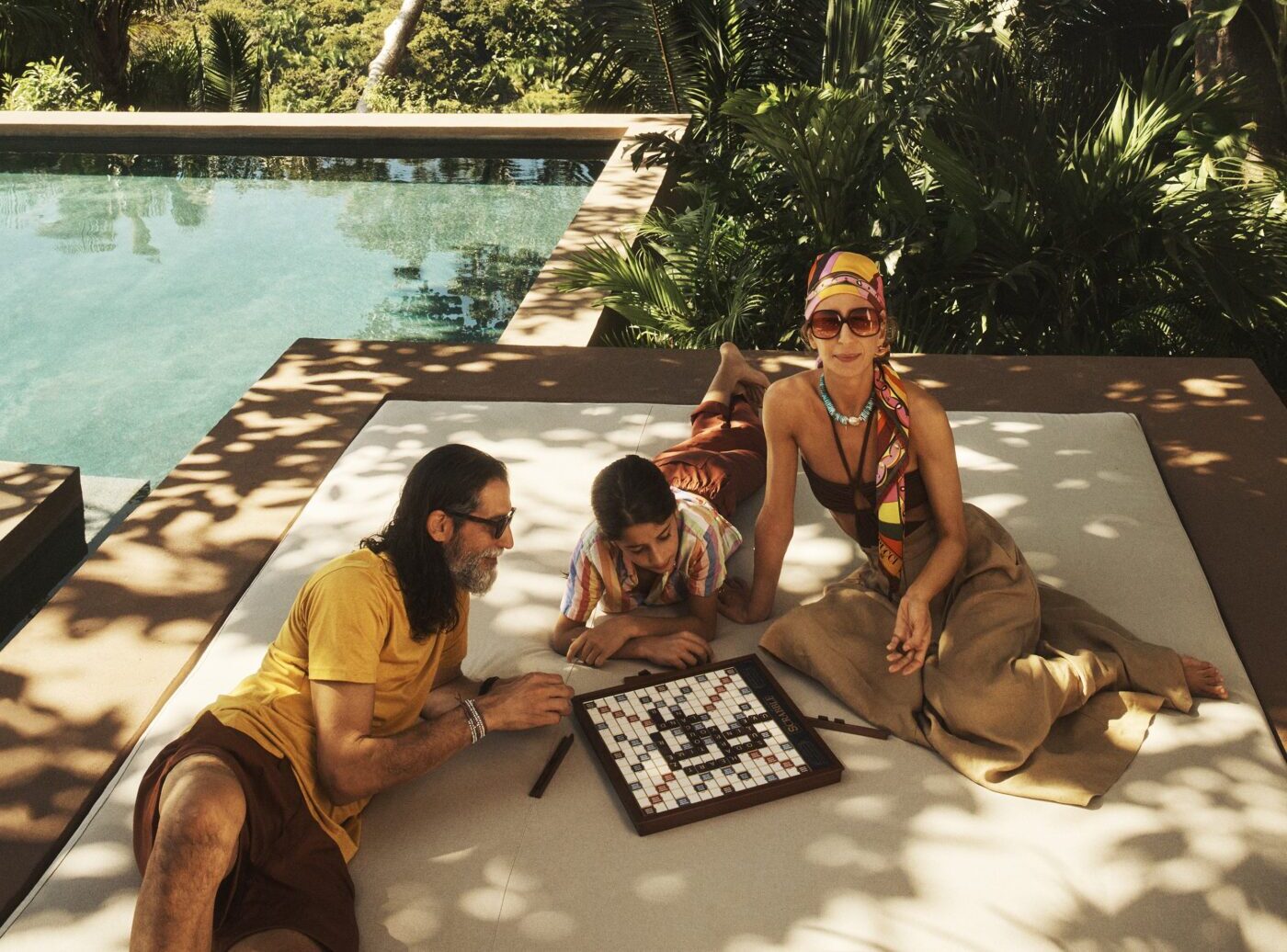
Each client is account managed by a travel lifestyle specialist and relationships are based on trust and really understanding their needs. Trusting that we offer the best advice, knowledge and ultimately value, clients appreciate the service of our dedicated concierge team. This is supported by the rest of our team to ensure every client receives VIP treatment throughout the booking process and when they are away. They also know that if they need support unexpectedly, we will be there via WhatsApp, text, email or phone.
Our business culture is centred around excellence, continually improving, and putting the client at the heart of all the decisions we make, resulting in referrals being our largest source of new business. For our most loyal and high-spending clients, we have the Chairman’s Club, which is a loyalty rewards-based programme where we continuously engage with them in person at events over the course of the year.
Barbados has been our number-one destination for 2023, followed very closely by the islands of Greece and the Spanish regions of the Costa Del Sol and Canary Islands. We’ve seen a significant growth in cruise holidays throughout the year; and multi-centre holidays across South Africa and the US have been very popular.
As the economy is still uncertain, we are predicting a continual trend toward booking holidays late within three months of departure, or much further out outside of nine months. However, January and February continue to be our peak booking months.
Our clients typically spend an average of £21,000 on their holidays, and travel for an average of nine days. They currently take an average of three holidays per year, which include short- and long-haul, as well as a city break or ski holiday.
High-value bookings have grown exponentially during the past few years with more clients travelling with multiple generations. We can expect around 5% of our bookings to be over £100k.
Something unique that truly immerses them within a destination and connects them with local cultures, cuisines, and unique experiences. They also seek exclusive experiences that are designed for them alone. We have a team of expert guides in all of our destinations, and we are receiving more requests for private viewings of key attractions, uncrowded viewing points and one-to-one experiences with local communities and wildlife.
The price of luxury holidays has increased by 30% since 2019 and clients’ expectations are higher in terms of the service and standards they receive. There is also a feeling of not compromising on the number of holidays or experiences since the pandemic. There is more of an urgency to make memories together and take those holidays they have always wanted to.
Cruise holidays are increasing in popularity and the new luxury lifestyle ships are attracting first-time cruisers who want ease of travel to multiple destinations. We are also seeing our older travellers take advantage of our seamless airport concierge service where we escort clients from their vehicle right to the aircraft on both sides – this takes away any anxiety about travelling and provides a flawless way of navigating busy airports.
Our marketing is most definitely evolving to ensure we are reaching and engaging with Gen Z travellers. We are keen to introduce our brand to this generation at a much younger point than we’ve ever done before, to get them to engage with our company and take them on our journey through mid to lower funnel channels predominantly on social media. This acts as a long-term brand strategy and has also resulted in clients now being influenced by this generation in terms of where and what experiences they desire from a holiday.
TikTok has been introduced as a key channel for us, and many members of our team are also within this demographic so have the skills and knowledge to produce content that performs well on social.
Millennials are much more digitally savvy than older generations, so it’s about educating them on the additional services and added value they can receive through Elegant Resorts. When it comes to multi-centre holidays, they have done lots of research and know where they would like to go, but they need the guidance and expertise of our team to pull it all together for them, with the security that a tour operator can offer. It’s also then up to us to demonstrate the differentiation with the experiences we can offer.
Younger families are looking for good value, and don’t worry about paying for it as long as they have everything locked into the price. This is why premium all-inclusives are becoming so popular, and we’re seeing more hotels offering this option. It’s also not always about traditional kid’s clubs – families want to feel more connected to destinations via cooking classes or visits to community projects, for example.
We are also seeing more extended families travelling together, with larger combined budgets. They are seeking activities that are suitable for all ages, with accommodation that works for each too. Sometimes that could be many rooms within a resort to take advantage of all of the facilities on offer, or large villas that have space, privacy and facilities for each generation.
Research tells us the luxury travel market is predicted to grow 7.6% per year until 2030 and we will see more destinations and hotel groups investing in the luxury traveller.
New destinations such as Saudi Arabia will attract a range of clients looking for truly unique experiences that they combine into one holiday and more traditional destinations will evolve their product to connect more with local communities and experiences.
Finally, sustainability will be at the heart of everything, with more focus on reducing waste, buying and growing local produce, reducing carbon footprints, and creating individual experiences to combat overtourism.
“I will be forever fascinated by our destinations and with the people that we choose to work with. We do not consider our clients or partners to be anything other than fellow travellers. Our aim is to create experiences that bring people together from different cultures and foster a deeper appreciation for our world. At cazenove+loyd, we are always looking to do things differently and use our expertise to shape new and better ways to travel. That is what keeps us fresh and relevant as the world continues to evolve.”
“I am disappointed that homogeneity has surpassed originality in terms of some of the hotels, lodges and travel experiences now on offer, and surprised that lazy norms often prevail in the travel sector. While this degrades the industry and all who it touches, this only makes us want to push harder for excellence, albeit against the pattern of money talking over what is right for a destination. I am encouraged by the fact that our ethos of slow travel is becoming more widely adopted and that the more information that exists, the more our services are needed to navigate the mediocre.”
“The cazenove+loyd client is one who expects more from their travels. They are demanding, curious and adventurous, and relish the joy of trying new things. Our clients expect unparalleled knowledge, service and expertise, and value our first-hand experience. It is our job to guide them on fulfilling their trip purpose, as well as providing moments that surprise and delight in ways that they didn’t know they were looking for.
“Those who have travelled with cazenove+loyd know that we are trusted collaborators that never compromise on quality. When working with new clients, we love to showcase the many ways in which we are not the same as mainstream travel providers, from our empirical knowledge to the importance of impartial guidance. We demonstrate our difference at every step and prove the value we bring.”
“No itinerary will ever be the same – even for clients visiting the same destination. Every contact with both client and partner should mean added learning, which makes every element of any itinerary better. We take feedback from clients and partners very seriously and are always adapting in pursuit of continuing to be the best.”
“A client who had studied archaeology at university wanted to experience the excitement of discovering an ancient site for himself. Certain Mayan ruins in Guatemala are completely inaccessible due to thick forest, so it was the one destination where we knew that by chartering a helicopter, we could get him to an incredible site that was also off-radar and to an extent ‘undiscovered’.
“Planning surprises with members of a family already travelling with us is always a wonderful way to add real value. We arranged for a son and daughter-in-law to fly to Oman unbeknownst to his parents and paraglide onto the beach to surprise them.
“We always strive to adapt and personalise excursions within an itinerary to enchant our clients and pique their individual interests. A family that travelled with us to the cloud forest in Ecuador was highly involved with conservation, so we organised for an expert guide to lead a conservation-focused excursion at Mashpi Lodge, specifically designed to highlight the effects of logging and deforestation.
“With remote working now the norm, we have seen an uptick in client requests involving longer-term travel to destinations that they have dreamed of living in. Duration has varied anywhere from one to six months, with some clients negotiating specific terms with their employers to facilitate working abroad for set number of months for the coming two to five years.
"As such, we’re designing immersive five-year travel plans whereby clients stay longer in one destination, living and working from their new ‘home’. These trips include key factors such as arranging extended stays in private homes, mini trips from their base to explore further afield, and ensuring connectivity and time difference aren’t an issue.
“Preconceived ideas of how different age groups operate are being broken down as the older demographic is travelling more adventurously – and for longer. They require our expertise to manage this process, but with that comes a responsibility for enhanced handholding and forthright advice. Some parents are now undertaking more intrepid holidays with younger children, and likewise grandparents with their grandchildren. This means multi-generational holidays are no longer just about a villa and a few excursions as we’ve highlighted with the trend for ‘Paradise Camps’.”
“We are incredibly proud to be celebrating our 30th anniversary this year. Reaching this milestone after the turbulent last few years has only served to feed our hunger to be best in class and to share our unique style of travel with as many like-minded souls as we can. We’ll see amplified curiosity in how to do things differently and travel in a way that is more in tune with the destination. Conservation, community and climate are all key tenets of this shift, a focus that we hope will lead to slower itineraries, more authentic hotels and lodges, and more original guides and experiences.
“We are continuing to find and curate new and exciting experiences for multi-generational holidays, which are also on the rise. Family holidays, particularly with those with teenagers and sometimes one on one with a solo parent, are an exciting development – educational, life-enhancing trips designed to enlighten and inspire the next generation. We are also planning to expand our portfolio to meet the rising appetite for more intrepid trips for clients in their 60s and 70s, from expedition cruises and hiking or trekking, to exploring hands-on hobbies.”
Leading luxury tour operator Elegant Resorts has partnered with Globetrender to produce a new trend report on the changing behaviour of luxury travellers and the opportunties this presents for the industry, with support from Kerzner International. (Download it free here.)
Luxury travel is a hugely significant, growing sector that will almost double in size by 2030, up from US$241 billion in 2022 to US$440 billion at the end of the decade.
"Creating this trend report was as much about identifying the changing behaviour, influences and emerging desires of luxury travellers in 2024, as the kinds of opportunities they present for the luxury travel industry going forward," says Jenny Southan, editor, founder and CEO of Globetrender.
"The trends we have identified are connected not with survey data, which has limited use for forecasting, but fundamental societal and cultural shifts such as human longevity, the emergence of Gen Z as the most powerful consumer group on Earth, and the under-appreciated power of Gen Alpha children.
"We also show how the persuasiveness of brand collaboration will be a defining force in luxury travel, how providers are tapping into the deeper human need for personal betterment and why top-end cruise passengers are going to be spreading their wealth on land as well as at sea."
Whether it is a desire to live a longer and healthier life, build bonds with loved ones, experience more of the world when going on a cruise, coincide travel plans with special events, satisfy wanderlust influenced by social content, learn something new for personal betterment or simply immerse oneself in the world of fashion, "discernment" is the common denominator when it comes to booking luxury holidays with Elegant Resorts.
Lisa Fitzell, managing director of Elegant Resorts, says: “The luxury traveller is discerning and has a thirst for new adventures. After the last few years, our clients want to make their holidays more meaningful, make the most of their time with their loved ones, look after themselves and be healthy for longer, ensure every trip matters, enriches their souls, create long lasting memories. Travel is not taken for granted and at Elegant Resorts, we have the expertise and know how to create unforgettable and perfectly curated holidays.”
Craig Jeffs, regional director, sales and marketing, United Kingdom, Scandinavia and Netherlands at Kerzner International, says: “It has been an absolute pleasure to support and collaborate on the Globetrender Luxury Travel Trends report. It goes without saying that these reports offer a great insight into how the luxury travel sector is growing and allows us to build strategic and meaningful road marks to support and align our offerings.”
Southan says: "It was interesting to collaborate with Elegant Resorts on this project because they are clearly a company that doesn’t want to rest on their laurels. They are aware that they have a very loyal database of high-spending clients but there are younger generations rising up the ranks and it never pays to be complacent."
 “You can’t put a price on health,” as they say. Except, of course, now you can, with the effort to “delay human death” being worth US$600 billion by 2025, according to Bank of America analysts.
Recent studies reveal that lifespans are actually decreasing in America, largely attributed to unhealthy diets and lifestyles. For the first time in human history, more people are dying of obesity than they are of starvation. However, globally, longevity continues to rise.
This dichotomy has fuelled the popularity of longevity programmes, especially among elite communities of Silicon Valley tech innovators looking to “hack” human lifespan limits.
Billionaire Bryan Johnson, for example, is pouring a fortune into unlocking the secrets of ageing, as captured in the recent BBC documentary podcast The Immortals. (He’s going so far as having “vampire” blood transfusions from his son.)
Why? Health and longevity have become the latest status symbols, inspiring innovative wellness resorts and retreats to cater to affluent consumers seeking to extend their lives with everything from high-tech therapies and DNA analysis to the healing attributes of nature and ancient ancestral knowledge.
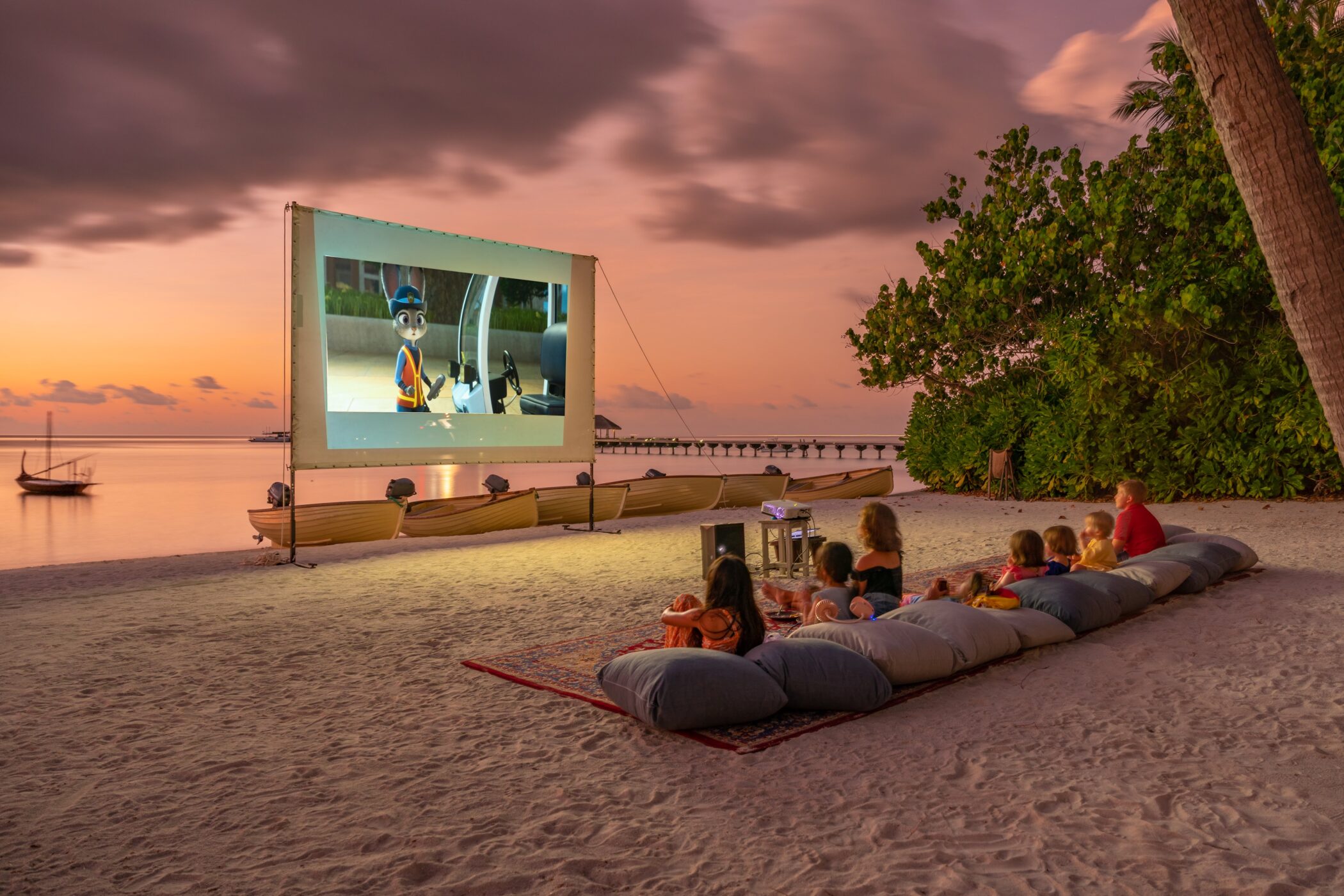 Everyone knows that multi-generational holidays are on the rise but Elegant Resorts has noticed that it’s grandparents that are increasingly footing the bill, and the emerging Gen Alpha demographic (the youngest generation born after 2010) has increasing sway when it comes to how money is spent and where families go on holiday.
With Gen Alpha’s parents and grandparents now prioritising shared experiences, a lot more attention is being paid to how to bridge the gap between children and adults, and finding destinations, accommodation and experiences that are fun-filled, safe and varied.
Kids clubs are great but they don’t facilitate bonding. By making holidays seamless for blended generations and embracing family-wide experiences, brands stand to gain their long-term loyalty: after all, extended families can make ideal repeat guests when programming hits the mark for all ages.
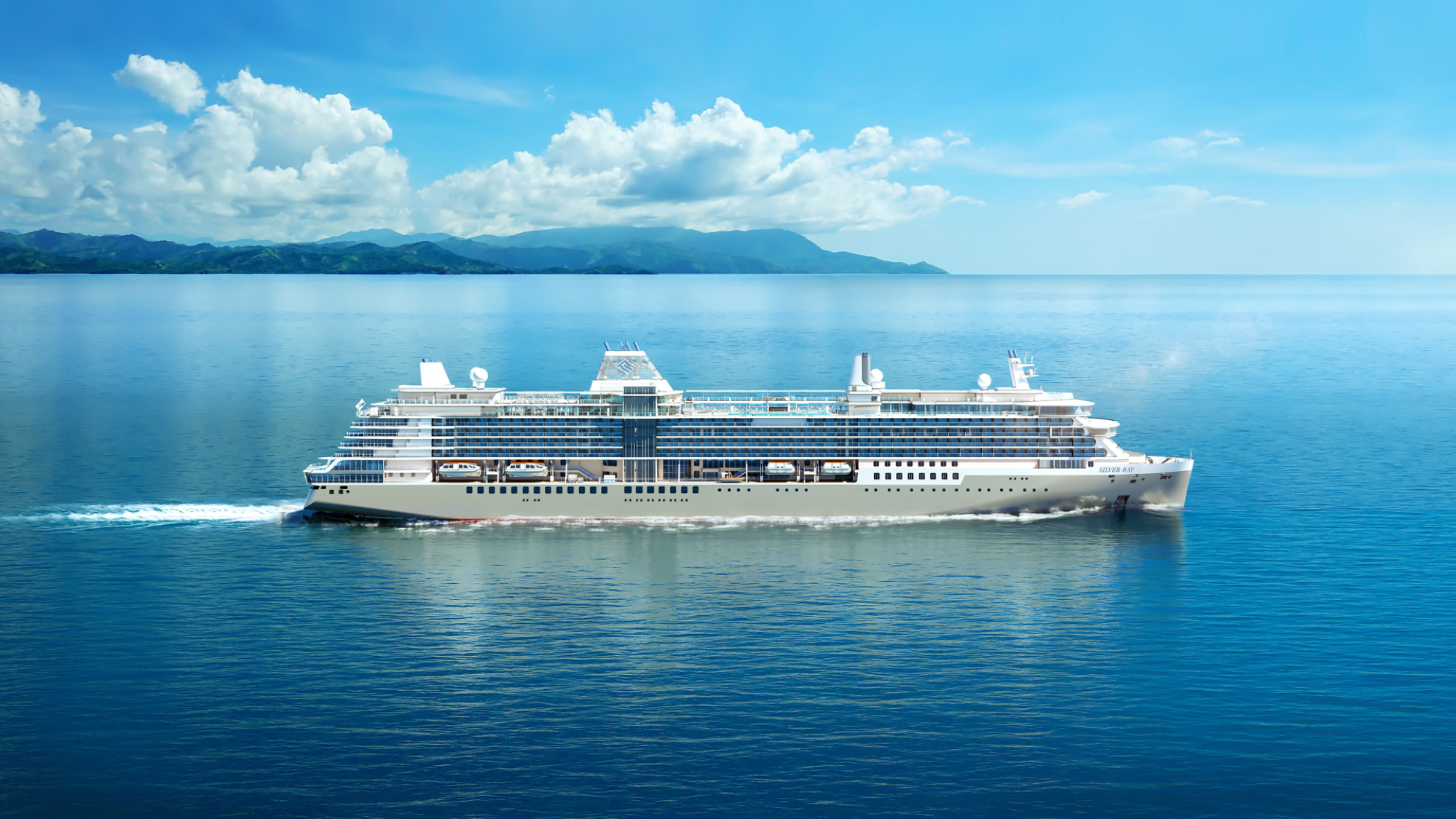 In the past, cruises left little opportunity for land-based exploration but for passengers of tomorrow, bookending a voyage with itineraries on terra firma are becoming a desirable enhancement. Plus it helps direct spending to local people.
Growing demand for ocean-land itineraries are going to be big news. Indeed, luxury cruising is sailing into a new era defined through pre- and-post-voyage stays that expand the at-sea experience with shore-based add-ons.
Although the cruise lines themselves provide compelling journeys with stops along the way, it’s the “framing” element (before boarding and after getting back to dry land) that luxury travel advisors such as Elegant Resorts can add value to.
This company’s exceptional expertise in crafting customised “Cruise Framing” journeys provides the ability to tap into local outfitters and their secret address books to arrange exclusive experiences beyond mass-market options.
Further benefits include insider knowledge and clout (including unbiased recommendations matched to clients’ wish lists), amplified experiences and upgrades, and a single point of contact for seamless, stress-free arrangements and support throughout the entire trip.
 Gen Z are the most plugged-in generation on Earth and when it comes to travel, these impressionable social media natives are thirsty for inspiration from content creators, while their parents are the ones who foot the vacation bill.
Generation Z now makes up about one-third of the global population. So, out of 8 billion people in the world, about 2.6 billion are aged 13-28 (in 2023). Although millions of them are children and teenagers, they are already a powerful consumer group.
Even those in their twenties may still be living at home and travelling with their elders. But, with a world of information delivered to their fingertips, never before have young people had so much inspiration to share – or so much clout when it comes to family decision making. Globetrender has coined the term “Zinfluence” to describe this.
Brands have an unmissable opportunity to speak to this generation through platforms such as TikTok, which is now rivalling Google when it comes to travel search. In so doing, they will nudge the ultimate booking decisions of parents in favour of what’s trending.
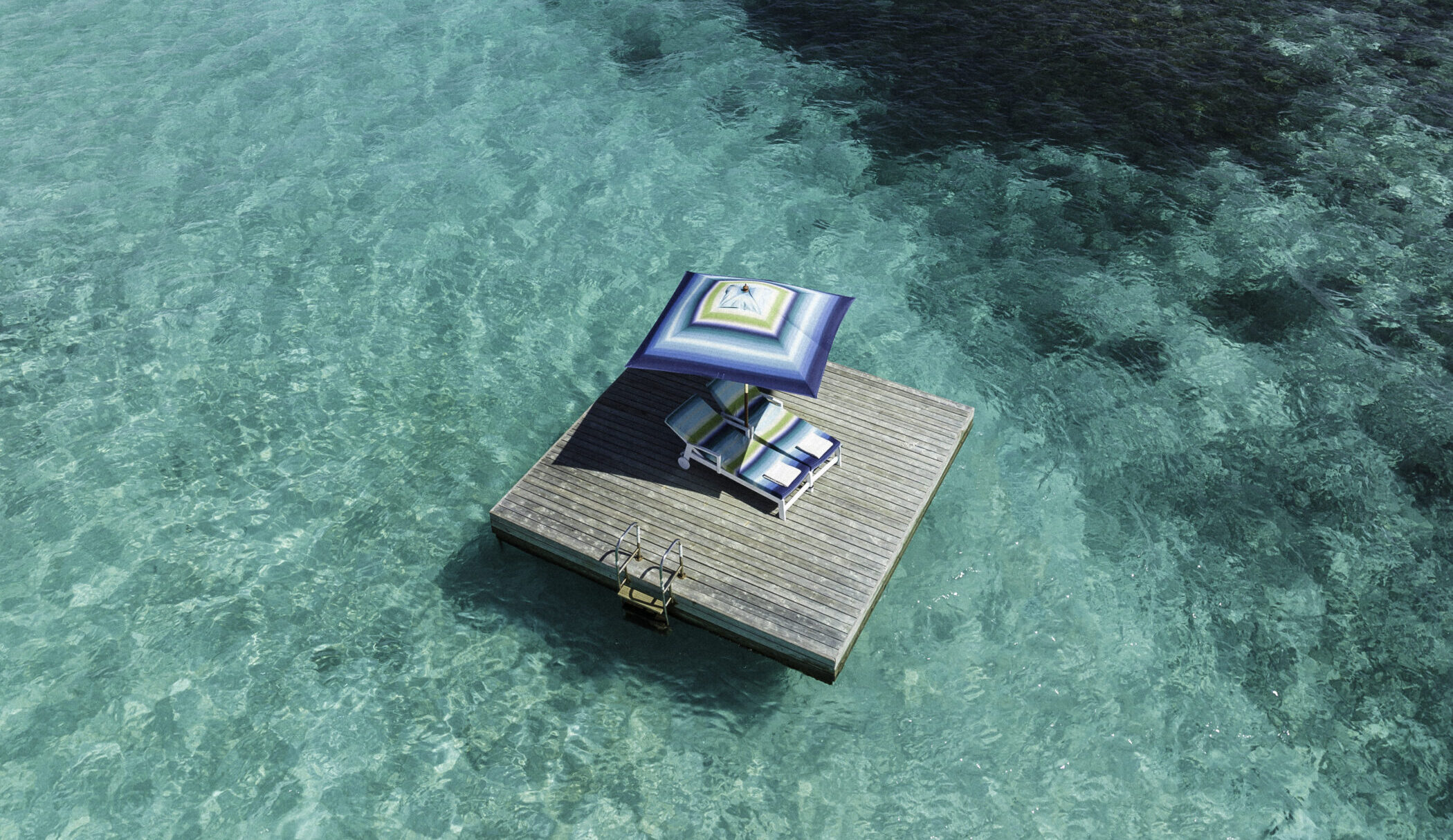 The fusion of travel and hospitality with high-end fashion and retail is opening up new opportunities for curated interiors and highly desirable concept mash-ups that appeal to brand-hungry consumers.
As aspirational consumption compels people at every income level to spend (or at least desire) lifestyle enhancements and material signifiers of wealth, travel and hotels are realising that aligning themselves with elite brands in other verticals can have a magnetic appeal.
From couture fashion houses to fine jewellers, luxury goods brands themselves are also tapping into travel to extend their universes, find new avenues of growth and revolutionise revenue streams through unique offerings such as shoppable suites, which might be bedecked in Gucci or Paul Smith homeware.
Other interesting examples of recent Designer Collaborations include Missoni’s venture with luxury Maldives resort One&Only Reethi Rah; and Dior and the Beverly Hills hotel in Los Angeles; and Louis Vuitton and Mandarin Oriental Bodrum.
In all three instances, the fashion brands opened pop-up boutiques at the resorts and installed branded parasols and loungers for the poolside.
After all, what better reminder than to leave with a designer souvenir as a memento of your trip and a long-lasting positive association with that brand.
The third edition of the annual Tfest ‘unconference’ for travel industry industry buyers and exhibitors, this time it was held at Atlantis the Palm in Dubai. Next year, it will be hosted at the new Fairmont Mayakoba hotel in Mexico from May 7-11.
So what makes it an "unconference"? Unlike other trade shows and corporate forums, Tfest combines power meetings with an array of stimulating talks, workshops, wellness experiences in the “Zen Den”, and activities such as paddle boarding, drum circles, tarot readings, dream catcher crafting and cacao ceremonies. 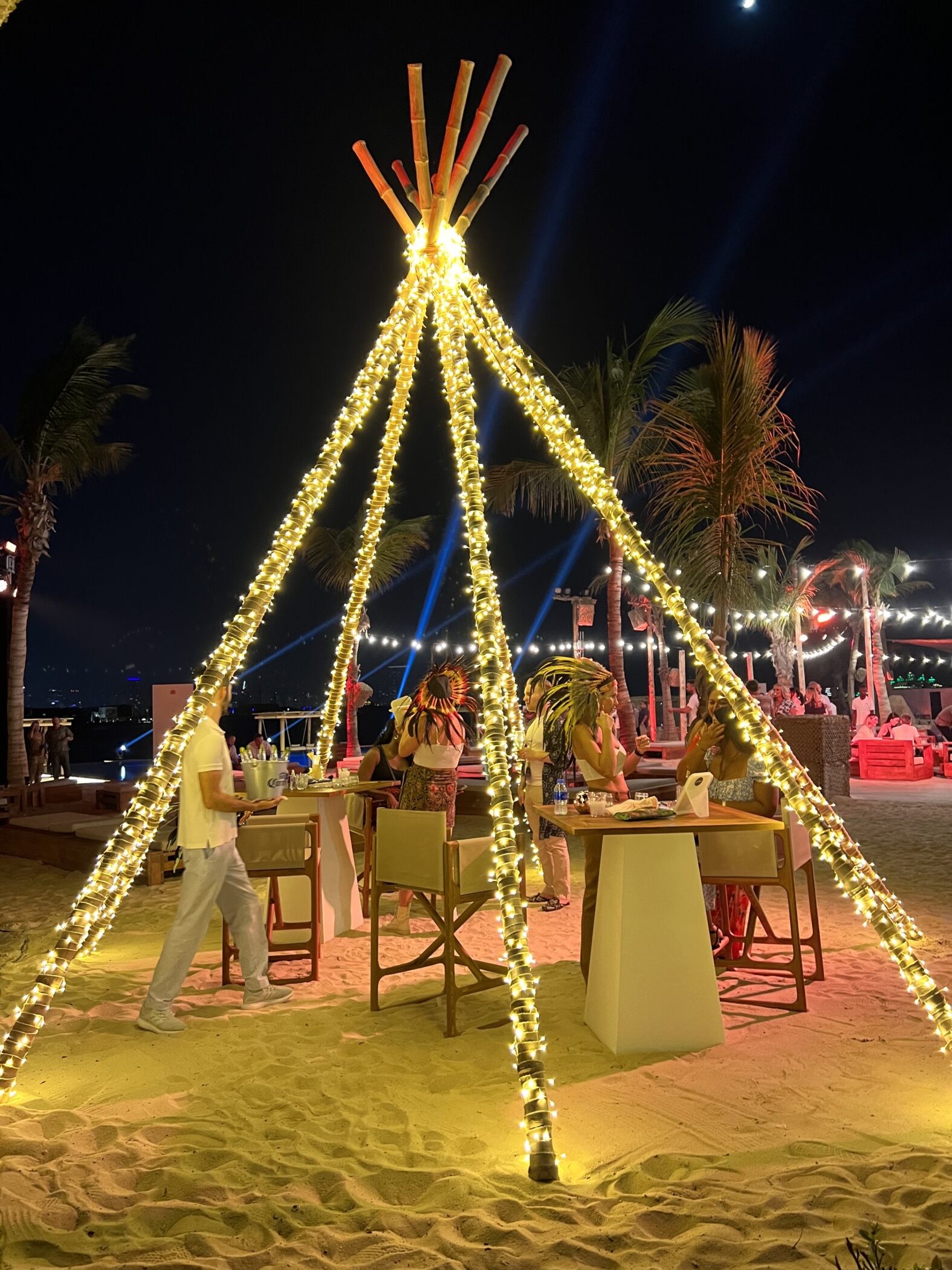
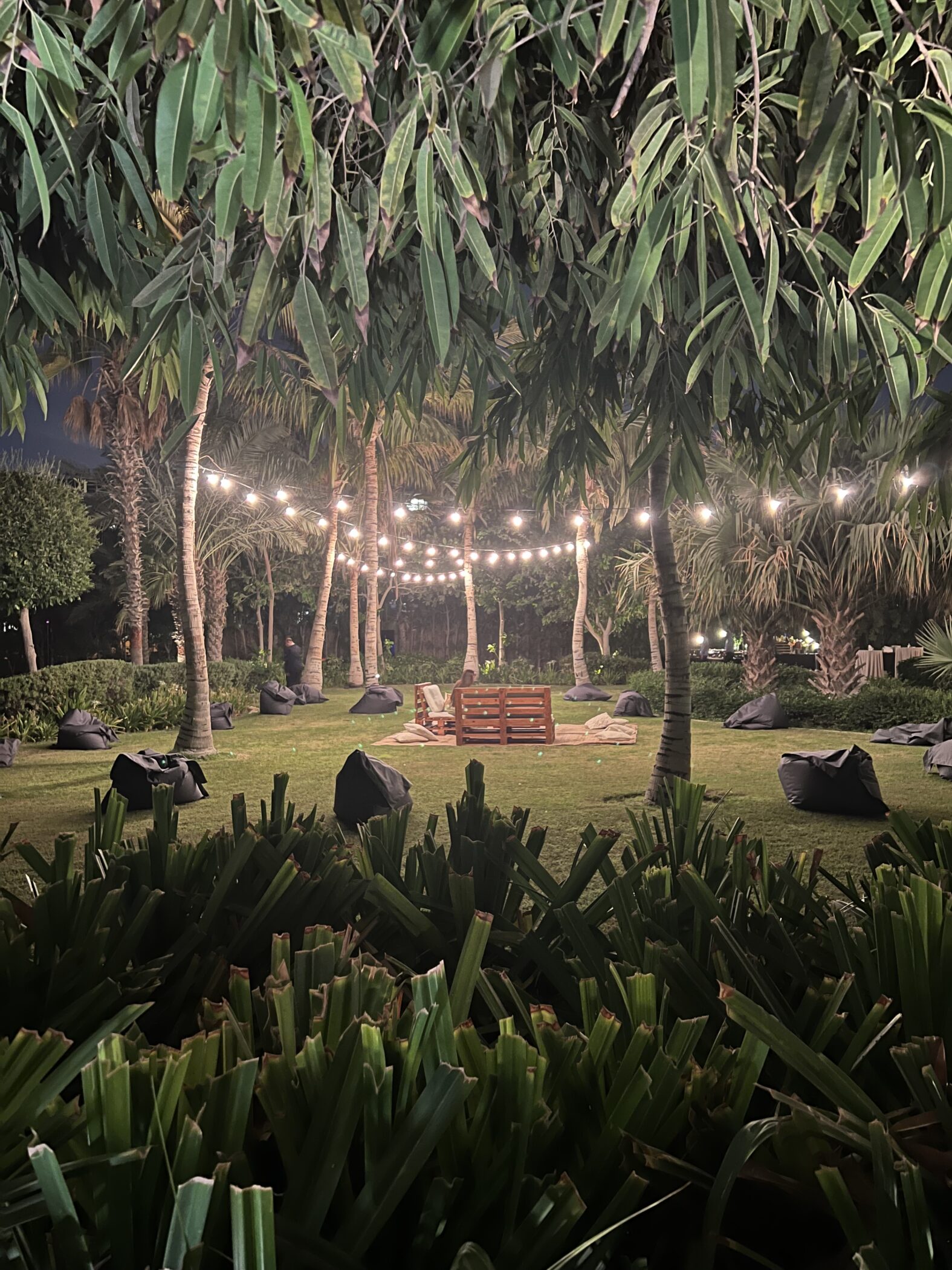
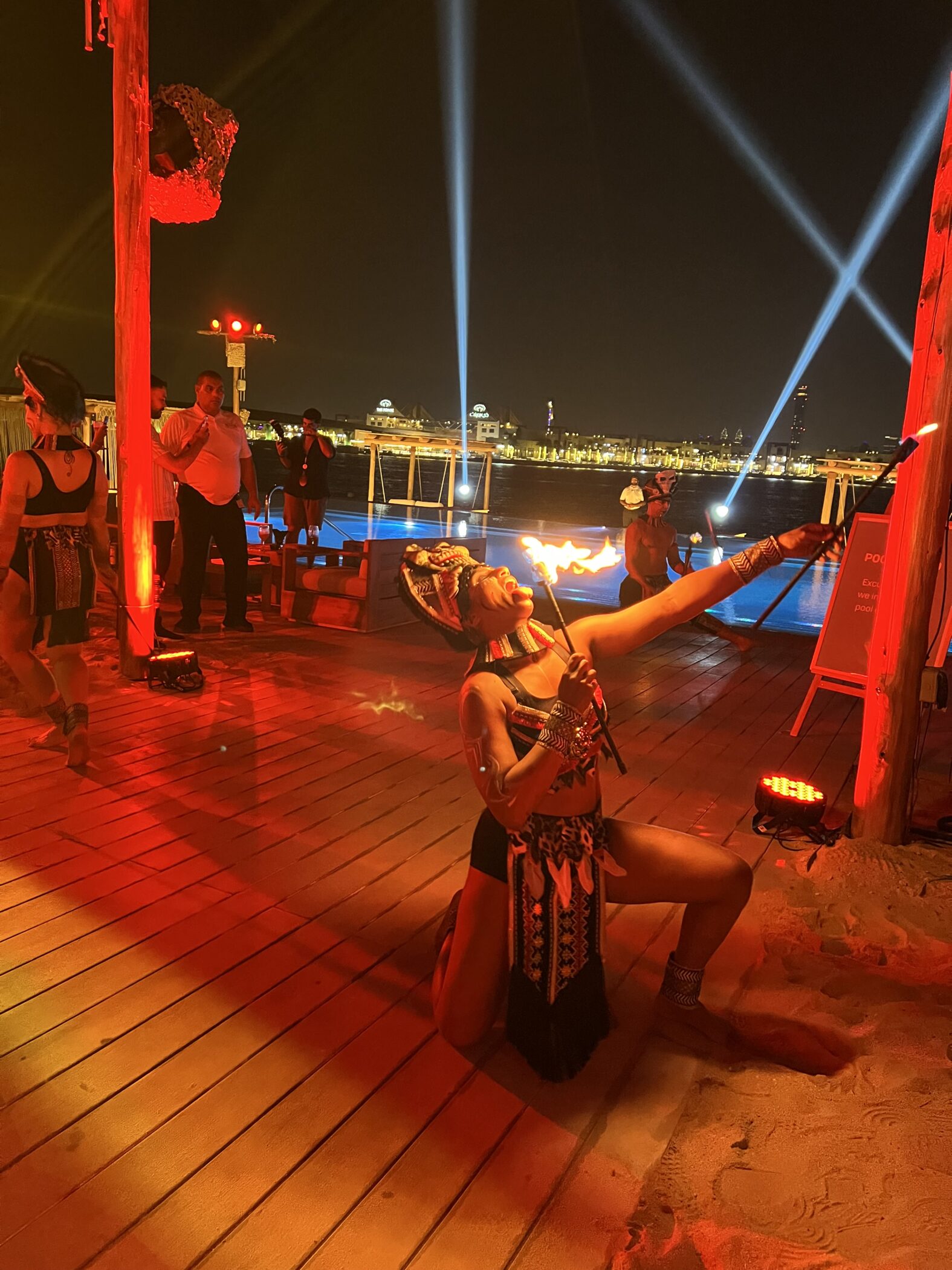 In the evening there are lavish parties that take place in different locations – there was a Bedouin-themed gathering in the desert, a raucous pool party at Nikki Beach and a chilled pow-wow in the garden of the Waldorf Astoria.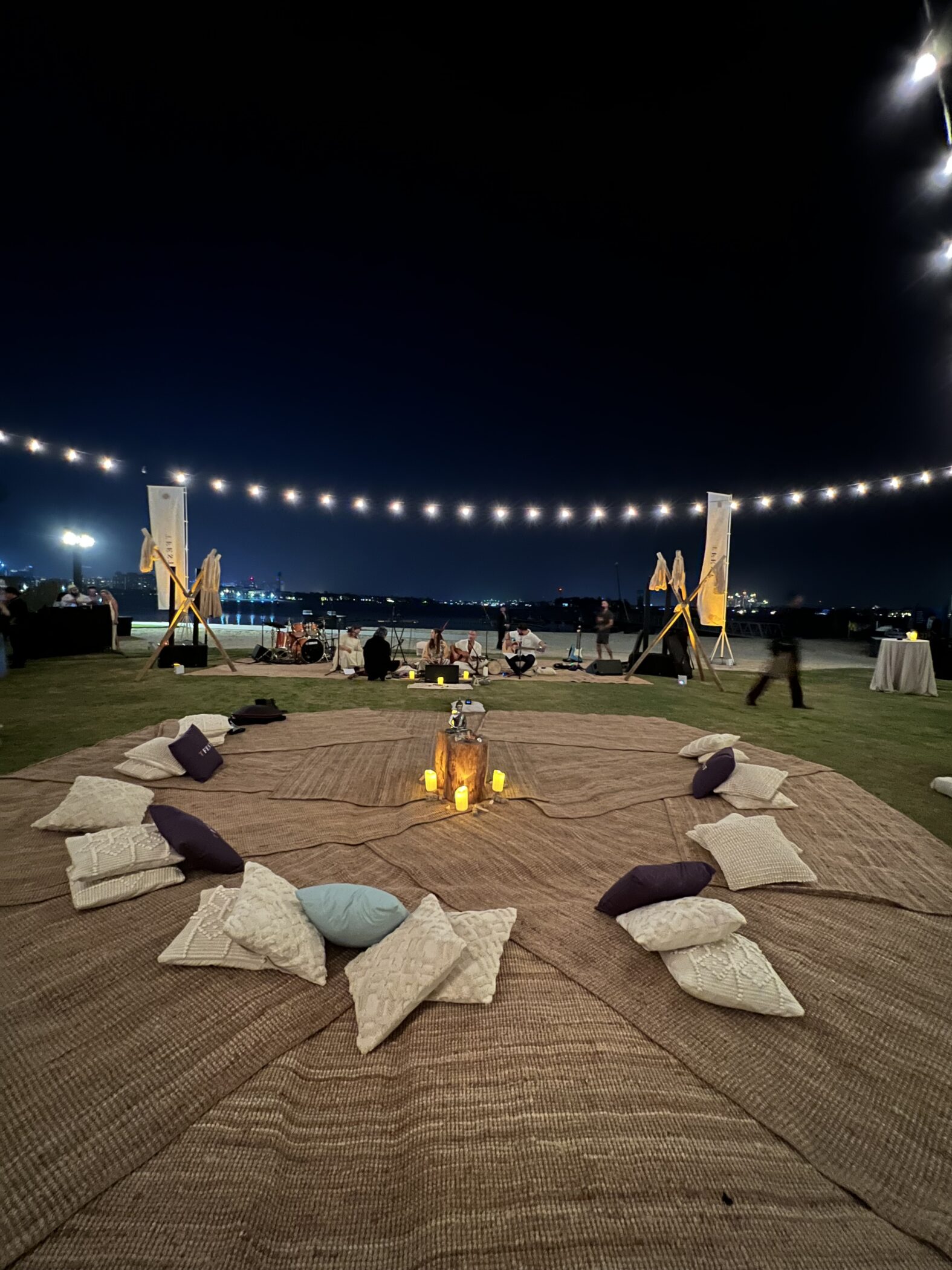
 Organised by Private Luxury Events, founder Peter Gould also owns an innovative company called Rendezverse, which designs “digital twins” of hotels and event spaces for the metaverse. The idea is to allow clients to “try before they buy”.
At Tfest, delegates were all able to experience a demo of the technology using VR headsets (I was impressed – although it was quite disorientating). Some of the properties Rendezverse has designed meta replicas of include Atlantis the Palm and Intercontinental Paris le Grand.
As mentioned before, TFest is a luxury travel show that is all about making human-to-human rather than business-to-business connections. Complementing the mission of Rendezverse, Private Luxury Events says it utilises technology to “help make stronger connections and better relationships”, rather than trying to use it to replace the need for in-person meetings.
At Tfest, delegates are invited to curate their own unconference agenda via a dedicated app called Wyred, that allows them to pick and choose what sessions they attend. It made the whole experience feel seamless and stress-free.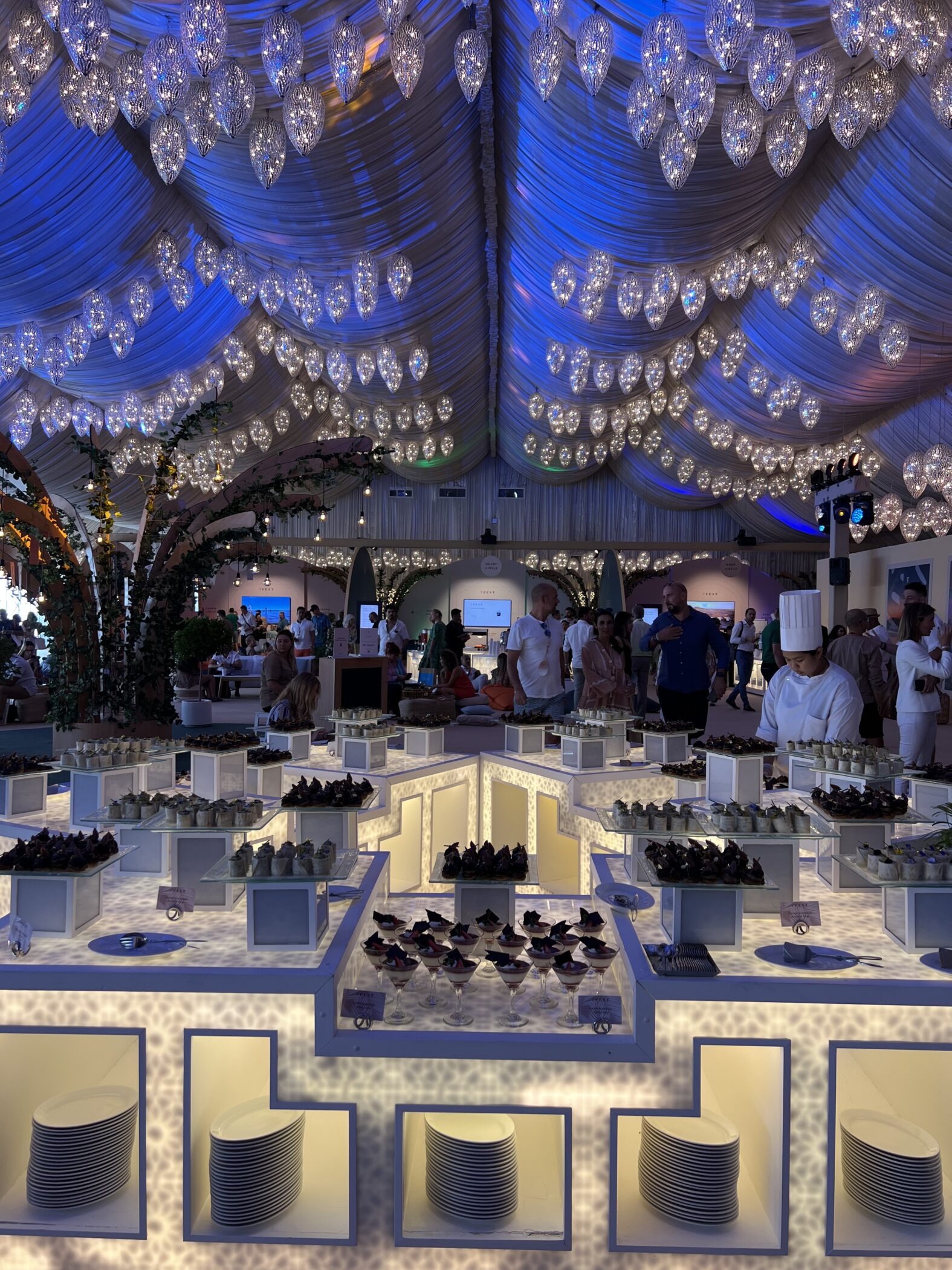 I signed up for a session called “Healing your relationship with money”, watched a seriously impressive “mind reading” performance and made a bracelet. I also attended talks from expert speakers on “How to go viral on You Tube”, “How to be unforgettable”, “How to biohack your flight”, and why “Radical Sabbaticals” are growing in popularity.
The combination of spirituality, health and personal development is a response to a new generation of Millennial professionals for whom work and lifestyle has melded together as one. It is no longer so acceptable to separate “working hard” from “playing hard”, and that cycle of hard drinking that often follows a day of networking.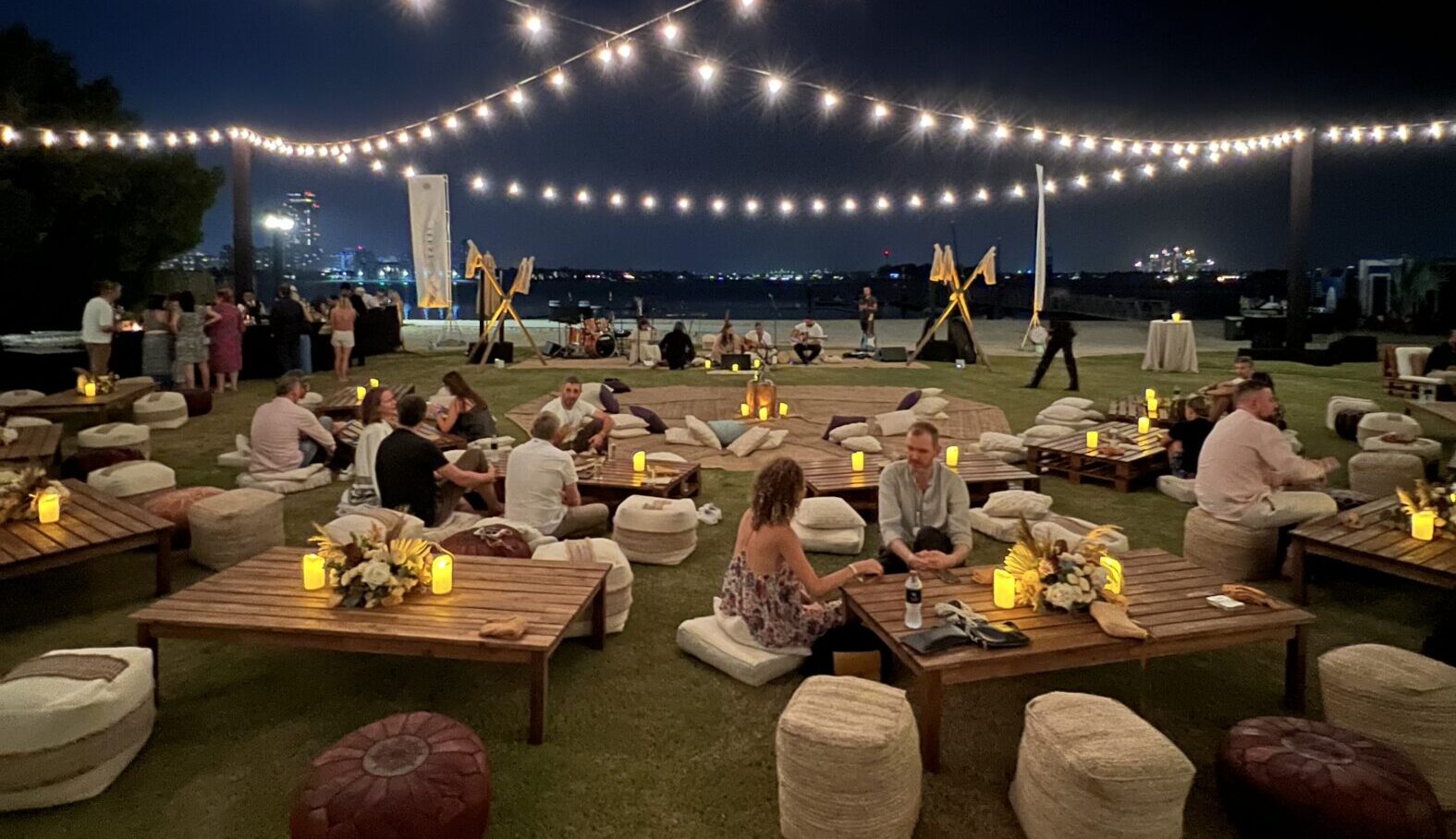 By integrating business and betterment, work can become a pleasure. Typically, a three-day conference would leave delegates feeling drained, hungover and exhausted. I came away from Test feeling inspired and invigorated, and that I had invested my time well. Surely, this is the future of events?
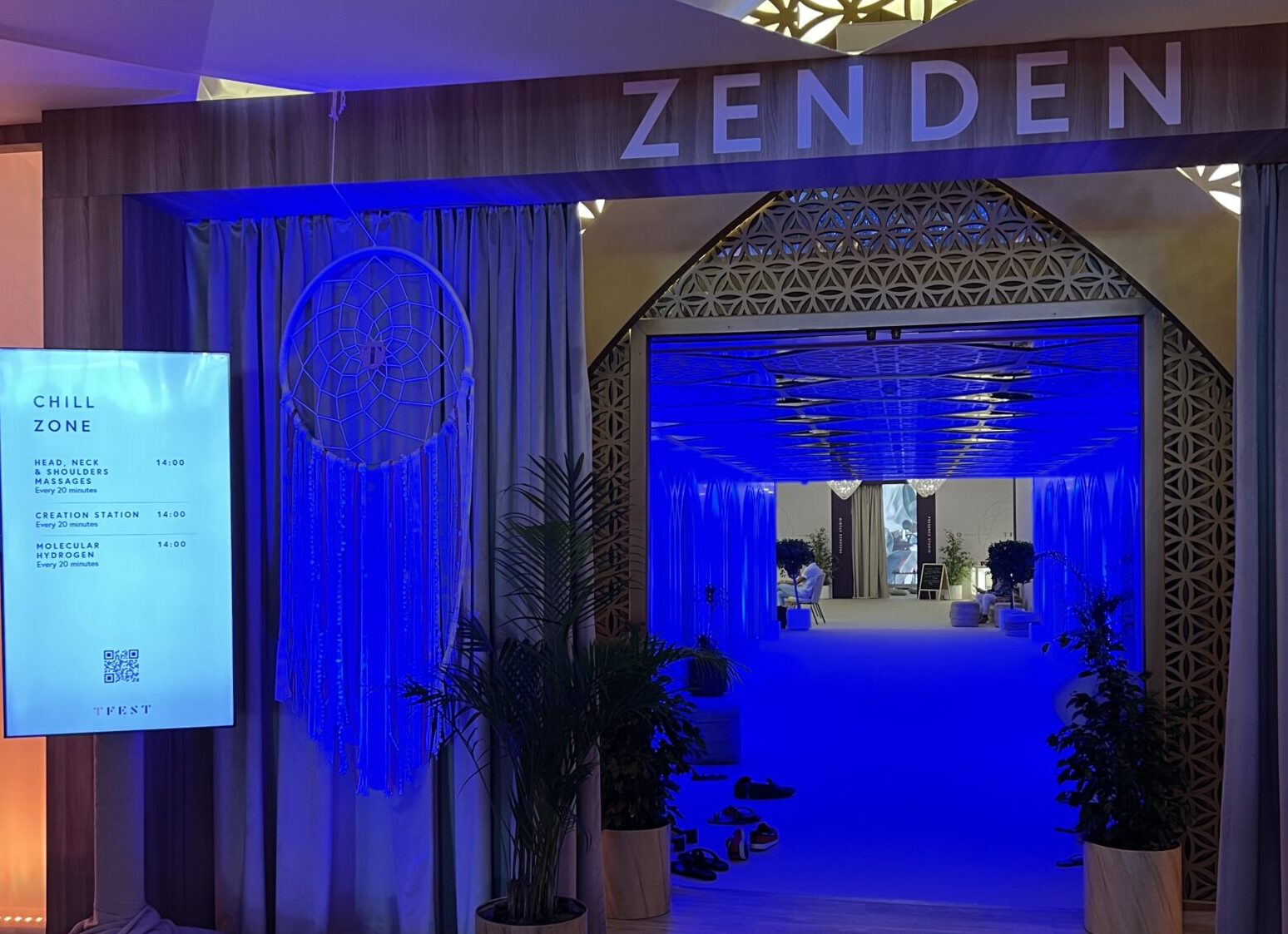 Christy Kuplic, managing director of Private Luxury Events, says: “TFest is about connecting people and having an experience like no other. It is a joyful celebration of luxury travel, creative passion, and personal growth. We want people to have the best time while growing their business. The future of luxury travel is changing. It’s all about creating bespoke experiences that are right for each individual.”
What about the emerging luxury travel trends that Globetrender spoke about? There are three “macro trends” that we predict will define travel in 2023: Asia Reopening, Long-Term Planning and Sky-High Prices.
We have also identified eight key trend drivers that will have an impact on the future of luxury travel over the remaining decade: Climate change; war and civil unrest; political polarisation; mass migration; entrepreneurship and remote working; Generation Alpha (children born between 2010 and 2024 – meaning that by 2030, the oldest will be 20 and the youngest will be six); Web3; and the ultra-high net-worth boom.
According to Credit Suisse, the number of people in the UHNW bracket has increased by more than 50% over the past two years. And in Singapore, it’s estimated that 13% of the population will be millionaires by 2030, boosting its status as a global hotspot for the rich.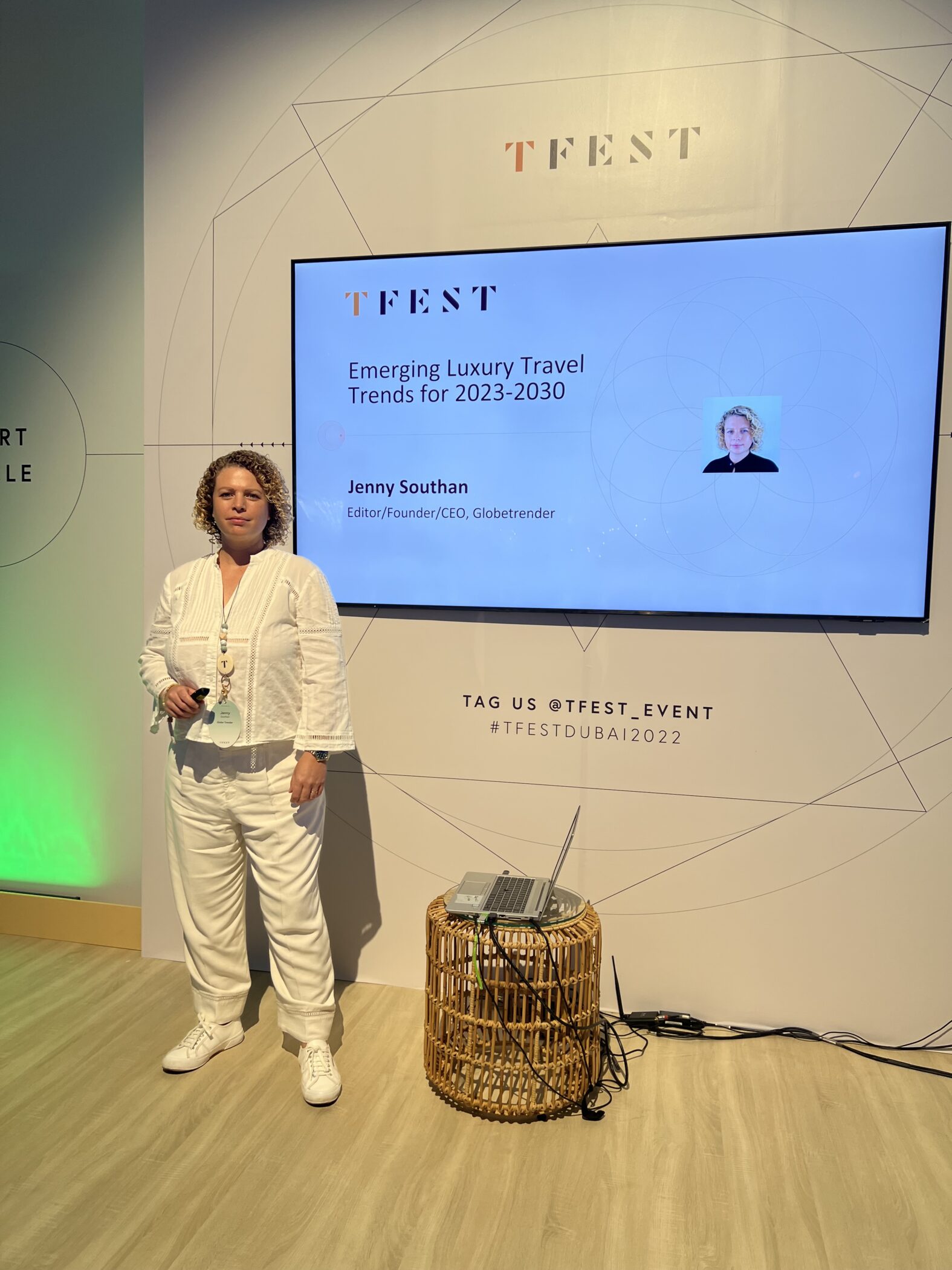
Suborbital Joyrides is a trend Globetrender named to describe a specific type of space tourism that does not see vehicles go into orbit. The idea is that flights give passengers time to experience weightlessness and see Earth from above at the point that divides 'air space' from 'outer space’, at 50 miles up.
Although environmental and social campaigners have their concerns, the continued success of sending civilians into space will inspire thousands of high-net-worth individuals around the globe to add 'becoming an astronaut' to their bucket list. What’s more, the opportunities – even for terrestrial travel companies – are limitless.
Space tourism is the ultimate elite travel experience. It also offers high levels of prestige and kudos for people daring enough to get on a rocket – or a balloon capsule.
Space Perspective, for example, offers a really interesting proposition because the idea of a peaceful, six-hour cruise – complete with a champagne bar – sounds much safer and more enjoyable than being blasted to the edge of space at high speed.
Space Perspective is currently taking reservations for 2025, with tickets costing US$125,000 per person. So it’s also cheaper than flying Virgin Galactic, which now charges US$450,000.
A whole industry is going to grow around space tourism – from space agencies such as Stellar Frontiers, to training camps from the likes of French company Orbite.
Next year, a reality TV show called Space Hero will see citizens competing to be sent to the International Space Station. In preparation, Space Villages are being built in ten destinations around the world that will accommodate fans, contestants and tourists.
A sub-trend of Clean Flying, Aerial Taxis will soon mean wealthy people no longer need to traverse cities by road. Instead, they will be taking to aerial highways, just like in the film Blade Runner.
In just a few years, look up at the sky and you will see sci-fi fleets of battery-powered eVTOLs whizzing overhead. To accommodate these new urban aircraft, vertiports will be built on rooftops, multi-storey car parks, above train stations and at airports for seamless connections.
Like helicopters, they can rise directly off the ground, which means there is very little space needed for runways. But they will be much quieter and cleaner.
Dubai has already been making headway with making flying taxis a reality. In fact, the first take-offs will be from Atlantis the Palm. Built by a company called Eve Holding, a fleet of 35 aerial taxis will enter the skies above Dubai in 2026.
From Joby Aviation in California, to EHang in China and SkyDrive in Japan to Jaunt Air Mobility in Texas and Urban Aeronautics in Israel, there is a tonne of innovation happening in this space.
Over the next 20 years, Hyundai forecasts the air mobility market to be worth US$1.5 trillion.
At the moment, there are about 320 million cryptocurrency owners globally. The problem is, there isn’t a lot for people to spend their digital wealth on yet. Over the next seven years, this will change.
Bitcoin, the original and most widely known cryptocurrency, was designed with the utopian ideal of creating a peer-to-peer electronic cash system; a global currency that increases financial freedom and is highly secure.
Up until now, cryptocurrencies have existed in a niche subculture of tech savvy investors. However, looking at our diffusion of innovation curve, we can see crypto is now moving beyond early adoption and entering the mainstream.
PrivateFly was one of the first global private jet companies to accept payments via Bitcoin back in 2014, when digital currencies were just getting started. A few years later, Berkeley Travel embraced Bitcoin payments for holidays in 2017.
The company’s CEO explained to Globetrender why they started accepting crypto payments. He said: “Paying in Bitcoin is a quick and hassle-free way of transacting for both clients and us as a merchant. Having an international client database means making bank transfers can become costly and often result in delays. Paying in a cryptocurrency is the fastest way to send funds and can also help consumers to avoid hefty bank fees.”
Demonstrating the direction this trend is taking, this summer, luxury resort chain Soneva began accepting Bitcoin and Ethereum as payments for hotel stays. And super yacht brokerage Yachtzoo began taking crypto payments for super yacht sales.
This autumn, Pelorus started accepting crypto for bespoke adventure travel trips. I have also been informed that luxury hotel club Little Emperors will integrate crypto booking in the near future.
Little Emperors is a private members hotel club, offering access to preferred rates and guaranteed benefits at the most exclusive hotels around the globe, handpicked by a team of travel advisors.
With membership fees from £250 per year, and both a web and app-based presence, it is a useful tool for modern travellers. "Members typically find they recoup the money they spend on becoming a member in the savings from just one hotel booking," says Masri.
Masri says: "Millennials have replaced Baby Boomers as our primary clientele. Approximately 93 per cent of our members are under 50. With remote offices on the rise, family duties arriving much later in life, and the nomadic lifestyle paving the way, wealthy Millennials seem keen to tap into that sense of freedom."
Masri says: "Millennials seek authenticity and shareability when travelling. They want an easy booking process – LE takes three clicks to book and retains preferences and booking details so you don’t need to repeat them every time.
"They want excellent visuals – two years ago, we hired Laura Mizon, (ex-Mr & Mrs Smith) as our CPO, and she recognised how key content is for us. Millennials are ‘buying with their eyes’, and as such we plan to eventually remove all sentences from our app. All they need are images, videos, floor plans and so on.
"They want relevant information – we are all subjected to so many adverts everyday – most of which are not relevant. We know our members – we know how much they spend, if they have kids, how old they are. And we can talk to them, predict and shape trends, and we do this through membership engagement.
"Social is also important to them. Instagram-friendly destinations have seen a significant increase in Millennial affluential visitors. Iceland, Jordan and New Zealand are some of the new destinations that were able to take advantage of the craving for original and beautiful travel experiences.
"Online influencers visually sharing their journeys have led to a new wave of aspirational living. A recent survey amongst our members told us 85 per cent check hotel social media before booking. A strong online and social media presence is important if a hotel hopes to attract Millennials."
"We have seen a huge rise in demand and bookings for one-time bucket list trips that are further afield. People are interested in places such as Rwanda, New Zealand, India and Bali - the Capella Ubud is a great example, with its swing into the jungle.
"We have also observed that affluence is no longer tied to the physicality of what you own. New status symbols can instead be found in the rich experiences that you live.
"Rather than spending days on sun loungers in five-star beach resorts, our members are enquiring more about tented safaris in Tanzania, cooking classes in San Sebastian, or surfing lessons in Hawaii.
"Not only will these experiences make for shareworthy photos on Instagram but they deliver a deeper cultural connection and a strong sense of place," says Masri.
She adds: "The curiosity among travellers to experience an independent hotel or new brand has been so great that Little Emperors has added 180 new hotels to its booking platform this year to keep up with demand."
According to data from Little Emperors, more than 50 per cent of affluent Millennial travellers believe that travel is about discovery and adventure, and 70 per cent want to learn from the cultures they visit.
Masri says: "Six Senses and its growing portfolio has seen an increase in over 40 per cent bookings from our clients based on their unique programmes and ability to embrace their local cultures."
She adds: "Environmental sustainability and social responsibility also play an important role in providing a sentiment of authenticity that appeals to younger affluent travellers. For example, in Singita, Tanzania, you can experience first-hand the perfect combination of luxury and care for our environment, with everything locally sourced and sustainable."
Masri also notes a "continual shift towards wellness". She says: "The wellness side of our business has really grown. Wellness for us has gone from 'I need a hotel with a sauna' to 'I want to do a tailored programme'. These tailored programmes are something we see hotels brands such as Chenot, which recently open in Montenegro, offering more and more.
"The pandemic has underlined that 'health is the new wealth', and has given rise to increased demand for highly tailored therapies and treatments with expert instruction."
Combining work with holiday time is becoming the norm. Masri says: "When you can work from anywhere, why not work from a new location? That’s the question that many people are asking themselves as work-from-home and hybrid work conditions continue.
"In fact, 61 per cent of remote workers expect to be working hybrid for the next year and beyond, and 27 per cent anticipate that they will work fully from home."
Masri says: "Our biggest growing destination has been Costa Rica – this country ticks all the boxes for this conscientious and social media-obsessed generation. Costa Rica has another key appeal: the complete absence of Covid red tape, and has been open since November 2020.
"The destination has ecolodges, surf lodges, new hotel openings and more – all of which satisfy the environmentally conscious, lifestyle seeking, Millennial traveller."
Masri says: "At Little Emperors we have seen the ADR (average daily room rate) increase by 29 per cent compared to last year, and an overall 14 per cent increase in price since pre-pandemic levels. This is partially owing to:
"As a general rule, hotels have put a 5 per cent increase on hotel prices for next year but people are afraid it will be even higher. I think it might go down a bit. But it will be last-minute prices that are the highest."
Masri says: "The pandemic led to the shortest lead-times we have ever seen but now people are booking much further in advance. We have seen an 20 per cent increase in bookings for next year already. People are even booking as far as Christmas 2023 and sometimes hotels haven't even released their rates.
"Consumers are also booking shorter stays. This is a major u-turn from during the pandemic when travellers were staying for extended periods due to being able to work-from-home. The prices today are so high, people want to stay in the same hotels, but only possess the budget for shorter stays.
"People are increasingly turning to travel agents (like us). Traditionally, many associate travel agents with being more expensive. At Little Emperors, we see ourselves as a new breed of travel agents (we like to be called "advisors" or "disruptors") who no longer charge hourly rates for advice, but instead a small annual fee.
"It’s easy to recoup in just a one-night booking, and even better, we get you free things such as daily breakfast, early check-in, late check-out, airport transfers, spa credits and restaurant credits."
"Unlike at the end of 2020 and the start of 2021, when we were still in the depths of the pandemic, 2022 genuinely seems like it’s going to be better.
"Of course it’s in illusion that change happens every 12 months and that on January 1 everything will be different. But given the immense amount of progress we have made with the vaccine roll-out this year, and the fact that tightly locked countries such as the US, New Zealand and Australia are expected to reopen borders to international tourists fairly soon, there are very distinct shifts waiting to happen.
"In terms of travel during the on-going pandemic, there will continue to be a need for testing but cheap and easy rapid antigen tests will start replacing expensive and invasive PCR tests. This is really fantastic news.
"From a UK perspective, we can expect the red list and airport hotel quarantines for inbound visitors from red list countries to be scrapped over the coming months. So again this indicates that travel will become more straightforward in 2022 – at least for people who have been double – if not triple – jabbed.
"What will probably be new for next year is expiry dates on vaccine passports, which will put a spanner in the works for some tourists. However, for wealthy people, getting hold of a booster shot probably won’t be a problem.
"Looking back at some of the trends we predicted for travel in our 2020 trend reports, we can now see how they are playing out. Germaphobia is shrinking into the background now that the vaccine is available so paranoia about taking commercial flights will be lessened.
 "Domestic travel will also receive greatly reduced limelight as the focus will be on travelling far and wide internationally again. For a little while consumers enjoyed an unprecedented amount of flexibility when it came to bookings as travel companies make huge concessions to win business. But in 2022 there will be less generosity in this respect.
"Involuntary undertourism due to government restrictions will also be lessened, although hopefully we won’t be returning to the problem of mass over tourism in the year ahead. Especially as destinations such as Venice and Bali are already introducing new measures to limit tourism numbers.
"Wilderness seeking and time in nature will continue to be attractive to people of all demographics and financial means, although culture-starved travellers will soon be keen to return to cities, especially in countries such as the US, which has been out of bounds for UK citizens for a long time.
"What I don’t think will be happening are a lot of short city breaks - in general I think the perception in 2022 will still be one of restraint when it comes to doing lots of trips throughout the year.
"This is because going abroad is still more complicated than pre-pandemic and it doesn’t look good from an environmental perspective. I predict that for the most part – perhaps with the exception of the very rich – the “fly less, stay longer” attitude will endure.
"The conversation around sustainable and regenerative travel will be a hot topic for years to come but in 2022, especially in the luxury travel segment, it won’t be something the majority of high-net-worths will be factoring into their decision-making when it comes to planning trips. Some will but they will be a minority.
"As we described in our free trend report on Travel in the Age of Covid-19, there will be Sustainability Paradoxes. You only have to look at private jet usage to see how people’s sentiment often doesn’t match up with their behaviour when it comes to sustainability.
"And yes, I think private jet usage will continue to be popular in 2022 and beyond – it’s almost like the pandemic has given people permission to use them again. If you remember, after the last financial crisis, private jets went out of fashion for a while.
"It’s been well documented that the super-rich have, on the whole, flourished during the pandemic. It’s made millionaires and billionaires even richer than before, and most of them have managed to carry on living their lives with minimal limitations.
"During the Covid crisis, the Financial Times reported that the total wealth of billionaires worldwide rose by US$5tn to US$13tn in 12 months, the most dramatic surge ever registered on the annual billionaire list compiled by Forbes magazine.
"In China, a new billionaire was born every 36 hours. When you are talking about people with this level of wealth – and there are only about 2,700 of them – no rules apply. The world is theirs for the taking."
At the moment, travelling feels like a distant dream for most of us. Ubiquitously, holiday plans have been scuppered by lockdowns, cancellations or financial insecurity, and booking a trip right now feels like too much of a risk when the advice is not to travel “indefinitely”.
Travel companies are urgently trying to persuade customers to postpone rather than cancel their bookings to help the industry survive – Much Better Adventures, for example, is offering a 5 per cent discount for life to those who do so, and most airlines are waiving rebooking fees to encourage travellers to move their travel to a later date – Qatar Airways is even going a step further and offering a 10 per cent discount off travellers’ ticket prices.
While the luxury travel sector has also taken a devastating hit, experiencing unprecedented cancellations for coming months, Globetrender predicts that it will bounce back faster than other areas of the industry. According to our sources, some customers with more of a financial buffer are still making plans for their next trip for as soon as they can – and some, controversially, have even fled their homes in crowded cities to spend a luxurious lockdown somewhere secluded (or more glamorous).
Unlike budget travellers booking their own hotels and flights via online channels to get the cheapest deal, some high-net-worth travellers are more likely to invest in the advice and service of consultants or agencies who can protect their booking and help them arrange to postpone it quickly and easily. On top of this, due to their relative wealth, they’re more likely to be in a financial position to be the first back on the road after lockdown.
Like many high-end adventure travel operators, Cookson Adventures has had to postpone or cancel many of its planned trips for now. However, the company is well-placed to meet the demands of travellers craving to escape to a new corner of the world.
“Thankfully, we do still have interest in booking later in year, often to far-flung places onboard private expedition yachts or bespoke camps in remote conservancies,” says Ricardo Gato, the company’s marketing director. “Our bread and butter has always been exploring remote destinations, such as Antarctica, Svalbard and secluded islands in the Pacific – for us that won’t change post Covid-19. We do predict, however, that there will be a big shift in this direction for luxury travellers across the industry.” Rebecca Masri, founder of Little Emperors, a private members' club offering special rates and rewards from its luxury hotel partners, with 50 per cent of its members based in the UK, says: “We still have bookings currently going through our platform. Of course, the decline is unbelievable – we were doing hundreds of corporate and leisure travel bookings each week, and now we’re now doing about five a week, most of which are relocations involving multiple rooms for longer durations.”
Currently, Masri says October seems to be the point that most Little Emperors members are banking on being able to travel again. ”Until October, whilst most future travel plans have been cancelled, we’ve had some bookings – often with the question of: ‘What’s the cancellation policy?’” she says. “Most hotels are now operating much more flexible booking policies, which has allowed us to secure bookings from October onwards.”
From Little Emperors’ back-end system, Masri is seeing a trend in searches for autumn and winter escapes to natural retreats, beach destinations in tropical climes and island resorts.“ The Maldives is picking up a lot of searches, especially for later in the year, as is Costa Rica, the Caribbean and Mexico. Domestic travel – across all markets – is also picking up searches in the more immediate future,” she says.
“I predict people will be less inclined to go to busy places, so I’m nervous for Europe over summer. I think the Europe we know – the South of France, Ibiza, Mykonos, Sardinia, Monaco – all the trendy hotspots, I’m sure there will remain a market for these places, but it will be smaller than the market we’re used to. I think people will be more inclined to do things which actually involve more space, and maybe less humans with more focus on wellbeing.”
Another trend to expect from the luxury market is “second-attempt” trips from infrequent luxury travellers. This includes those who’ve missed out on once-in-a-lifetime holidays they’re highly emotionally and financially invested in – such as honeymoons – due to Covid-19 travel restrictions.
Britt Marie-Monks, founder of the Honeymoon Fixer, says: “We’re still rebooking honeymoons for clients who now want to move them to the end of 2020. We’re also working for some couples who plan on getting married later this year, but the conversion rates (from planning to booking) aren’t great, even with people who have the budget – in some cases because they don’t know yet if their weddings are even going ahead.”
For those planning high-end honeymoons first-time round during lockdown, Marie-Monks is noticing a trend for more intrepid itineraries. “Because people have been contained, when they get out again, they want to do more exploring, rather than a fly-and-flop honeymoon in an all-inclusive luxury resort,” she says.
“For example, self-drive tours of Canada, unique tours across South America with lots of wildlife. Japan is still firmly on people’s bucket lists. And we’re still getting requests for small, high-end winter cruises too – the Norwegian fjords seem to be really popular. People don’t seem to be put off cruises, despite what has happened with certain cruises during Covid-19. Once you’re a cruiser, you’re a cruiser.”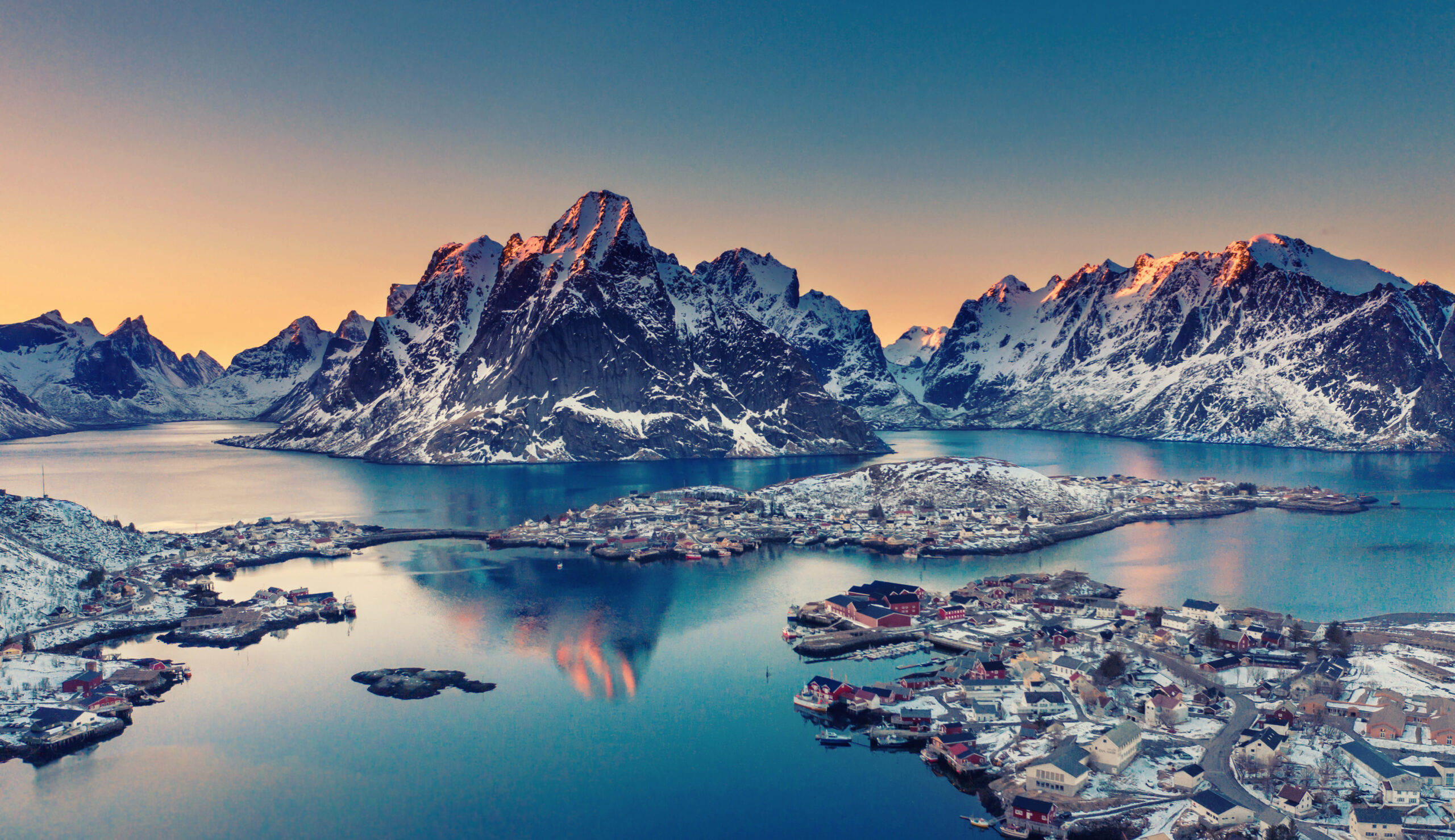 As many people look to certain Asian nations where coronavirus cases are decreasing – such as China and South Korea – as an example of what post-lockdown life may look like, they won’t be looking into the crystal ball and seeing the return of international luxury travel.
Although wealthy travellers from recovering countries may have the money and pent-up wanderlust to see the world, their freedom to do so is limited until more nations reopen their borders. What’s more, China and South Korea have both introduced 14-day quarantines for any inbound travellers, an attempt to prevent a second wave of new cases.
As China begins to emerge from Covid-19 crisis, its domestic luxury travel sector is starting to show green shoots of recovery – a trend that logically will be the case for other countries until cross-border travel becomes viable.
A recent survey of people from 100 cities across China, the Trip.com Group, China’s largest travel agency, found that 90 per cent of respondents would prefer for their first post-lockdown travel to be domestic, with the historic mountain province of Yunnan, the upscale beach resorts of Hainan Island and Shanghai coming out as the top three destinations of choice.
And according to Andy Christie, private jets director for the ACS Air Charter Service (ACS), there’s been a spike in private jet charters within the country. “China has come out the other side, and purely domestic flying has started to increase again,” he says. “There are high-net-worths in China wanting to get out of the cities where they’ve lived in lockdown to their summer houses or other locations where their family may be, and with jets, they avoid the main terminals, and any large groups.”
Blair Hong is CEO and founder of Seoul-based T-Percent Travel, a travel curation agency for high-net worth Korean travellers, 95 per cent of whom are based in South Korea. “Right now, I don’t have any pending bookings or events until September or October,” she says. “Countries aren’t accepting visitors and domestic travel is not recommended yet in Korea. Some of my clients are saying that, as soon as countries are accepting visitors again, they want to book trips.
"In general, people don’t believe that business will be back to normal until July or August over here. People have been at home for months here dreaming about their next trip, looking at social media and for now, I am creating sample dream itineraries for them based on their personal preferences. I’m guessing we will be extremely busy again soon.”
When air travel becomes possible again for more of us, it’s unlikely that airlines will operate routes at their pre-Covid-19 capacity for a long time. As a result, passengers will probably be competing for fewer tickets, meaning first class seats will become even more of a hot commodity.
Instead, more luxury travellers may seek the option of chartering their own jets, and it’s like that the private jet sector may benefit in a post-lockdown travel landscape – not least for the privacy and seclusion it offers from other people.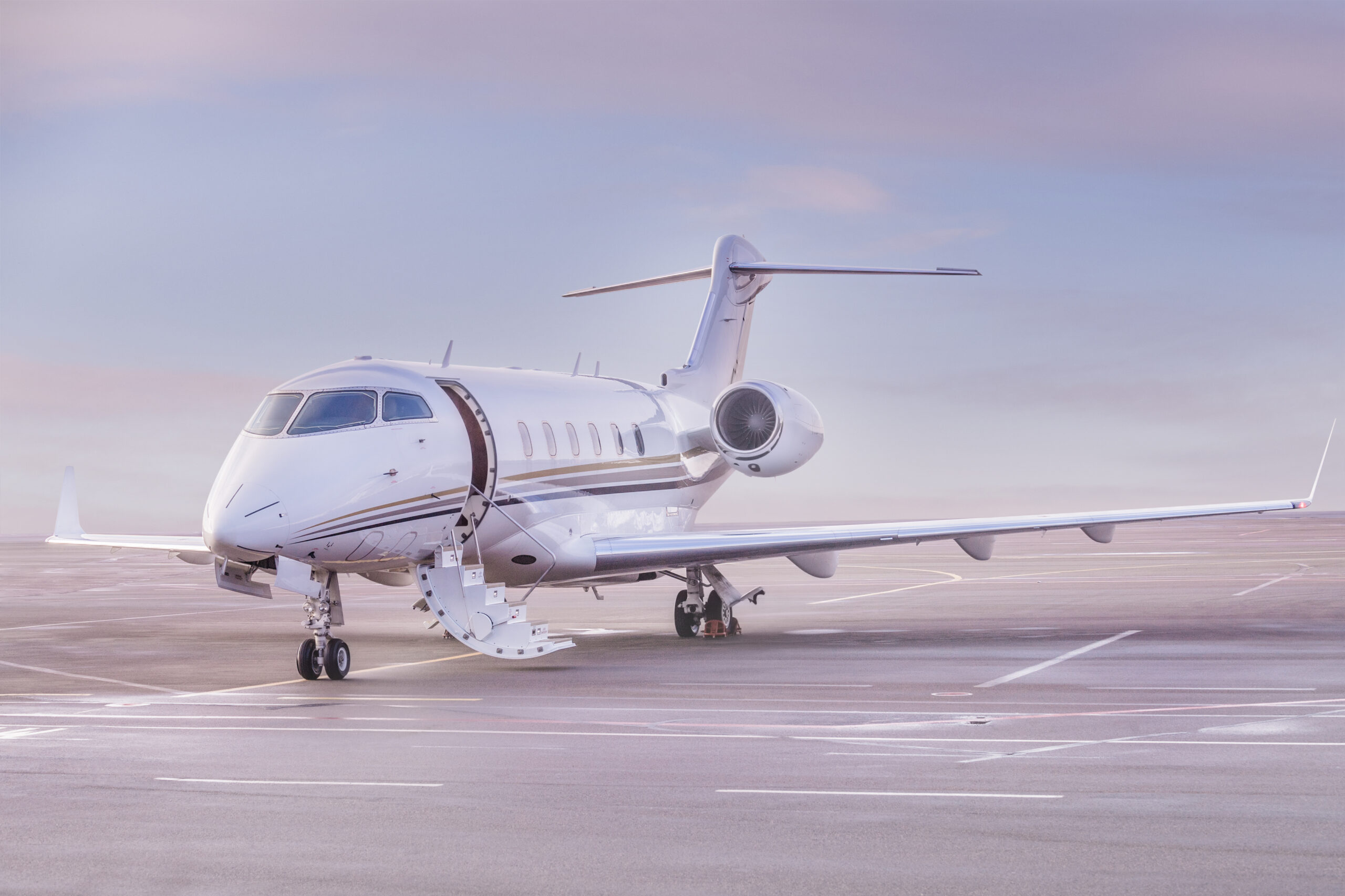 Christie from the Air Charter Service reveals that around the globe, wealthy travellers are still enquiring about booking private jets, despite being in lockdown. “What we’re finding is that a lot of people are having their permits rejected – they’re trying to fly somewhere that isn’t approved to fly,” he says.
"So they are putting those trips on hold, and we’ll revisit them when the borders reopen. There are a lot of people who didn't get to have their ski trip this year for example – I think that market will will come back very strong.”
Unlike commercial airlines, the lead-in time for booking private jet charters is a matter weeks rather than months. This means while high net-worth travellers aren’t able to book private air charters just yet (other than in the US and China, where domestic air travel is currently still permitted) once restrictions are lifted, they’ll be able to do so at short notice.
And unlike commercial airlines, the private jet industry is able to be more agile and recover its operations to serve luxury travellers faster. “We expect there to be a big influx when the controls soften – it’s just a matter of when,” says Christie.
“The whole of the the private charter business is built on short-term demand. On a normal day, within three hours’ notice, the crew are at the airport, the aircraft is fuelled and you can depart. The market is built around quite a lot of affluent people who make snap decisions a lot of time, and money buys you that.”
Still, if everyone has the same idea at the same time, jet-setting luxury travellers may still find they face some restrictions. “One thing money can’t buy, is more slots at a small European airport,” says Christie. “For example, the Greek islands aren’t always catered particularly well for 50 private jets coming in over a weekend. The airports have to control the slots to limit the number of jets they can physically handle. So they play a significant role.”
It’s likely that only once the post-pandemic dust has settled, a vaccine is available, and the true impact on both individual countries and the global economy is known will anyone be able to make concrete decisions about when and where they should next travel. Even though some luxury travellers may have the means to place bookings now, the question remains: will their late-2020 itineraries actually be possible when the time comes?
Laura Dean, co-founder of The Travel Design Company, says: “Recently, we’ve had quite a few people who happy to plan their itinerary right up until the moment of booking, but are nervous about what will still be around at the time of travel. Will their airline go bust? Will it still be a once-in-a-lifetime opportunity they’d hoped it be – will they get there and find they can’t do some of the things in the itinerary? We do our best to reassure them, although, we don’t know what the landscape will look like either. But we are more than happy to help them navigate it.”


[dropcap size=big]A[/dropcap] new trend in the luxury hotel market sees guests provided with a designer wardrobe full of outfits to wear during their stay. It means travellers can pack as light as they like, and dress in seasonally appropriate, fashionable attire without going shopping for it.
One of the forerunners of the designer wardrobe innovation was Starwood’s W Hotels, which launched its “Walk Out Wardrobe” concept last summer at the W London Leicester Square.
Partnering with women’s online rental site GirlMeetsDress, it is enabling people staying in suites to have access to a clothing rail of “must-have designer pieces” delivered to their room free of charge (a range of sizes is available).
To borrow a designer outfit, guests must contact the hotel’s “W Insider” via the 24-hour “Whatever/Whenever” concierge service. The curated designer wardrobe will then be wheeled right into their room.

For those wanting to choose something specific from the 4,000-piece GirlMeetsDress archive, they will also be presented with an iPad to make a selection (again free for suite guests).
Dresses can be ordered by 2pm to arrive the same day and a GirlMeetsDress personal styling service can also be pre-booked for those wanting a unique selection of dresses chosen for them to be waiting in their hotel room when they check in.
For all other hotel guests, prices for dress hire start from £29. Brands available include Victoria Beckham, Stella McCartney, Marc Jacobs and Alexander McQueen.
Anna Bance, co-founder of GirlMeetsDress, says: “This partnership is our first-ever hotel collaboration and we can think of no better service to complete a luxury stay than offering a stunning designer dress for guests to wear when enjoying the city.”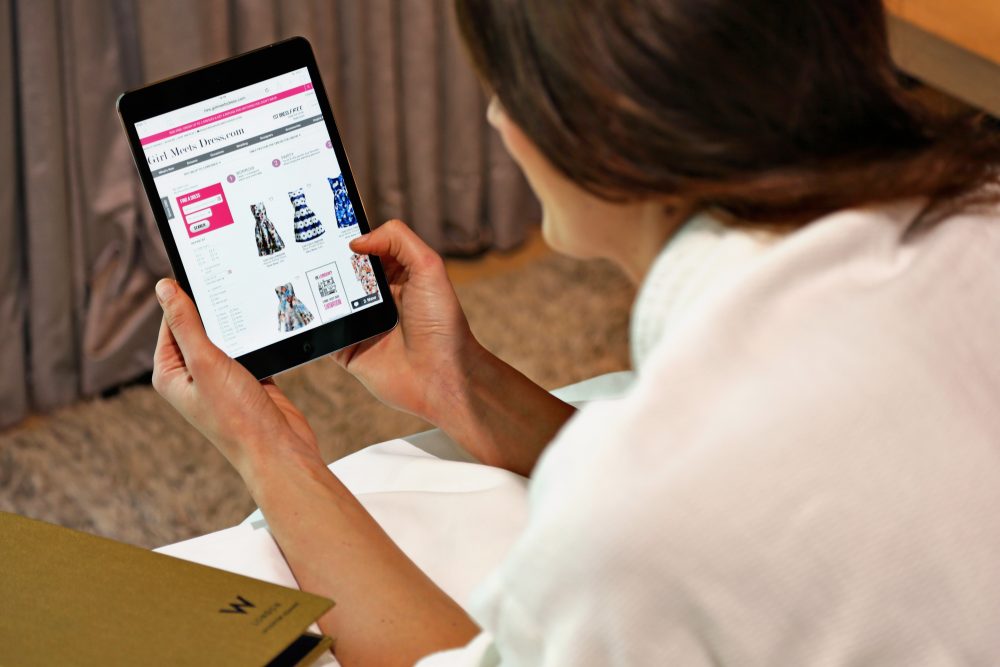 Over in New York, last summer the James hotel allowed guests to rent or buy a trendy pair of Garrett Leight sunglasses, while the Dream Downtown has a “Sneaker Stylist” who will come to your suite and help you source the coolest footwear.
In Chicago, the new Virgin Hotel offers guests the chance to reserve Gap clothing room service-style via an iPad left in the bedroom. Staff will then go and collect it from the nearest store and leave it in your wardrobe.
Back in London, five-star the Berkeley hotel has this summer announced a new “one-of-a-kind fashion trunk exclusively curated by digital vintage fashion boutique Vestiaire Collective” for August.
Guests staying in any of the hotel’s Chelsea, Berkeley or new Terrace suites (from £1,200 a night) can request for the designer wardrobe to be brought to their room, giving them free rein to choose rare vintage pieces from the 1950s, 60s and 70s to wear during their stay, for free.
Fanny Moizant, vintage specialist and one of the founders of online fashion resale site Vestiaire Collective, has personally selected some of her favourite pieces from leading designers such Christian Dior, Chanel and Hermès.
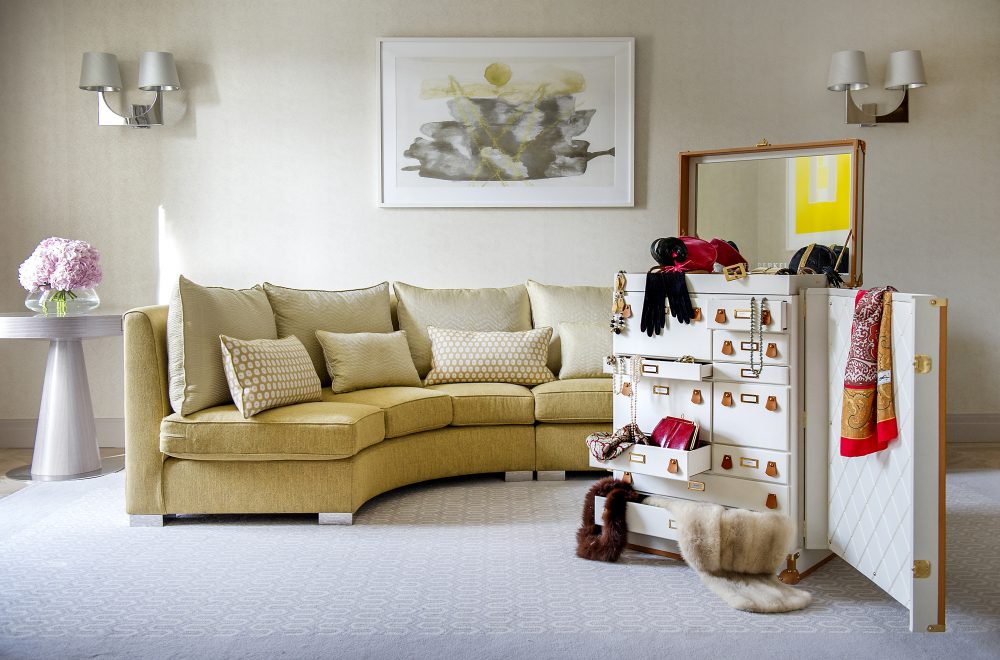
Guests can spend a few hours trying on accessories before heading out for dinner, and if they fall in love with a scarf or bag, there is also the option to buy it.
The Berkeley says: “The bespoke fashion trunk has been hand-crafted in England by Norton MacCullough and Locke, purveyors of the world’s finest custom-made trunks.
“The trunk includes eleven drawers of various sizes, an engraved mirror and a suede-lined tray on which the accessories of choice can be taken to the dressing table.”
Guests in new Terrace suites will also find a pair of brand-new Burberry macs placed in their very own designer wardrobe, ready for them to pop on if it’s raining. They can also purchase them if they want to take them home.
In the future, Globetrender predicts this trend will explode, with hotels competing for fashion and retail brand partnerships to woo guests. It's also a great way to advertise and sell clothes directly to wealthy customers. The designer wardrobe means we need never pack a suitcase again.
[dropcap size=big]T[/dropcap]he world’s biggest luxury hotel brand, Intercontinental Hotels Group (IHG), has teamed up with renowned futurist Faith Popcorn to predict the luxury travel trends of the future.
Focusing on the guest experience, service, destinations and hotel design, Popcorn highlights virtual reality, escapism and immersive brand experiences as being key drivers in shaping the way we will experience travel in coming years.
Described as “the Trend Oracle”, Popcorn has worked with leading Fortune 500 companies to help them predict consumer trends – with a documented 95 per cent accuracy rate. Intercontinental Hotels and Resorts teamed up with Faith as part of the brand’s “on-going commitment to remain at the forefront of luxury travel”.
Popcorn says: “Consumers will be craving immersive experiences which will allow them to indulge in luxury in both a physical and a virtual sense. By harnessing virtual reality and the constant flow of personal likes, dislikes and bio-data, hotels will be able to provide guests with once-in-a-lifetime experiences seamlessly and spontaneously – or so it will seem.”
Luxury hotel interior designer Tara Bernerd, who is developing IHG’s new design philosophy, says: ”Intercontinental Hotels and Resorts is constantly looking to evolve their interiors and aesthetic to make their properties more unique and luxurious for guests. Interior architecture and design play a very powerful part of a guest’s experience – I hope to see [IHG] continue to push the boundaries of luxury travel into the future.”
Simon Scoot, vice-president of global brand strategy at Intercontinental Hotels and Resorts, says: “Innovation and pioneering spirit is in the Intercontinental brand’s DNA. Since the launch of the brand in 1946, followed by the opening of the first hotel in Belem, Brazil, Intercontinental Hotels and Resorts opened the gateway to a whole new world of glamour and discovery for a jet-set generation. Seventy years on, as global travel has transformed, the Intercontinental brand has evolved and adapted with it.”
Virtual reality will enable real-time sharing of real-time holiday experiences among friends and family in other parts of the planet – so when you go on safari, they can come with you. At the same time, people could use VR to “live out danger in a safe environment”.
VR headsets from the likes of Oculus Rift and Google Cardboard are already providing a taste of what’s to come, and in the future we can expect this kind of technology to be provided to guests when they book a stay.
In 2014, Marriott demonstrated taking a simulated 4D journey from London to Maui using an early version of Oculus Rift. “The Teleporter” toured eight Marriott hotels in New York, Boston, Atlanta, Dallas, San Diego, California, Washington DC, San Jose and San Francisco.
Guests will be able to tailor their hotel room according to their personal taste with the help of customisable holographic art, projections and moveable furniture and walls. The new Zoku hotel in Amsterdam, for example, already allows people to modify their room for work or play.
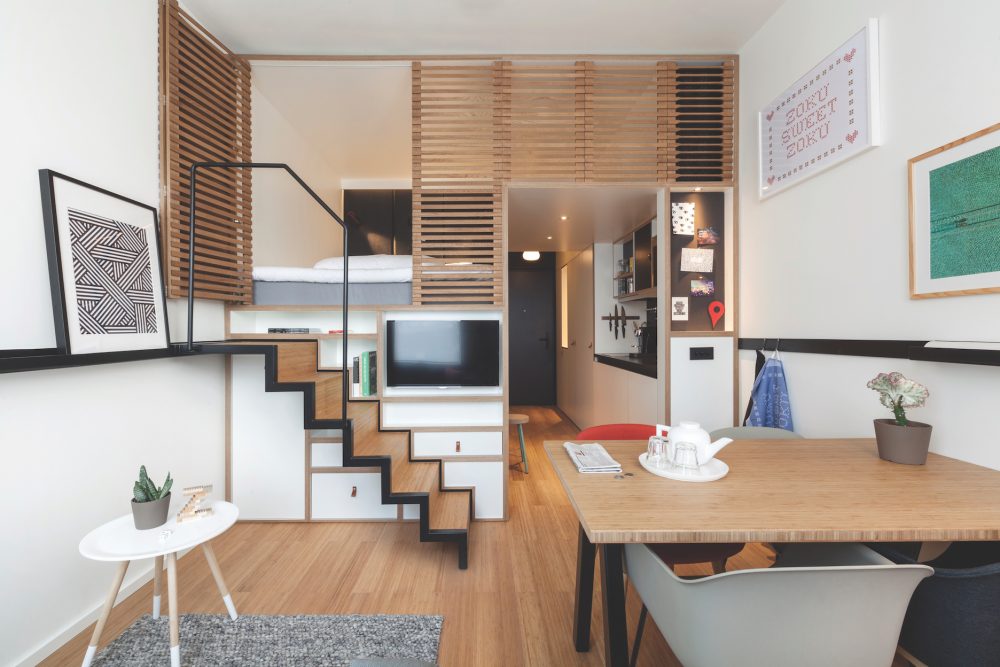
Zoku smart lofts have retractable stairs that lead to a sleeping area
Hotel rooms and wings will be themed to give a feel of different locations around the world – from Caribbean beaches to Swiss mountains. Luxury boutique hotel Zanzibar in Hastings tapped into this trend a few years ago, with guests able to book a stay in rooms inspired by Antarctica, Africa, Manhattan, India, Japan, Bali, Morocco and South America.
Hotels will partner with fashion brands to sponsor guests’ in-room wardrobes, complete with 3D printed designer clothing. Wardrobes will be customised to suit personal taste based on online shopping habits, size and local weather conditions.
Starwood’s W Leicester Square already offers women suitcase-free stays with Walk Out Wardrobe thanks to its partnership with digital dress rental platform Girl Meets Dress. Guests staying in a suite can have one of 4,000 outfits delivered free.

Now your hotel room can be stocked with designer dresses – Starwood's Walk Out Wardrobe
Although 70 per cent of the world’s population is expected to be living in cities by 2050, not everyone will want to stay in a high-rise tower. The design and structure of luxury hotels will see new architectural approaches such as “building down”, to fit to the landscape or go subterranean.
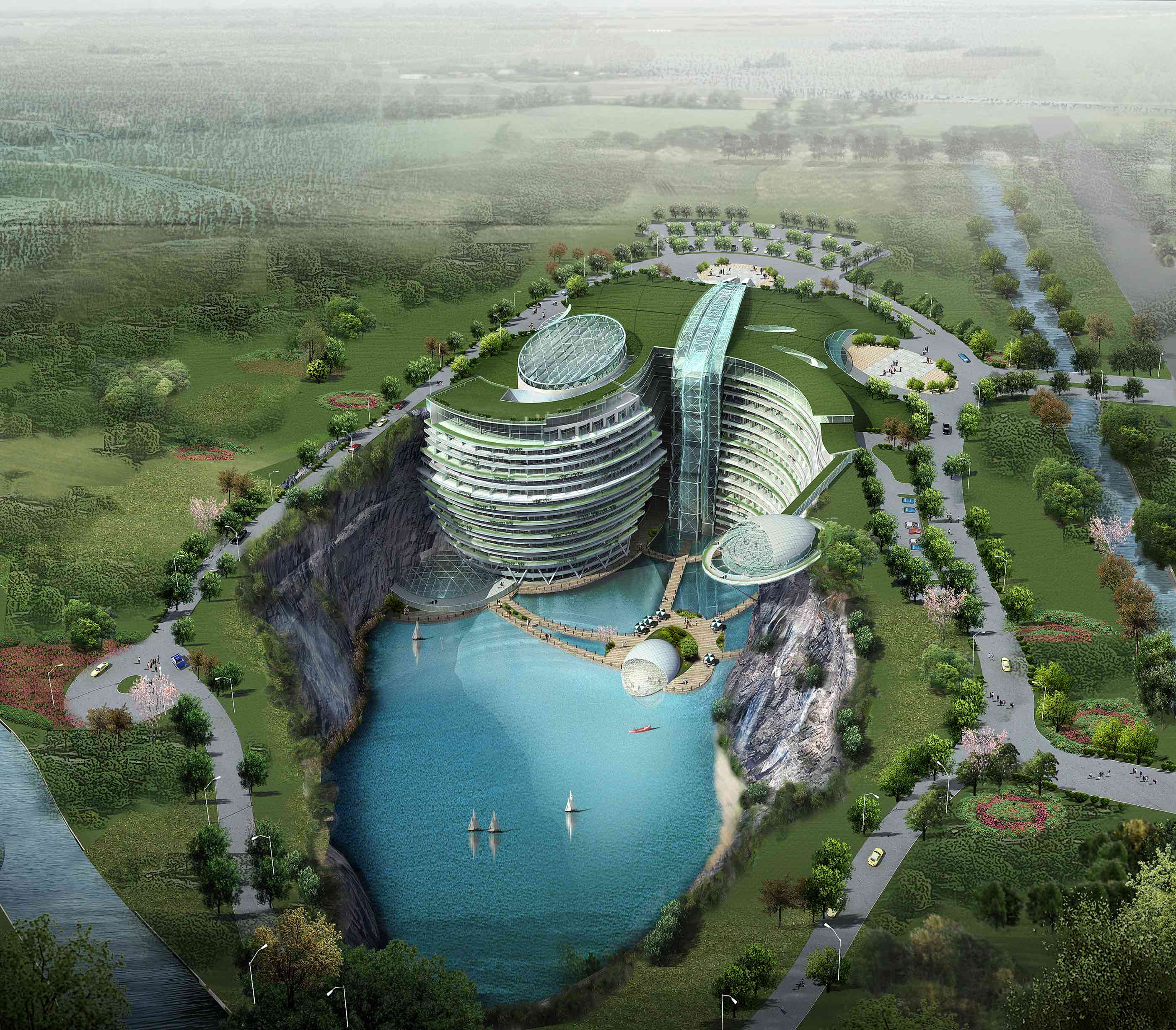
The Songjiang Intercontinental Quarry Hotel is built into a quarry
The Songjiang Intercontinental Quarry Hotel in China, which is opening in the near future, is built into a 90-metre deep quarry outside of Shanghai. Jutting right out of the cliff itself, it features waterfalls, a lake, bungee jumping, rock climbing and underwater bedrooms. It also hopes to be the greenest hotel ever built, with plans for power to come from geothermal and solar energy.