Global travel technology company Amadeus is funnelling its travel technology and content into AI tools powered by Anthropic's Claude – a family of AI models and tools designed to help people with tasks such as research, coding, analysis and workplace processes.
The collaboration focuses on two groups: software developers building travel applications and travel professionals using Amadeus systems in their day-to-day work. For developers, Amadeus is working on a toolkit that will bring its connectivity, documentation, authentication and travel content into AI-enabled development environments.
The aim is to allow developers using Anthropic's Claude Code to find Amadeus resources and work with travel content without repeatedly moving between developer portals, documentation and other systems.
Using natural language, developers will be able to discover Amadeus capabilities, create prototypes and develop applications with the help of an AI coding assistant. The first areas of focus will be flight and destination content, including access to real-time Amadeus travel information.
The move reflects a wider change in software development as AI agents increasingly help developers write, test and assemble applications. Amadeus is also exploring how the same technology could change the way travel professionals interact with its systems.
The company is working to make selected Amadeus applications available through a plug-in for Claude Cowork, Anthropic's agentic workplace tool. This is intended to allow users to interact with Amadeus services from within an AI-powered working environment rather than switching between different systems.
Amadeus says the technology could eventually allow travel professionals to find information, conduct research, draft content, analyse data and take actions across its systems using plain language. It also says access will be controlled, with organisations retaining oversight of decisions and safeguards around how AI is used.
The work follows a recently completed Claude Enterprise pilot at Amadeus, with the travel technology company now assessing options for further deployment. The initiative is part of Amadeus' wider response to the rise of AI agents, which can carry out multi-step tasks on behalf of users rather than simply answering questions.
For the travel industry, this could change how people interact with the complex technology behind areas such as flight distribution, travel selling and destination information. Instead of requiring specialist knowledge of individual software interfaces, some tasks could increasingly be initiated through conversational instructions.
Amadeus says its collaboration with Anthropic is designed to make its travel intelligence easier to access through the AI environments that developers and travel professionals are beginning to use.
Transformative technology provider Amadeus has released its Travel Trends 2026 report, forecasting a year of change across the global travel industry. Produced in partnership with Globetrender and enriched by Amadeus’ proprietary data, the report, which is free to download, outlines six key trends that point to a more technologically driven, culturally attuned and personalised era of travel.
Jenny Southan, CEO, Globetrender, says: "The future of travel is on 'spin mode' – with technology, culture and innovation propelling it into hyper-drive. At Globetrender we continuously hunt for shifts in consumer behaviour in relation to our framework of ten globally relevant mega trends, which range from Climate Contours to Youthquake. The broader pace of change that is now happening in the mid 2020s is feeding into an accelerated loop cycle within the travel industry, as differing influences nudge and ignite what both companies and individuals do in response.
“Although people's fundamental human needs don't change from year to year, what does change is how they react to marketing, news cycles and pop culture. As we enter the latter half of the decade, 2026 will feel more 'science fiction' than any year that has come before."

Pets are beings whose dignity demands genuine consideration, and a wave of new technology, legislation, and innovation is ensuring animals’ needs are given greater attention while travelling.
This is also a booming market. By 2030, Bloomberg forecasts the global pet industry will be worth US$500 billion, while research from Shape Insight suggests animals are travelling more than ever. In a survey of 2,896 travellers in the UK and USA, researchers found that 27% of pet owners who took their pet on their main holiday in 2025 were doing so for the first time.
China Railway Express is leading the way, piloting pet-friendly journeys on its busy Beijing-Shanghai route, laying the foundations for a wider rollout, while in Italy, medium and large-sized dogs were upgraded to the passenger cabin following new rules from the civil aviation authority, ENAC.
Experiences are also moving upmarket. In 2026, SkyePets will roll out long-haul transpacific in-cabin pet flights between Australia and the US, while keen to leash this new demographic, AKA Hotels has integrated pets into its loyalty program with the launch of a Canine Club. Amadeus predicts 2026 will be the year of genuine care for close companions.

Travel Mixology sees savvy travellers flitting between platforms and technologies to build the perfect trip. They might leverage the hive brain of Large Language Models (LLMs) to gauge consensus and big-picture thinking, then turn to Reddit or YouTube for nuance and lived experience. From there, they could lean on brands’ conversational AI assistants to get suggestions based on past search behavior – or skip that step entirely, combining their own custom recipe of tools to conjure up the perfect journey.
Whatever their technique, the intended result is the same: a more layered, resilient approach to trip planning that blends machine speed with human authenticity.
In 2026, spurred by new in-platform integrations that deliver unprecedented convenience and value, Amadeus expects these switched-on travellers to come to the fore. Google Flight Deals, for example, uses Amadeus’ inventory to surface destinations and the most affordable flight options from an open-ended user prompt. There is no need to even have a destination in mind; simply describe the intended vibe and atmosphere, and the tool pulls up near-perfect pairings.
Trip Matching from Expedia is another example, allowing Instagram users to decode reels instantly, translating visual content into full itineraries with booking links.
In 2026, Travel Mixology will set the pace thanks to a multi-source method that is finely attuned to the whims and vulnerabilities of both human and AI-powered sources.
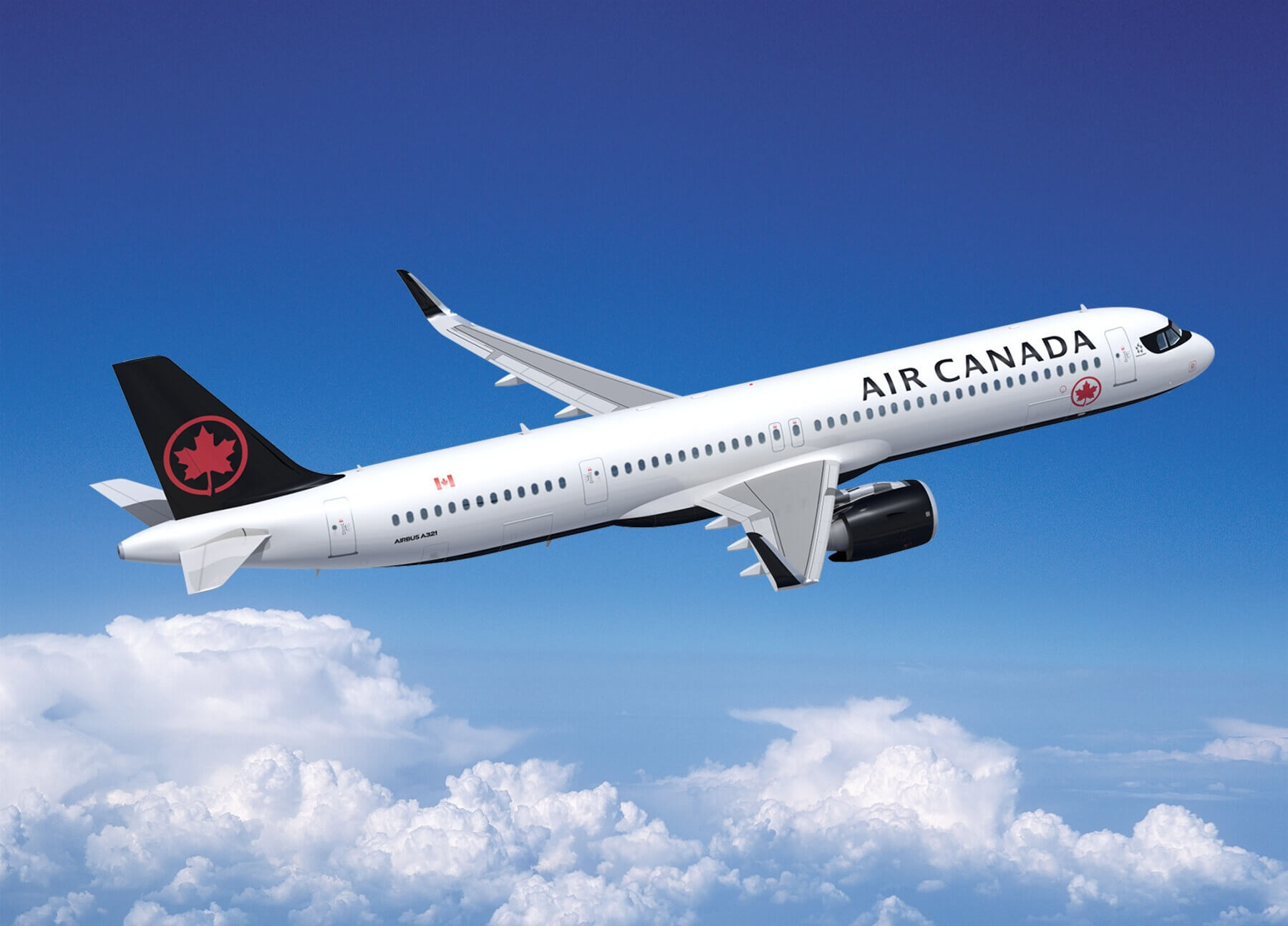 Aircraft innovation continues to shrink the world, crunching time spent in transit and collapsing cultural distances. In 2026, expect the world to feel that much smaller as new fleets of long-haul narrow body jets take to the skies.
This is a trend being propelled by Airbus, primarily the A321XLR – fitted with an extra rear center fuel tank which increases the jet’s range by 700 nautical miles (compared to the long range version). When the revolutionary design was announced in 2019, global carriers were excited, placing 500 orders in total – the first of which were delivered in the latter half of 2025. But a number of extended-range models are set to take to the skies in 2026.
IndiGo will launch the first non-stop service between India and Athens in January 2026, while Air Canada prepares to connect Montréal and Mallorca for the very first time. According to Amadeus Travel Intelligence, by early 2026, these narrowbody aircraft will account for nearly 10% of Iberia’s flights by operating seven long-haul routes between Madrid and the Americas.
Then there’s Qantas’ ambitious Project Sunrise which will be a true gamechanger. Its A350-1000ULR aircraft (Ultra Long Range) will link Sydney to London and New York with non-stop journeys up to four hours shorter than traditional routes.
Next year will mark a new dawn for air travel. Journeys once considered marathons will feel more like sprints, opening up second cities and far-flung destinations to new visitors.
 From Labubus to Bridgerton, cultural IP heavyweights have proven themselves adept at driving fans into a frenzy. An estimated US$1 billion-worth of Labubus were sold in 2025, while Visit Bath expects Netflix drama Bridgerton to contribute approximately £5 million per year to the local economy.
In 2026 and beyond, smart brands will lean upon IP to build sustained relevance. Pop culture travel pioneers include the Seoul Tourism Organisation, which innovated an end-to-end traveller journey revolving around the film KPop Demon Hunters. Across the city, fans can forge connections while making traditional knot bracelets worn by characters in the film, eating featured meals, or joining a ‘Learn K-Pop dance’ program near the scenic Cheonggyecheon Stream.
Established fandom events are also seeing increased interest according to data from Amadeus Travel Intelligence. International flight searches for travel to San Diego, US, made across the Comic-Con window are up 9% for 2026 versus the previous year.
Early signals also suggest the relevance of Pop Culting will extend far beyond 2026, with some destinations building temples to IP in the form of new theme parks. Universal Studios Great Britain starts construction in 2026, becoming a major European destination for various IPs, supported by a network of hospitality and hotel offerings.
For savvy travel brands, IP-led experiences enable consumers to step beyond the glass screen; becoming portals for human connection that deliver a sense of belonging.
 Powered by new technology, hotels are giving travellers the freedom to choose every detail of their room, whether they want a reformer Pilates machine and blackout blinds, wrap-around monitors for deep work, or a room just steps from the breakfast buffet.
This personalisation in the hospitality industry is driven by tech innovation, particularly the evolution of the typical Central Reservation System (CRS), the core hotel software that manages reservations, room availability and rates across all distribution channels.
New iterations, such as Amadeus’ iHotelier reservations and booking engine, are transforming how hotels keep tabs on availability. Design elements once hard to specify at booking – a spacious room that doubles as a VR gaming or at-home cinema space, or superior soundproofing that turns a suite into an ideal remote workspace – are now being reframed as high-value selling points.
Beyond any single platform, the rise of Pick ‘n’ Stays reflects a broader consumer shift. As AI accelerates, personalisation will no longer be a nice-to-have but the default operating system of choice. Once generative AI reaches mass adoption, fueled by in-app integrations from Meta and Google, scrolling through vague categories like “standard” or “premium” will feel increasingly outdated.
In this new landscape, Pick ‘n’ Stays won’t be a perk – they’ll be a powerful differentiator, enabling hotels to maximize revenues while offering travellers stays that feel tailor-made, down to the last detail.
 Picture the scene. Chrome robots which relieve travellers of their luggage and dutifully follow them to a connecting train. Tickets purchased with a flash of a palm, as they hurtle through tunnels aglow with holographic projections. After refueling on 3D-printed room service, guests head to a nearby park for some much-needed R&R, ordering a chilled natural wine that’s delivered to exact coordinates by drone. This is not science fiction but reality — if travellers know where innovation is taking place, they can visit the future, today.
For example, long recognized as China’s innovation powerhouse, Shenzhen, is seeing a surge in global interest that extends well beyond business travel. Amadeus Travel Intelligence data shows flight searches for the first half of 2026 are up +48% year-on-year, highlighting the city’s growing allure as a destination where technology, creativity, and investment converge.
By 2026, 2,000 more autonomous vehicles are expected to hit streets across the USA, with London poised to follow. Waymo is already lining up its London fleet, alongside native UK brand Wayve which have both been granted authorization to launch London’s first driverless taxis in time for the UK’s Automated Vehicles Act, expected to come into force in 2027.
Or consider wearables. In 2026, iconic Apple designer Jony Ive will reveal OpenAI’s first hardware device. AI-powered instant-translation earbuds are already here, but what about inter-species translation – a development hinted at by scientists at the UK’s Coller Foundation. This sudden platforming of animal perspectives has the power to entirely reimagine conservation and safari travel.
Those who move early on Innovation Tourism will capture a traveller segment motivated by curiosity and eager to showcase their progressive tastes. For these future-curious travellers, the passport stamp is secondary; the true souvenir is the story of how they glimpsed tomorrow before everyone else.
Maher Koubaa, executive vice-president, EMEA for Amadeus, says: "Across Europe, the Middle East and Africa, we are seeing travellers embrace new possibilities that redefine how journeys are experienced. From the rise of pet-friendly travel and AI-powered planning tools to the expansion of pointtopoint routes connecting our region more directly with the world, innovation is reshaping expectations.
"Pop culture is inspiring new forms of tourism, while hotels are offering unprecedented personalisation that reflects individual lifestyles. These trends highlight a future where travel is more inclusive, connected, and tailored than ever before, and EMEA will play a central role in leading this transformation."
New research by Amadeus has found that Gen AI usage in travel planning has surged 64% compared to last year, with users citing significant time savings, personalised recommendations and destination discovery as key benefits.
The 'Connected Journeys' study of 9,500 travellers across seven countries found that nearly two-thirds are willing to pay for an AI travel assistant to help during trips, with 17% prepared to spend up to 5% of their total journey cost on such services.
However, the research also exposed frustrations with current AI limitations, with 25% experiencing outdated or inaccurate information and another 25% struggling with AI's inability to capture personal preferences.
Importantly, word of mouth recommendations remain important; a deep dive into the UK statistics show that despite growing role for emerging technology, Brits still rely on friends and family for holiday tips.
The findings also reveal that 90% of air travellers experience some level of anxiety during their journey, creating demand for technological solutions that promise convenience and reassurance. Two-thirds of respondents expressed strong interest in remote baggage check-in services that would collect luggage directly from their homes, significantly reducing pre-trip stress.
Biometric gateways proved popular with 69% of respondents, offering the promise of smoother airport experiences by eliminating repetitive document checks. The technology addresses anxiety around multiple journey stages, including packing (26%), security screening (27%), airport travel (26%) and the flight itself (24%).
Decius Valmorbida, president of travel at Amadeus, says: "The rapid rise in Generative AI usage shows that travellers are eager for smarter, more personalised experiences. But the data also reveals a clear message: expectations are high, and the industry must work together to meet them. At Amadeus, we see a big opportunity to collaborate across the travel ecosystem to ensure AI delivers real value - reducing friction, enhancing confidence and making every journey more intuitive and enjoyable."
The research, spanning China, France, India, Singapore, Spain, the UK and the US, found that travellers' primary aspirations centre on experiences rather than material purchases. Quality time with loved ones (27%), discovering great food and drink (25%) and creating lasting memories (24%) topped the list of travel hopes, whilst 22% explicitly highlighted the desire for smooth, disruption-free experiences.
Current technology solutions already helping to alleviate anxiety include real-time travel updates via apps (29%), digital wallets for secure document storage (27%), smart baggage tracking systems (26%) and integrated 'super apps' offering comprehensive travel management (26%).
Francisco Pérez-Lozao Rüter, president of hospitality at Amadeus, says: "Travellers are embracing AI with enthusiasm, but they're also demanding more. In Hospitality, we see this as a call to action: to deliver technology that not only responds to traveller needs but anticipates them. From booking the perfect stay to navigating the trip itself, hyper personalisation and real time accuracy are no longer optional, they are expected."
Global business travel spending is projected to reach US$1.64 trillion in 2025, up from US$1.48 trillion last year, according to the Global Business Travel Association (GBTA). As the sector grows, the way employees travel – and how companies manage that travel – also continues to evolve.
Alongside partners at travel trend forecasting agency, Globetrender, Amadeus Cytric has explored the biggest developments and transformations anticipated this year and share a report on "Business Travel Trends 2025", which is free to download.
Thanks to investment in AI-driven technologies, business travel is becoming more flexible, streamlined and tailored to the needs of everyone. Travellers themselves have a greater awareness of the impact of their trip on their wellbeing and on the world around them. By embracing these shifts, companies can maximise the value of corporate travel, empower their workforce, and stay competitive in an ever-evolving world.
Jenny Southan, CEO and founder of Globetrender, says: "Business travel is evolving in response to shifting workforce expectations, new technologies and a greater emphasis on wellbeing and human connections. In 2025, companies that adapt – whether through AI-driven automation, reimagined meeting spaces, or a more strategic approach to traveller health – will be best placed to maximise the value of corporate trips. This report explores the key trends transforming the future of business travel, providing insights that will help organisations stay ahead in a rapidly changing landscape."
1. Agentic AI is transforming the way corporations manage travel and expense 
The next wave of AI will move the technology from passive assistance to proactive functionality, with Agentic AI working behind the scenes allowing travelers, travel managers travel agents and finance teams to focus on more valuable tasks. Over the last two years, Generative AI has been all about offering supportive assistance; from 2025 onwards, and the next stage will be defined by ‘proactive functionality’.
Rather than simply responding to requests, Agentic AI will autonomously anticipate traveler needs, helping them to rebook flights in real-time, optimize itineraries based on changing schedules, and even help travel managers negotiate hotel rates, as well as create, audit and approve expense reports. This shift means business travelers will experience a seamless, highly personalized journey with minimal manual input, allowing them to focus on productivity instead of logistics.
2. Biometric Gateways are enabling seamless, digitised airport experiences
 As airports and airlines increasingly seek to offer travelers smooth, fuss-free journeys, physical passports and even smartphone boarding passes are becoming outdated. Soon, travelers will be able to move through the airport without repeatedly showing travel documents or waiting in long queues, by simply having their face scanned at key touch points.
For frequent flyers, being able to move through an airport with minimal queuing is key to keeping stress levels down, so it’s no surprise to learn that 73% of global air passengers are interested in using biometric data instead of passports, according to IATA’s GPS 2024 report.
Vision-Box is leading the way with its facial recognition and smart automation technology that makes airport experiences smoother and safer.
3. Jetset Hacking is a growing trend as business travelers choose to prioritise their wellbeing on trips
 From sleep labs to cryo chambers, wellness-focused innovations are redefining business travel, helping professionals stay healthy and productive while on the move. Whether due to late dinner meetings with clients or sleepless nights caused by jet lag, business travel can take a toll on people's wellbeing.
However, as wellness becomes a growing priority for travellers, high-flying professionals have been paying far more attention to taking good care of their mental and physical health when travelling for work.
Mark Cullen, Chief Commercial Officer for Amadeus Cytric, says: “In 2025, business travelers are increasingly aware of the impact their journeys have on both their well-being and the environment. They are open to investing in more sustainable travel options that benefit themselves and the planet. Factors such as hybrid working arrangements, economic uncertainty, and geopolitical tensions are reshaping the priorities of travel managers and suppliers. Meanwhile, investments in new transformational technologies are helping travel providers enhance the overall experience, making business trips smoother and more efficient while also allowing providers to allocate resources more effectively.”
Clive Wratten, Chief Executive, The Business Travel Association, says: "This report makes it clear that business travel in is evolving at pace, shaped by advancements in AI, changing preferences for ways of working and what a modern-day workplace culture looks like, as well as a continued push for efficient travel solutions that also help travelers to inform themselves about the sustainability of a chosen trip.
"AI-driven automation is transforming corporate travel management, while biometric innovations are streamlining airport experiences – all of which are key developments as our national aviation sector faces ongoing pressures to improve efficiency and boost passenger capacity.
"Against a backdrop of economic uncertainty and changing trade relationships, we’re also seeing a renewed emphasis on domestic and regional business travel. As both our rail and air transport networks undergo reform and investment – including efforts to improve connectivity between key UK business hubs – it’s crucial that our travel infrastructure keeps pace with these shifting demands. We need to ensure that UK businesses and everyone travelling for work can move efficiently, affordably, and get information about sustainability – the key to maintaining our position as a global leader in business and innovation.”
Travel technology leader Amadeus has released its Travel Trends 2025 report, produced in association with Globetrender. Free to download, the project explores five trends including Personalized Flying, New Heydays and Connections IRL.
Drawing on Amadeus’ proprietary and other leading industry data, the 2025 Travel Trends report highlights five key trends promising to reshape the travel landscape in the coming year:
 Jenny Southan, founder and CEO of Globetrender, says: “It is important to predict the changing ways people are exploring the world, and the forces of influence that are determining their decisions. Partnering with Amadeus in producing this 2025 Travel Trends report means that together we can help businesses successfully anticipate the needs and demands of tomorrow's travelers.
"For consumers themselves, who are under pressure to keep finding joy in a volatile world, it is no surprise to see people looking to the ‘good old days’ when life was simpler, and turning to traditional means of making human connections, in spite of the ascent of artificial intelligence and other sci-fi technology.”
Daniel Batchelor, vice-president of global corporate marketing and communications at Amadeus, says: "After a year where change has become the backdrop to daily life, travelers are seeking a deeper connection to people and places more than ever.
"We’ll see a blend of old favorites and new immersive experiences, with one-of-a-kind stays putting destinations on the map. Asia is set for a tourism revival, while we are also seeing a rise in spontaneous solo travel, as people seek more off-screen, authentic experiences.”
 In 2025, air travel will reach new heights of personalization, blending smart tech with customized in-flight experiences. Although many passengers consume content on their own devices, airlines are upping the ante by combining algorithmic entertainment with hyper-personalized in-flight systems that deliver box-fresh content – from movies and TV series to adverts and things to buy – that are tailored to the individual flyer, based on their historic preferences [as loyalty scheme members].
With high-speed wifi from providers like SpaceX's Starlink now available, passengers can stream their favorite content mid-flight just as effortlessly as they would at home. We may also see airlines increasingly loaning VR headsets to passengers in first and business class – in 2024, premium airline start-up Beond began handing out Apple Vision Pros to people flying its Maldives route.
 Nostalgia is fueling the rise of "New Heydays" (a term coined by Globetrender), with the past taking center stage. From the comeback of 90s films and CDs to Gen Z’s love for digital cameras, culture is embracing the retro everywhere you look. In travel, adults are seeking to relive gap years, distant honeymoons and childhood dreams - for example, Airbnb listed a Polly Pocket-inspired rental - and U.S. travelers are flocking back to Miami, a "Miami Vice" era hotspot.
As millennials enter middle age, we will see the revival of the classic caravan and camping holiday. Eurocamp is seeing a huge rise in bookings, with 2024 shaping up to be its best year in five decades. In the US, adult summer camps are also booming, with Club Getaway reporting a 9% jump in revenue from its adult segments in 2024 compared to 2023.
 Facing digital fatigue, travelers are closing their apps and opening their passports, using travel to make new friends and even find romance in real life. According to Amadeus booking data, solo leisure travel soared by 15.6% in 2023 compared to the previous year, with a further 9.2% rise so far in 2024.
The 2025 trends report predicts a wave of group and solo adventures designed to spark genuine connections. From G Adventures "Solo-ish" trips combating loneliness, to TimeLeft, an app for travelers that lets you meet five strangers for dinner every Wednesday in over 60 countries.
Socially driven festival tourism is also on the rise, with members of the LGBTQ+ community set to gather in Washington DC for World Pride 2025.
 In 2025, hotels will make headlines by increasingly becoming destinations in their own right – they will immerse guests in the local culture, history, and natural beauty of their surroundings.
For example, guests will be enamored by the charm of restored Mozambiquan Dhows at Jannah Lamu in Kenya (hotel pictured above) or leaning into the old-world charm of the Maryhill Estate in Sweden.
While many trailblazer hotels are independently owned, some belong to larger chains. Reverb Hamburg, a Hard Rock property, opened in a World War II-era bunker; Bunkhouse hotels in the US, known for creating memorable boutique experiences with flagships in Texas, California, and Kentucky; while Marriott International’s Edition Lake Como, set in a 19th-century Italian mansion, opens in 2025.
Major hotel groups are adapting too, launching curated boutique collections such as Accor’s Handwritten Collection, which is expected to include more than 17 hotels globally by 2025.
 After years of restricted travel, travelers are excited to rediscover Asia’s cultural treasures. China is opening its doors to millions by expanding visa-free travel, while Thailand’s new digital nomad visas and broader visa-free program for 93 countries are set to attract a global audience.
Pop culture is also driving interest, with the upcoming season of The White Lotus set in Thailand, Squid Game season two expected to boost travel to South Korea, and renewed curiosity about Japan’s history inspired by the TV series Shōgun. Adding to this momentum, Iberia has recently launched direct flights between Madrid and Tokyo, making it easier than ever for travelers to explore Japan.
Over the next 15 years, IATA predicts that Asia Pacific will record the fastest rise in passenger numbers and contribute to more than half of the net increase in global passenger numbers by 2043.
Amadeus data reflects this momentum as outbound travel from Chengdu, China, surged 66% to 35.2 million passengers from 2016 to 2023, while Guangzhou grew 20%. Delhi also saw a 31% rise with over 30 million outbound passengers in 2023.
Travel tech company Amadeus has launched a study on Generative AI that reveals 46% of travel companies feel it is a top priority for 2025.
In the Asia-Pacific region, 61% of companies said Gen AI was a top priority for next year - the highest of all the regions. This suggests the area could be leading the way on implementing the tech into travel.
The research also highlights the challenges around Gen AI that are causing concern for the travel sector, including skill shortages, lack of expertise and the return on investment in the tech.
The Amadeus report Navigating the Future: How Generative Artificial Intelligence is transforming the travel industry surveyed more than 300 experts from across the travel industry. Mercury Analytics used AI to analyse the survey data and open-ended questions from the survey respondents, who were based across ten markets: Canada, Italy, the UK, France, Germany, India, Australia, China, Japan and the US.
More than half of the travel leaders surveyed (51%) say Generative AI already has a significant presence in the travel industry in their country. A further 36% expect this presence to emerge over the next year, while 11% expect it will take one-to-two years. Just 2% of travel technology leaders think it will take three or more years for Generative AI to have a significant presence on the travel sector where they are.
Today, 41% of travel companies say they have the budget and resources in place to implement Generative AI, while 87% are open to working with a third-party vendor to develop Gen AI-powered applications.
Despite the support for the roll-out of Generative AI in the travel sector, the Amadeus report finds several challenges are emerging. When respondents were asked what – if anything – was slowing the adoption of the technology in the travel industry, 35% said data security.
Other issues identified were lack of Generative AI expertise and training (34%); data quality and inadequate technological infrastructure (33%), concerns about the return-on-investment, lacks of use cases, or difficulty in estimating value (30%) and difficulty in connecting with partners or vendors (29%).
The study also explored how Generative AI is currently being used across the travel sector. Leading the way as the most common use case is digital assistance for travellers during booking (53%). This is followed by recommendations for activities or venues (48%), content generation (47%), helping staff to better serve customers (45%), and collecting and condensing post-travel feedback (45%).
Finally, in terms of what successful deployment of Generative AI would look like in the travel industry, respondents said they were looking for - in ranked order - return on investment, customer satisfaction, efficiency and productivity improvements, performance metrics (accuracy, precision and relevance) and increases in key performance indicators.
Sylvain Roy, chief technology officer at Amadeus, said: "[Generative AI] has the potential to transform every facet of the travel ecosystem, significantly enhancing the passenger experience at every step of the journey.
"While the technology will be a key focus for the next year, questions are rightly being asked whether Generative AI will deliver sufficient returns on investment, while talent shortages are also coming under the spotlight. It is crucial that we use this new technology responsibly, including ensuring data security, privacy, and content reliability. It is time for Generative AI to prove it can live up to the hype."
As well as Gen AI, other technologies identified as top priority for 2025 are data management (38%), cloud architecture (36%), non-Generative AI IT infrastructure (34%) and biometric technology (23%).
This year, business travel spending will likely exceed pre-pandemic levels for the first time (US$1.5 trillion, compared with US$1.4 trillion in 2019) according to the Global Business Travel Association.
However, the way employees are traveling – and corporations are managing that travel – is changing. In Business Travel Trends 2024 (a report that is free to download), Globetrender (the UK’s leading travel trend forecasting agency) and Cytric Easy by Amadeus have together identified seven trends that will define business travel in the coming year.
Jenny Southan, CEO and founder of Globetrender, says: "When looking at the future of business travel in 2024, it's clear that two macro shifts are happening in parallel: technology is making the planning and execution of trips ever-more seamless; but there is also a desire to 'go back to basics', which is manifesting in nature-based corporate retreats and the revival of 'power lunches'.
"This highlights the enduring value of human connection in building good business relationships. Ultimately, every journey needs to be optimized to justify the return on investment, and the subsequent carbon impact of flying."
She adds: “If there is one word to sum up business travel in 2024, that will be 'discernment'. Employees no longer want to sacrifice areas of their personal lives to be constantly on the road, and companies need to balance the fulfillment of financial and ESG targets, which will mean all parties need to be more selective about what trips they commit to."
Deborah Mahoney, head of sales and business development – Americas, Amadeus Cytric Solutions, says: “Face-to-face meetings have many benefits, from increasing social capital to fostering ideas and engaging in more complex thinking together. In-person contact provides a competitive advantage when it comes to meeting clients and customers, as real conversations can generate more effective, efficient, and trust-building interactions.
“Value is key when it comes to business travel. A trip must fulfill multiple objectives, be increasingly sustainable, simple to book, and have a positive impact on both the employee and organization for it to be worth the time and money investment. Cytric Easy by Amadeus, the only travel booking tool embedded into Microsoft Teams unlocks new ways to travel, recommending employees who to meet with and when to achieve their business goals.”
 For corporate travellers, the emergence of Generative Artificial Intelligence (Gen AI) has catalysed the arrival of "AI PAs". These intelligent, 24/7, solutions can patiently help with everything from advising on itinerary options, to using natural language that guides the traveller on their company’s travel policy.
They can respond to a detailed trip brief: after inputting an initial prompt, the output generated is friendly and helpful in tone, and it is easy to continue the dialogue with follow-up questions.
 Scheduling team building days has often been used to bring people together, but a shift towards longer trips away, often in nature, is giving rise to the burgeoning trend. These corporate off-sites are being taken to the next level with an ever-greater array of immersive, surprising, and sometimes even extreme experiences, in domestic locations as well as abroad.
Forging camaraderie is seen as essential to cementing positive relationships between employees, boosting company loyalty and motivating people to work towards a common goal. To facilitate this objective, people need to be taken out of their comfort zone and forced to leave their ego at the door, with everything from white water rafting to tropical bushcraft being added to the agenda on these enhanced trips.
 As pressure grows to adhere to company sustainability mandates and manage outgoings in the face of soaring prices, there will be increased demands on employees to justify work trips. In the coming years, “Objective Stacking” – a term coined by Globetrender to describe trips that are planned to fulfill multiple goals – will become the default way of operating to maximize efficiency and value.
Instead of flying in and out for one meeting, sales pitch or event, business travellers will be required to build in time to meet clients, conduct reconnaissance, forge deals, investigate expansion opportunities, conduct competitor analysis or they might even want to tag on a vacation.
 A new corporate mindset and automated systems are enabling Blended Itineraries for business travellers, which go beyond simple "bleisure" trips that see a weekend tagged on to a few days of meetings. Central to what is taking off in 2024, though, is the relaxation and personalisation of these once rigid corporate travel policies that now place employee experience at the heart.
 In December 2023, the COP28 global climate summit concluded with an agreement to “transition away” from fossil fuel consumption and ramp up clean energy production, with the goal of achieving net-zero carbon emissions by 2050.
Sustainability ambitions are being taken seriously by the corporate travel world, with a survey of 896 senior decision-makers commissioned by Amadeus revealing that 90 per cent of travel companies had a strategy in place to reach environmental sustainability objectives or are planning to implement one in 2024.
As pressure grows to justify the environmental impact of business travel, companies will increasingly embrace Objective Stacking as a way of ensuring employees maximise the value of trips, as well as Blended Itineraries, which will facilitate this thanks to more flexible travel policies.
 The world of corporate finance is leveling up, propelled by the transition to digital expensing and virtual cards for on-the-go expenses. The shift marks the end of an era dominated by cumbersome manual management of expense forms and the constant juggle of paper receipts.
For many companies this change signifies not just a procedural update, but a fundamental overhaul of how business transactions are recorded, processed, and analysed. Digitised Expenses will boost personalization and enhance the user experience, while ensuring data security and travel policy compliance.
 Finally, Power Networking will emerge as a new hyper-focused approach to acquiring and building new connections. Gone will be the days when delegates sneak off early from conferences or hide in their hotel room to avoid making small talk – in 2024 and beyond, every opportunity will need to be maximised.
After all, if employees are taking time away from their desks and families then they will need to ensure it is worthwhile. This means crafting richer itineraries with multiple meetings outside of the core agenda.
Spanning generative artificial intelligence (Gen AI) and social media selling, Spanish multinational technology company Amadeus has published a report predicting five key trends and innovations for travel in 2024.
Daniel Batchelor, vice-president of global corporate marketing and communications at Amadeus, says: “After a period of recalibration and reassessment over the past few years, we are beginning to see a host of new ideas bear fruit across our industry.
“Generative artificial intelligence will continue to exert a growing influence across the sector during 2024, while electric taxis are finally poised for take-off. Doing what we love, be it travelling to see our favourite music acts or using new tools to follow in the footsteps of digital influencers, will also drive bookings next year, while airlines continue to reshape their offering to respond to changing tastes.
“There is much to look forward to, and Amadeus will be working alongside our partners from across the travel ecosystem to drive change for the traveller, wherever we can.”
Gen AI is adding tremendous value to the online travel planning experience for consumers, as search and advice become hyper-personalized and more intuitive. Instead of selecting filters to fine-tune a search on a metasearch site or online travel agency (OTA), travellers can simply provide a brief to a chatbot in the same way you would a human advisor.
For example, a new ChatGPT plug-in from Expedia acts like a virtual travel assistant, listening to customer needs and delivering instant hotel and itinerary recommendations, with links to book. (Tripadvisor, Kayak and Booking.com have also integrated ChatGPT.)
The next generation of Gen AI-powered customer service will be delivered with greater patience and empathy, reducing the workload of employees to deal with the bulk of after-sales servicing and customer review management, giving them the bandwidth to provide the human touch on more specialist issues.
 Social media has become a powerful force during the inspiration phase of a trip, but a new shift is happening. Instead of influencers solely being the source of vacation inspiration for their communities, they are now facilitators of direct bookings through their varying channels.
Influencers, such as Ana Hernández Sárria, travel photographer Rafael Fernandez Caballero, travel blogger The Blonde Abroad (pictured), yoga and movement coach Sjana Elise, and full-time traveller and content creator, Alyssa Ramos, are designing and hosting their own group trips.
The rise of so-called “Agents of Influence” is being facilitated by e-commerce marketplaces such as Thatch, Luxury Travel Hackers and TrovaTrip, which Inc ranked number 236 out of 5,000 of the fast-growing companies in the US in 2023. This technology allows influencers using Instagram, YouTube and TikTok, for example, to share a booking link directly on their profile page and process payments.
 As cities are more congested and air pollution is more prevalent, a potential solution to fossil-fuel-powered transportation will be the emergence of skyways that allow flying taxis, electric vertical take-off, and landing (eVTOL) aircraft and other kinds of electric aircraft to provide lower emission air travel options, both within urban areas, to satellite airports, cross-country and between islands.
It may seem very futuristic but German aircraft manufacturer Volocopter (pictured) is planning to provide a fleet of electric VoloCity eVTOL for the Paris Olympics in 2024, making it one of the first electric air taxi networks. At the same time, Volocopter is expanding its reach to Asia, with plans to launch electric air taxis in Singapore by 2024, beginning with services in Marina Bay and Sentosa.
The potential expansion of these services includes cross-border air taxi trips to destinations in Malaysia and Indonesia, potentially connecting terminals in areas like Seletar and Changi to cities such as Melaka, Batam, and Bintan.
Toff Mobility, the first electric air company in Asia, is working toward debuting electric aircraft in 2024 in South Korea, while Surcar Airlines has selected Zeroavia to provide hydrogen-electric engines for its seaplanes in the Canary Islands.
Over in the US, Joby Aviation intends to start commercial eVTOL flights from 2025 and has signed agreements to work with Delta Air Lines and Japanese airline ANA, which wants to operate e-taxi flights during the Expo 2025 in Osaka. In the UK, Virgin Atlantic has invested in a fleet of Vertical Aerospace eVTOL that could serve a city-to-city network of Electric Skyways as soon as 2025.
 After the social isolation of the pandemic, when bands and musical artists were grounded for months, a boom in concerts and festivals has this year tapped into a desire for connection. The trend is expected to accelerate as we look toward 2024.
Taylor Swift recently announced Asia-Pacific tour dates for next year, drawing fans from around the world. Amadeus research suggests Taylor Swift concert dates in Australia, Singapore, and Japan for 2024 had a significant impact on travel searches and booking volumes to the countries.
During the week of the concert announcement, flight searches to Melbourne and Sydney saw a significant week-over-week growth of 44%, while bookings for these cities surged impressively by 446%. The concert announcement also had a striking impact on searches from New Zealand to both cities, resulting in a 240% week-over-week increase during the same period.
Flight searches to Singapore likewise showed an 18% week-over-week growth shortly after both Taylor Swift and Coldplay concert announcements were made.
There was a notable 32% week-over-week surge in international searches from neighbouring countries to Tokyo. Inbound travellers from Asia-Pacific countries such as Australia, Indonesia, South Korea, Malaysia, and Thailand demonstrated a strong preference for both short and long trips in a desire to enjoy the concert experience while also making room for leisurely exploration during their visit.
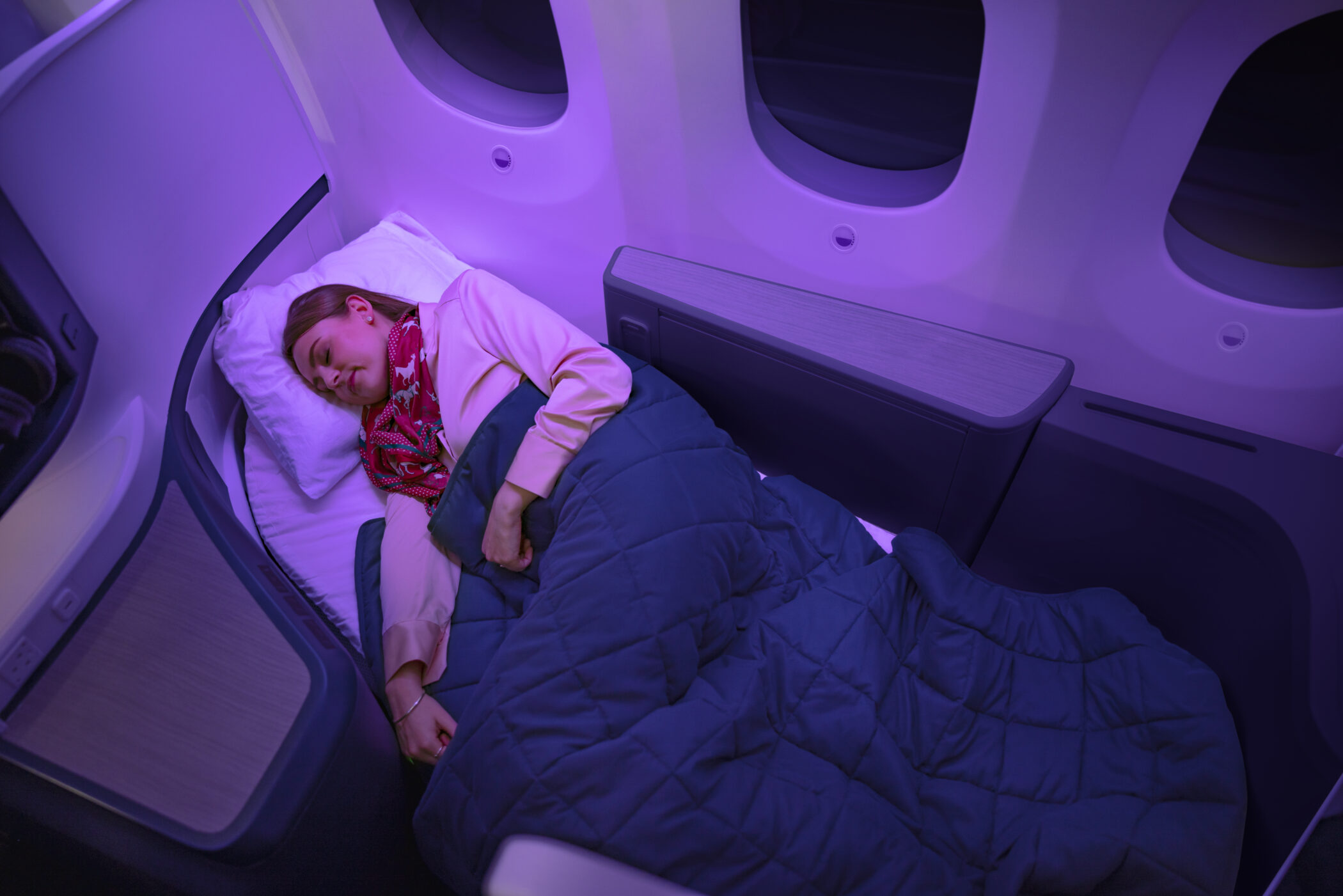 With ever-more travellers wanting to fly at the front of the plane, there is an opportunity to offer more affordable and accessible “unbundled” business class fares.
In 2019, Emirates was one of the first airlines to launch “special” business class tickets, with no lounge access, restricted seat selection and no upgrade abilities. Qatar Airways followed, unveiling a Business Class Lite fare, with passengers asked to pay extra for lounge access and date or route changes, while they also earn fewer Avios/Qmiles.
With the trend gathering momentum, Zipair of Japan and Finnair began offering basic business tickets in 2021, while Air France and KLM added Business Class Light fares in 2023.
At the other end of the scale, airlines are also installing more comfortable, private “luxe” business class seats and added amenities. Examples include Japan Airlines' A350 business class, Air India's business class, and Cathay Pacific "Aria" business class, featuring features such as a 1-2-1 seating layout, sliding privacy doors, wireless charging apparatus, large 4K screens, and advanced Bluetooth audio streaming options.
Evidence of this trend continuing through 2024 includes news from Air New Zealand, which will be adding either four or eight rows along with sliding privacy doors, a storage cabinet, vanity mirror, and a spacious side shelf of a debut Business Premier Luxe product (pictured). Also, passengers can look forward to the integration of advanced entertainment features as part of this premium experience.
Travel tech company Amadeus has partnered with two travel specialists – Uplift and Fly Now Pay Later – to bring "Buy Now Pay Later" (BNPL) booking services into the mainstream via its Xchange Payment Platform (XPP).
The hope is that BNPL services will spark an increase in travel bookings and overall spending by allowing the customer to spread the cost of their trip over a series of installments of six, nine or 12 months.
According to research by Amadeus, 68 per cent of travellers would spend more on travel if BNPL options were widely available. (It's the same principle as Klarna, which has become popular among online retailers.)
Travel remains a big-ticket item for consumers, especially so when planning a family or long-haul trip in the current climate of financial uncertainty. Buy Now Pay Later options, which are already hugely popular in the retail sector, have emerged over recent years as a way to spread the cost of a purchase across several monthly payments, delivering additional flexibility for the everyday traveller.
Beatrice Bouju, head of partnerships and payments for Amadeus, says: “The growth of BNPL across all sectors has been remarkable and the message from travellers is clear – they want the choice to pay for the trip in installments. Such payment options will help travel’s recovery by facilitating pent-up demand for higher value holidays as travel restrictions are lifted.”
She adds: “Our vision for the Amadeus Xchange Payment Platform is a one-stop-shop for travel companies to access the latest in fintech innovation, so adding BNPL services from two travel specialists to the mix was an easy choice.”
The Amadeus XPP is already used by hundreds of airlines and travel companies , but now all airlines, travel agencies and hotels can add BNPL options to their sales channels via a single connection to Amadeus – making Fly Now Pay Later and Uplift BNPL options more readily available and practical.
Fly Now Pay Later' chief commercial officer, Stephen Quinn, says: “According to research from Cornerstone Advisors, BNPL use by Gen Z in the US grew six-fold year over year. But Baby Boomer adoption increased even more rapidly, from 1 per cent in 2020 to 18 per cent in 2021. Integrating our services to the Amadeus Xchange Payment Platform provides ease of adoption for the travel industry and greater choice for travellers.”
As financial markets continue to fluctuate, it seems inevitable that travel will sit lower on the list of priorities for lower income consumers, however, the option of spreading the cost of trips will make going on holiday more feasible.
Global leader in travel technology Amadeus has revealed the results of its international research into how the travel industry and governments can work to rebuild traveller confidence following Covid-19.
More than 6,000 travellers across France, Germany, India, Singapore, the UK and the US were surveyed to learn more about travellers’ main concerns, and which types of technology would help travellers feel safe enough to travel.
The study found that, for four in five travellers (84 per cent), technology would increase their confidence to travel in the next 12 months by addressing their concerns about mixing with crowds, social distancing and physical touch points.
Meanwhile, 42 per cent felt mobile apps giving notifications about local outbreaks and changes to government guidance during their trip would help. A further 42 per cent said contactless and mobile payment options – such as Google Pay, Paypal and Venmo – were key.
Another 34 per cent of travellers expressed that biometrics – such as facial or voice recognition – at airport check in, security and boarding, reducing the need for physical checks – would make them more likely to travel.
Finally, 33 per cent of respondents said they would like a universal digital traveller identification on their phone with all the necessary travel documents and immunity status, so that they only have to prove they are Covid-negative once.
The Amadeus study also highlights how travellers’ receptiveness and preferences for technology differ by country and age demographic, emphasising the needs for personalisation to gain trust.
For example, almost half (47 per cent) of Boomers – those aged between 55 and 74 – said they would need to be able to socially or physically distance throughout the journey to feel comfortable travelling, compared to less than three in ten (27 per cent) of Generation Z (16- to 24-year olds).
More than half (52 per cent) of respondents in Singapore chose contactless hotel experiences as a technology that would make them more likely to travel, while almost half of Indian travellers (47 per cent) preferred mobile apps giving information about a destination’s Covid-19 safety measures.
For French travellers, automated cleaning tech (36 per cent) and contactless payments by smartphone (34 per cent) were the most popular of the suggested options.
For 25 per cent of UK travellers and 26 per cent of US travellers, tech would be most valuable for reducing the need for physical documents. Meanwhile, three in ten German and UK travellers (30 per cent each) said they’d like tech to minimise their contact with others.
The Amadeus survey identified five key things travellers would most like technology to do for their travel based on people’s responses:
1) Reduce queues and congestion in public spaces (38 per cent)
2) Minimise face-to-face or physical contact with others (31 per cent)
3) Protect financial data and personal information (31 per cent)
4) Notify in advance when there is a delay (29 per cent)
5) Ensure the accuracy and effectiveness of national test, track and trace programs (28 per cent)
Furthermore, the results highlighted five top recommendations for building traveller confidence again:
1) Provide access to flexible change, cancellations policies and payment terms to avoid losing money (39 per cent)
2) Limit the number of passengers on a plane (38 per cent)
3) An ability for travellers to socially or physically distance themselves throughout the journey (36 per cent)
4) Having visibility to and assurance of sanitisation, hygiene and safety measures in hotels and accommodations (36 per cent)
5) Effective test, track and trace programs in place (34 per cent)
“This research provides a source of optimism for the industry as many of the travellers’ concerns can be addressed by technology available now, at every stage of a traveler’s experience,” says Christophe Bousquet, chief technology officer for Amadeus.
“Whether it is new mobile applications, biometrics or contactless solutions, we need to explore together as an industry and with governments how best to accelerate adoption if we are to encourage global travel, which is a major driver of global prosperity.”
Stefan Ropers, president of Strategic Growth Businesses at Amadeus adds: “From finding suitable destinations to going through airports and paying for travel services, today’s travellers want reassurance that their journey will be stress-free, prioritising safety and hygiene, as well as experiences that meet their needs.
“This requires overcoming industry siloes to build a better experience by connecting the travel ecosystem, for example, via digital identity management, linking every step of the traveller journey.”