
How Broughton Sanctuary is rewilding the mind in the age of AI
As a new documentary chronicles Broughton Sanctuary's evolution, founder Roger Tempest explains why the future of wellbeing lies in reconnection, not optimisation. Robbie Hodges reports
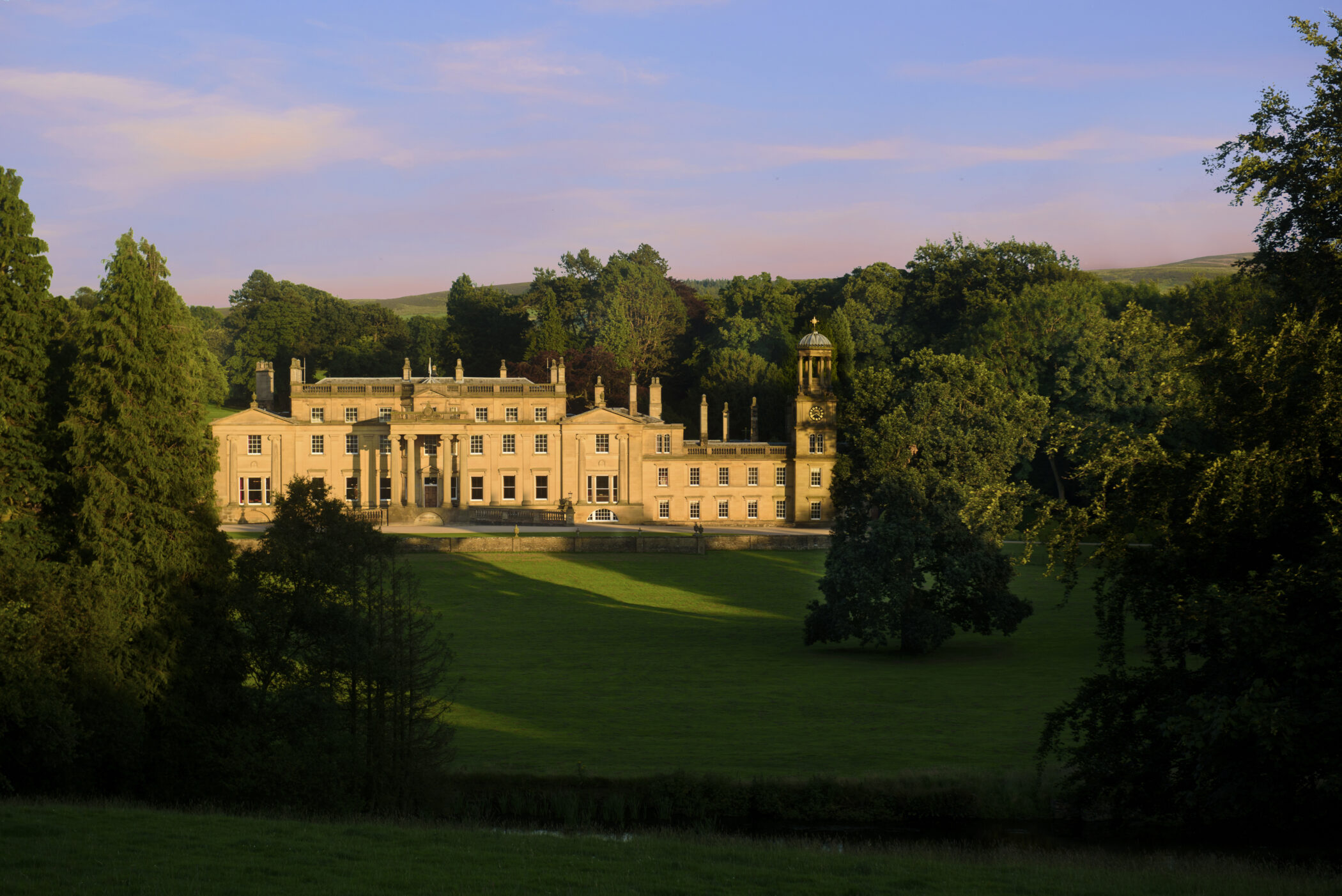
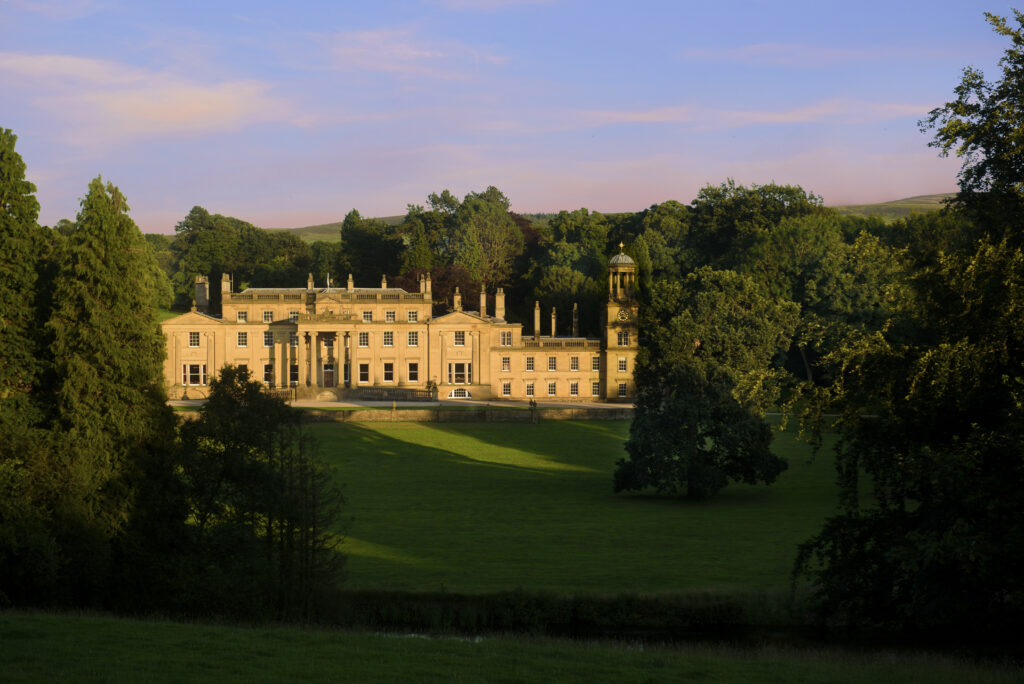
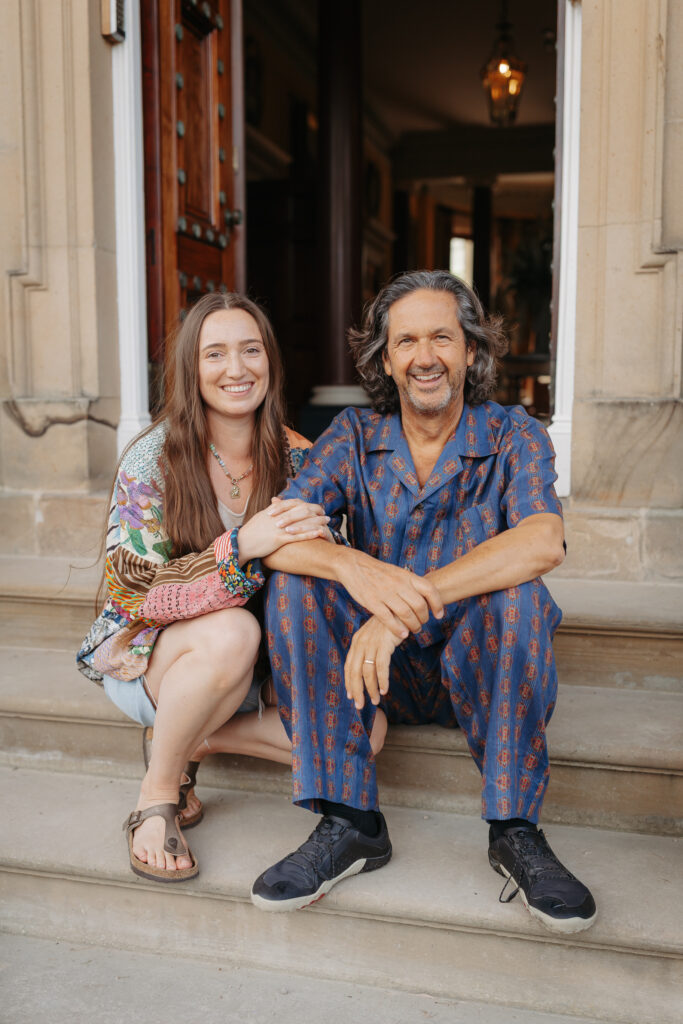
Roger Tempest is something of a maverick. He’s the 32nd custodian of a property over 1,000 years old – Broughton Hall Estate, a grand old, grade I-listed pile in the folds of North Yorkshire. Some might be crushed into conservatism by the weight of that responsibility. Tempest is galvanized by it.
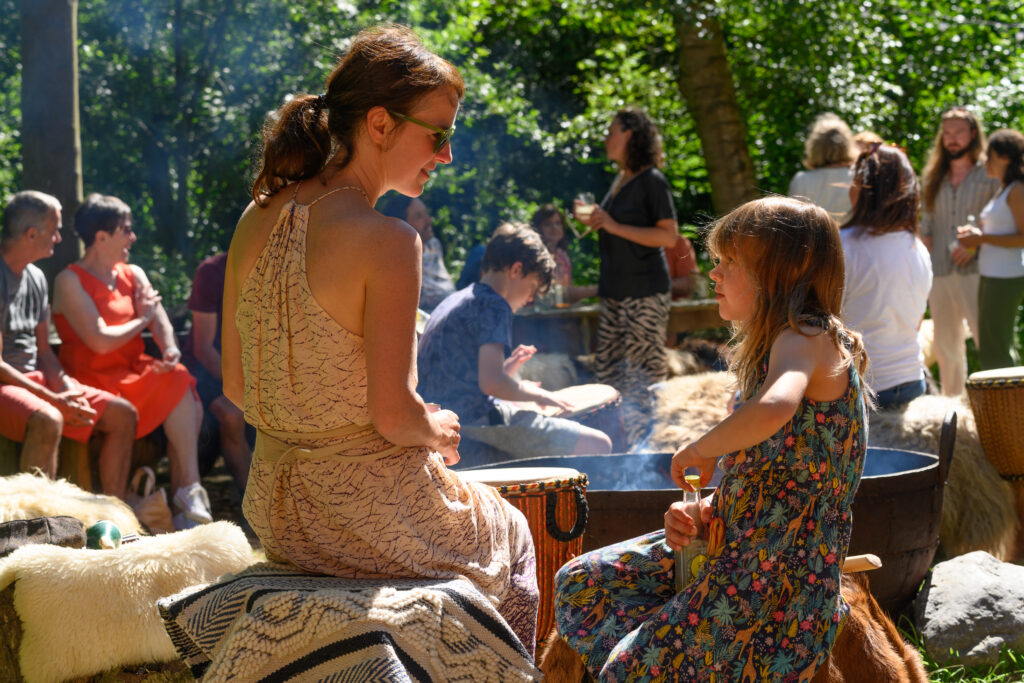
Over the past two decades, he and his wife Paris have set about transforming the estate into Broughton Sanctuary, a holistic healing centre that returns guests better than when they arrived. In a sense, guests are returned to themselves; a version of themselves untrampled by the pressures and distortions of the modern world.
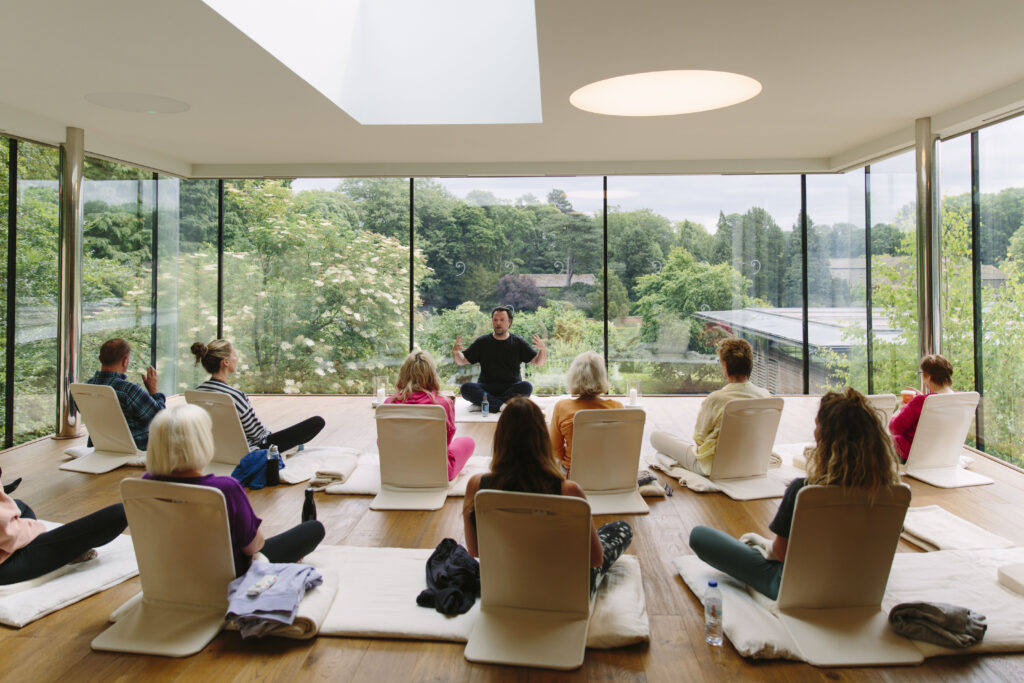
Beneath the sound baths and somatic movement lies a greater goal of bringing people “back to source”. Habitat loss, the rise of AI and an epidemic of disconnection. These are just some of the seismic forces reshaping modern life – forces that Broughton’s pioneering retreats help people make sense of, and find refuge from. It’s a systems-thinking approach to wellness which, in an age of wellness soda water and biohacking fads, feels radically pure.
In truth, “wellness” is too small a word for what the Tempests are building. They see themselves as part of what Roger describes as an “unarticulated movement” – a growing cohort searching for more meaningful ways of living, relating and inhabiting the world.
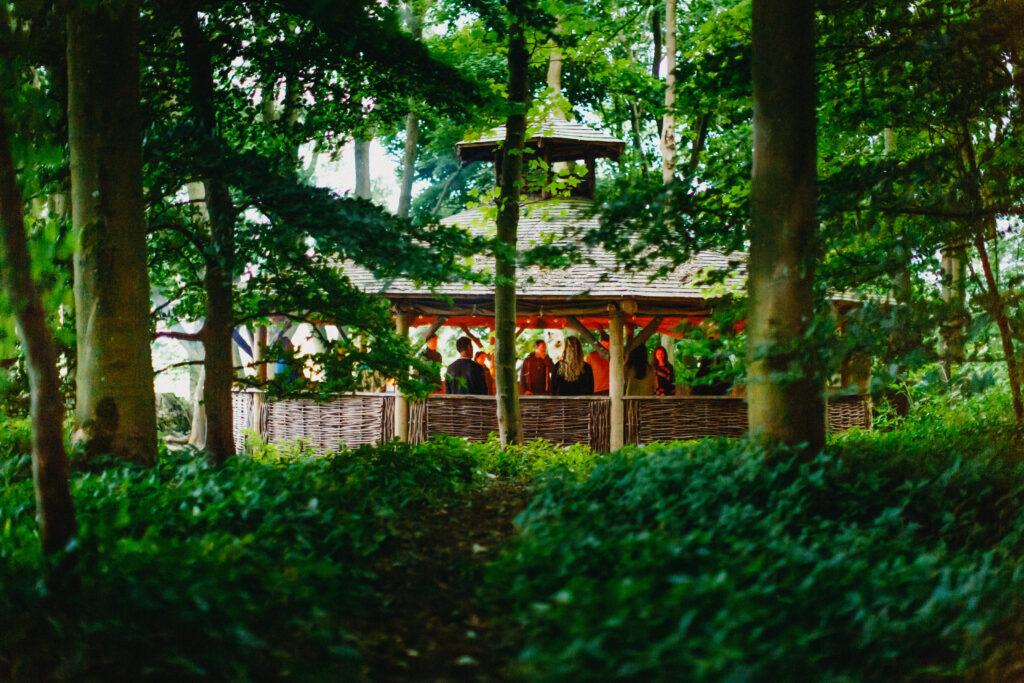
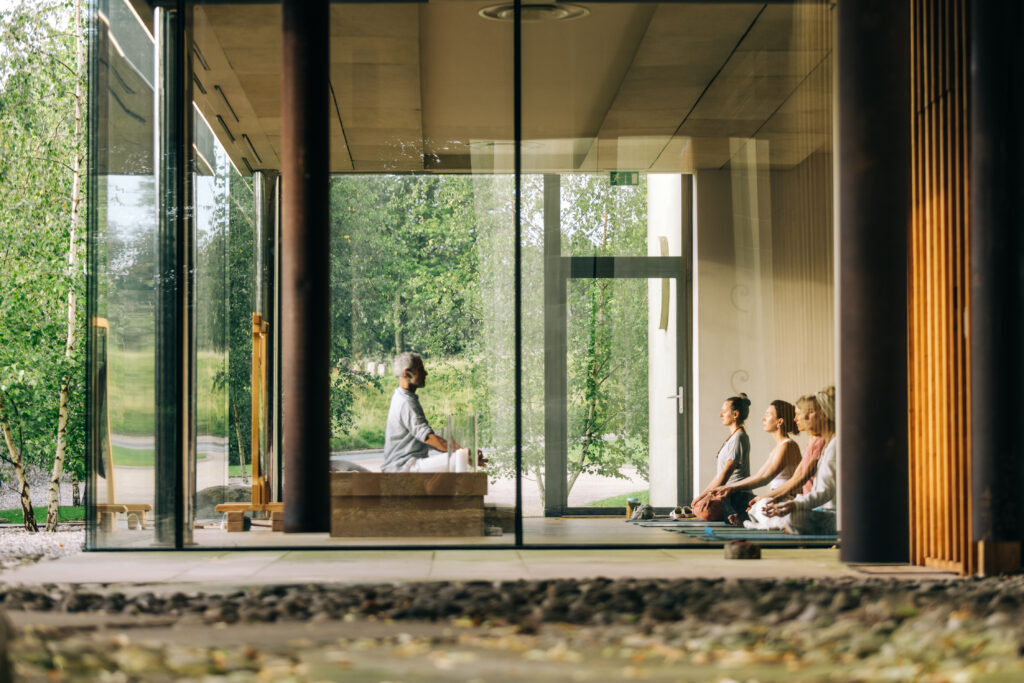
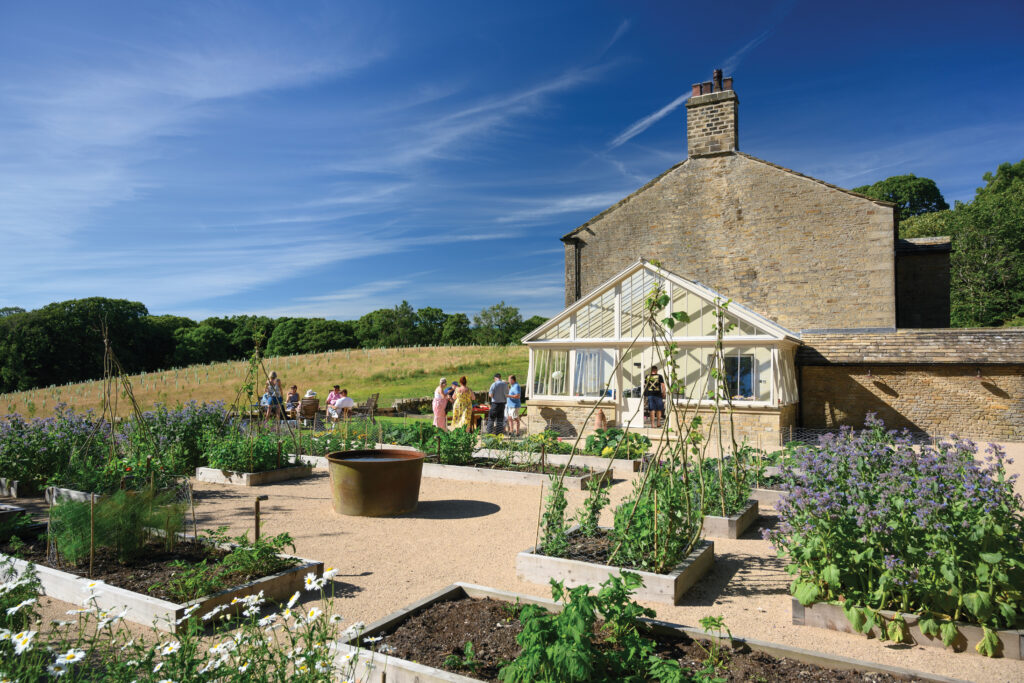
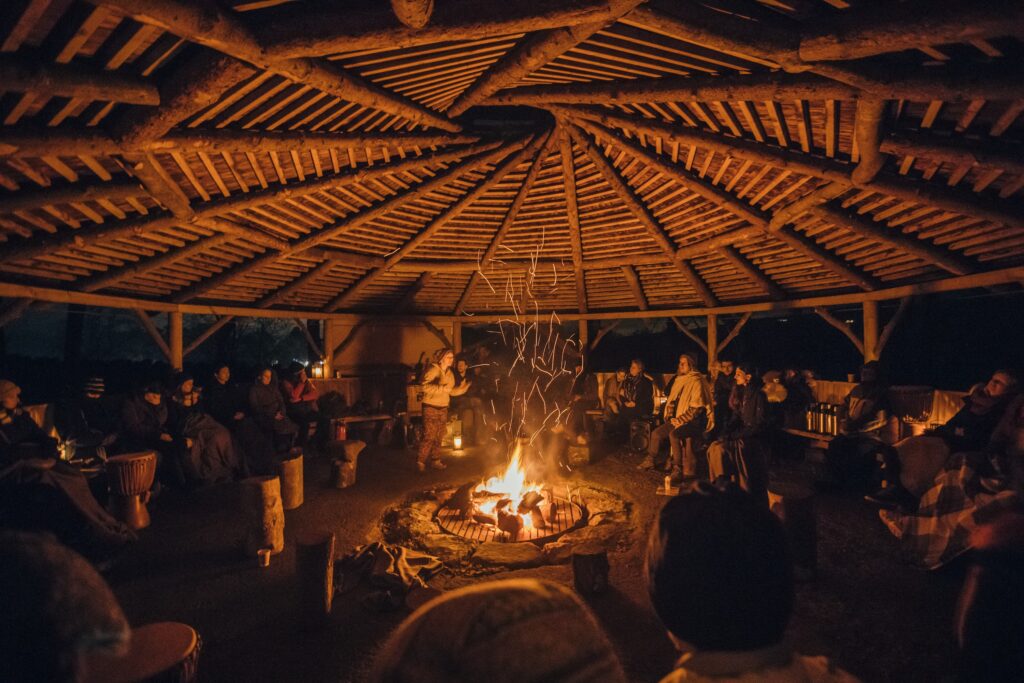
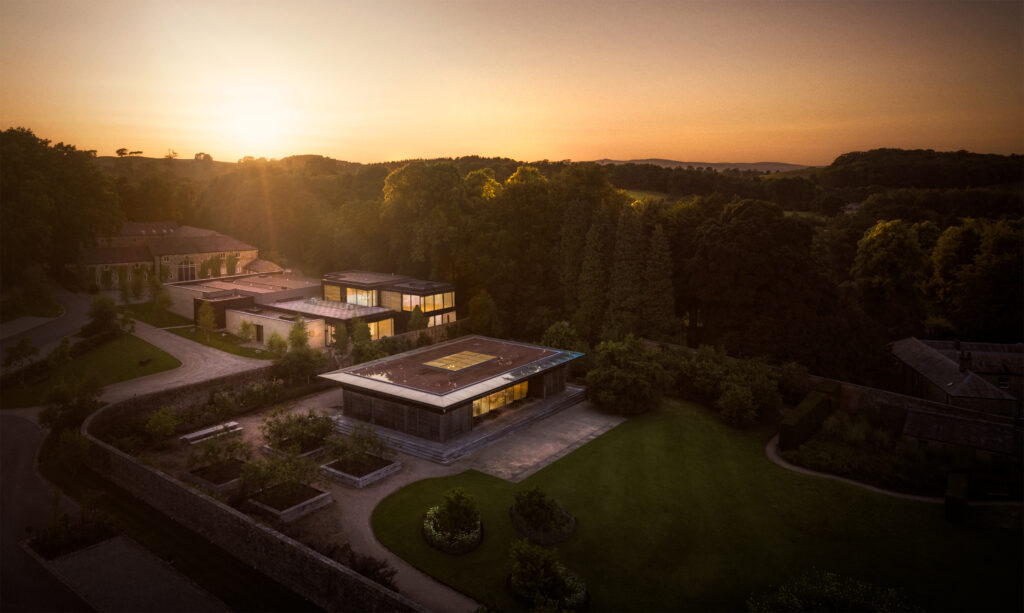
The evidence is everywhere. Hundreds of acres have been rewilded. More than 350,000 trees have been planted. The Avalon Centre – often described as one of the UK's leading retreat venues – has risen from the landscape, while 23 crumbling estate buildings have been painstakingly restored as guest cottages.
All of this, and much more besides, is captured in the new documentary House of Transformation. Globetrender was fortunate enough to speak with Roger about the film, the future of Broughton, and why transformation begins not with reinvention, but with remembering who we are.
What struck me at the screening of House of Transformation was how many people seemed to have been deeply moved by their stays at Broughton. Can I call it a hotel?
“It’s a form of hotel, I suppose. A specialised hotel, in one respect.
“We’re not an ashram, we’re not a kibbutz, we’re not a single-issue place or an Osho centre. We’re just this place with a metaphorical feel, where people come in and out in any shape or form and can coexist. You don’t all have to have the same views at all.
“At the moment, we’ve got a bunch of interesting people staying. They’re all different, with different views, but there is a sort of pulling together, a centre point where there is some sort of unity in all that. Maybe it’s just acceptance. Maybe that is how the human being should be.
“The ideological side of everything is very interesting to me. People are hanging onto sets of beliefs that are incompatible with other people’s sets of beliefs. I’m not saying it’s Muslim and Christian, or socialist and whatever the right wing is, but there are ideological impasses that have been created, and they are creating a lot of dysfunction in society.
“Some of the things we said in the documentary were about how universal values seem to have been forgotten. Personal responsibility seems to have been diminished over the last 50 years. The outer state seems to win against our inner state, or our inner nature. Nature has been forgotten.”
In the film, this idea of “rewilding the mind” is mentioned. Would you say it’s about lifting yourself out of ideological fugues?
“Yes, that’s part of it. I would really say it’s about detaching yourself from your ideology, whether it’s a delusion or a hypnotism or whatever you call it. Some of it is very real too.
“I was just speaking to someone who came to the documentary. He was sitting in the back row. He’s Libyan and a very devout Muslim, and he’s a really good friend. He said, “I was in tears, and I looked around me and there were six people along the row and they were all in tears.”
“I didn’t see any of that, but it was quite interesting. From his point of view, something moved him. We were talking about what we’re talking about now, and I think there’s something very universal about certain thoughts that have been completely denied because of, call it wokeism, ideology, whatever it is.
“But what I’m aware of is that this ‘unarticulated movement’ we mentioned that night is definitely bubbling. It’s really bubbling. People have very high levels of dissatisfaction about where we are in society and where we seem to be heading.
“What I’d like the things we’re doing at Broughton Sanctuary to become is a bit of a haven, to try to rediscover our roots and literally rewild: getting back to some original sort of harmony and coexistence.”
What are the external forces alienating people from that harmony? AI is obviously one, but what else do you see?
"A lot of people are living half-lived lives. Or they’ve been permanently distracted in their life and never confronted the real core of their source, or found a level of contentment or sense of purpose.
"The way we’re operating in daily existence is affected by urbanisation over the last 100 years, by very intense lighting, noise, cars, mechanisation and television screens. The conversations we have here, because we have some amazing people coming and discussing these things, are really about what has been left of our true humanity and our true source.
"But AI is going to be, oh my God, it’s like fire, really. It can burn you or warm you. It’s an industrial revolution coming along. This is what the Pope and the Archbishop of Canterbury and many others are talking about. How is this going to integrate?
"What is it going to do to the brain? Will you need to learn a language anymore? What is the capacity of the brain? How far have we reached in taking things on? How busy are we? How distracted are we? How hypnotised are we? What is left in a human being?
"AI is obviously going to be hugely helpful. But it’s a big subject, and we try to track the content that is affecting society at this stage."
Do you think the future of wellbeing is less about the individual and more about learning how to navigate the wider systems we live within?
"In some sectors of the wellness or wellbeing world, my belief is that it’s in its complete and utter infancy. We are just seeing the beginning of it.
"It’s like the iPhone. At school, I was using a slide rule. I’m 63 this year. Look at the power of the phone now. My dad’s computers in 1970 filled the whole room and had about 0.0001% of the power of a phone today.
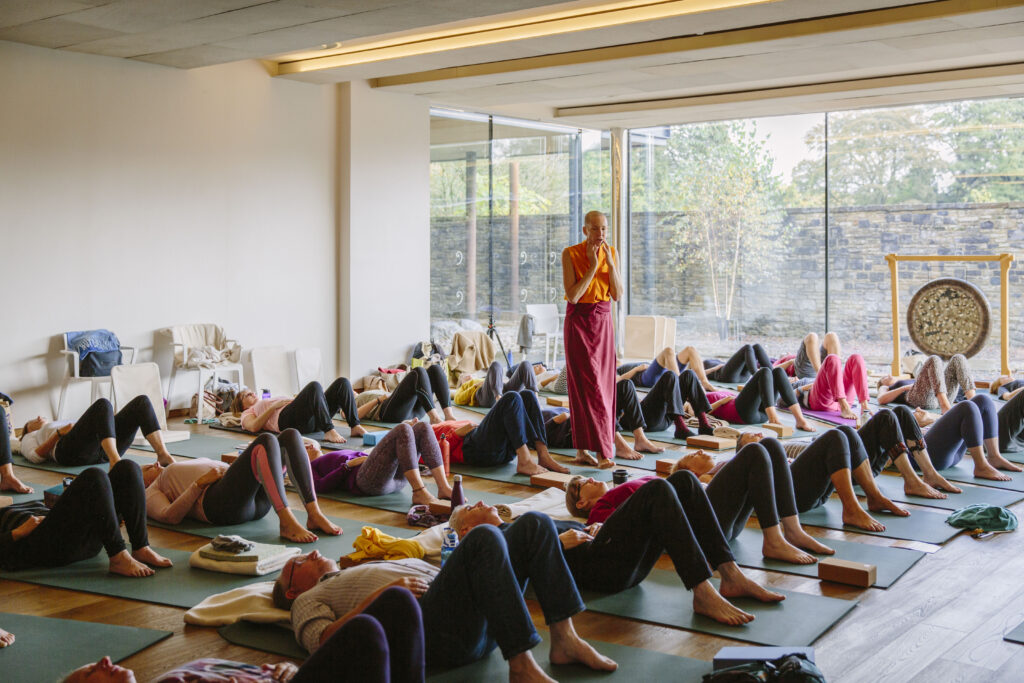
"I think the narrowness of wellness and wellbeing is the issue. Here we are not just doing yoga and sound baths and sweat lodges, although we do those things. We’re way beyond that. What we’re trying to get is a sort of Renaissance feel, a totality. It’s nutritional wellbeing. It’s mental agility. It’s this wholeness that we’re trying to do. It’s a return to source.
"I have a little child, and I remember being near a milking parlour years ago and thinking: they’ve got fertiliser, glyphosates, hormones, vaccines, all these things going into the cows producing the milk. Then the milk gets washed and pasteurised and goes into another vehicle and another pot. I remember thinking, “Where have we got to?”
"I don’t think this is normal, but it has been normalised. That normalisation of how we live is part of the problem. But at Broughton, I feel we’re knocking on the door of something different."
How do you feel about the term ‘New Age’ in relation to Broughton Sanctuary?
"Language is very confusing sometimes, isn’t it? There is a funny side of the ‘New Age’, something I don’t feel comfortable with. I haven’t heard that phrase for a bit, but I’m very aware of it because of the condemnation you get when you put your head above the parapet.
“When you put your head above the parapet, there are so many forces that try to knock you down again. There is also beauty on the other side, and a huge amount of support too.
"With the term ‘New Age’, you can get compartmentalised very quickly and very assertively. I think the phrase that Andrew Harvey used is more helpful. He writes beautifully on sacred activism and he talked about this metaphorical place where people plug in for various reasons, and it ends up in coexistence.
"We have beautiful days here. Tonight I’ve got eight people coming for supper and a round table. One’s an artist, one’s a landscape designer. I don’t know who the others are. But there is an acknowledgement that something new is erupting.”
What was the original impetus behind making the Visions of the Future documentary?
"I watched The Biggest Little Farm on Netflix. It’s a really good story. Then I saw My Octopus Teacher and things like that, and I suddenly thought: we can talk about a lot of things, but who is actually doing something?
"What are we actually doing? There’s so much talk on television, Instagram and social media. Talk, talk, talk, talk, talk.
"I just thought, well, our strange little story is that we were one thing and now we’re something different. What can we do as a tiny little place in the back of beyond? Can we do our bit to improve the way the world is?
"Whether we were fossil fuels and now we’re renewable, or whether we were industrial farming and now we’re nature-friendly, it goes on and on. Rather than doing weddings where everyone gets pissed and coked up – nothing against weddings, but it is a bit of that – now we do retreats where people are completely sober and having life-changing moments week to week.
"The film is just trying to say, “Hello, we’re a little project here. How’s your project going?”"
The film talks about how many visions of the future in popular culture are dystopian, and how few hopeful visions we have. What role can Broughton play in helping people imagine alternative futures?
"Something like Davos has been slightly hijacked by the World Economic Forum, or whoever they are. It’s very economical. The soul doesn’t seem to have much room in things like that. The source of our humanity doesn’t seem to have a lot of room. Paris and I felt this lack, this disappointment. I’m not saying we’re a spiritual Davos, but the idea was to form some ideas."
Are there other unconventional, or even threatening, approaches to healing and human development that excite you?
"There are. My wife would be very good at this. There are so many different therapies trying to break through at the moment.
"My wife has done equine therapy. She says it’s remarkable. There were 15 people on it, and they were mind-blown by the power of it. I don’t know enough about it to comment fully, but we have seven horses and they are amazing. She’s definitely going to go for the power of the horse.
"Our essential one here is the power of nature. We have Wild Explorers for kids, and a lot of autistic children come. They are like different people in the woods. They hold their own. The teachers say, “Oh my God, they’re not like this in the classroom.” They’ve had really powerful experiences.
"That is one minor example, but the power of nature as an antidote, as a healer, is so underestimated. People think, “Oh, it’s too simple,” but I think it’s very complex."
Tell me more about Broughton’s ‘Wyrd Wednesdays’ which are being hosted at Broughton by The Centre for Liminal Studies?
"With Wyrd Wednesdays, the Centre for Liminal Studies is pulling together some of the leading organisations exploring consciousness. People can come and use technologies from Princeton University. It’s about using the power of the mind.
"There are experiments where one person is in one room and another person is in another room, and one is visualising what the other is seeing. It’s showing the power of the mind and how you can communicate in a different way. In one experiment, you can change the colour of a lamp just using your thoughts.
"The story, briefly, is that in the American military, aircraft people in the 1960s and 1970s were affecting their instrumentation with the power of their mind beyond statistical doubt, and they couldn’t work out what was happening. So they founded a department within Princeton to explore this.
"That department was going to be shut down about four or five years ago. Someone who works for us, Dr Peter Merry, one of the founders of Ubiquity University, said, “All this equipment in the lab is going to be available.” I said, “Base it here and we’ll run it from here, and we’ll continue it.” And that’s what happened.
"There’s a retreat in October called Science and Consciousness, which is an annual retreat and a longer immersion."
You also mentioned archaeological tourism. How does that fit into the wider picture?
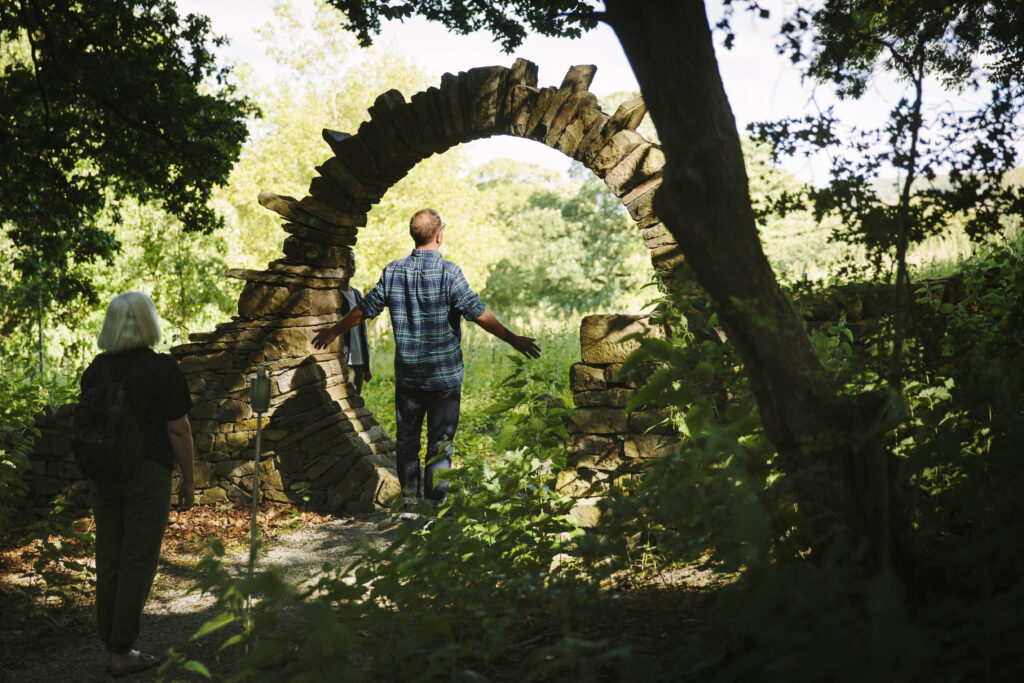
"We’re looking into archaeological tourism at the moment because we have druid mounds here, which we discovered a couple of years ago. They’re on 18th-century maps and we never noticed them. There’s also a Bronze Age circle, and in this area there are all sorts of different things.
"That is another thing: getting to know the land on a deeper level. The point is that everything here is trying to be holistic, not confined to one thing. It’s about totality."