

Globetrender's Guide to Amsterdam WorldPride 2026
Amsterdam WorldPride 2026 brings the world's biggest LGBTQ+ celebration to the Dutch capital. Discover where to stay, what to see and how to experience Pride beyond the Canal Parade.
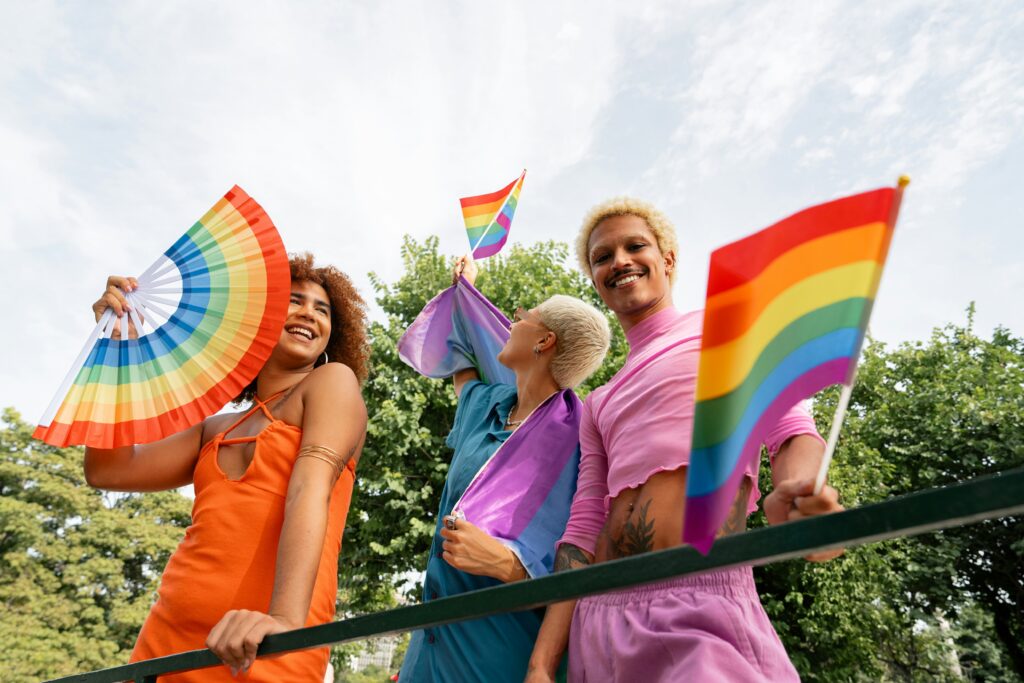
Amsterdam Pride has never been a protest. When it debuted in 1998 as a prelude to the Gay Games, it was conceived less as a demonstration than a celebration: a flotilla of decorated boats drifting through the city's canals to crowds of bemused onlookers. Nearly three decades later, that joyful spectacle has evolved into one of the world's defining Pride events, and in 2026 Amsterdam hosts WorldPride for the first time.
Winning the right to host WorldPride is no walk in the (Vondel)park. The title is awarded by InterPride, the International Association of Pride Organisers, after cities spend years preparing competitive bids. Along with global recognition comes a significant influx of international visitors, placing the host city firmly on the world's LGBTQ+ travel map.
That makes Amsterdam's victory particularly intriguing. The Dutch capital has spent much of the past few years trying to curb overtourism, introducing restrictions on new hotels, tighter rules around short-term rentals, shorter nightlife opening hours and one of Europe's highest tourist taxes. WorldPride, meanwhile, promises precisely the kind of global attention the city has recently appeared keen to discourage.
In reality, the two ideas aren't incompatible. Amsterdam's evolving tourism strategy isn't about keeping visitors away altogether, but encouraging people to engage with the city more thoughtfully – supporting locally owned businesses, venturing beyond the busiest canals and embracing the neighbourhoods where residents actually spend their time. WorldPride offers the perfect excuse to do exactly that.
Yes, there will be the famous Canal Parade, packed bars and all-night parties. But increasingly, Amsterdam's queer scene extends beyond nightlife, encompassing cinemas, cafés, swimming spots, galleries and community events that reflect a broader, more inclusive vision of Pride.

Getting There
From London, there's no more civilised way to reach Amsterdam than by Eurostar. In just over four hours, the train links St Pancras International with Amsterdam Centraal, depositing passengers in the heart of the city without the faff of airports or onward transfers.
The environmental case isn’t to be overlooked either. A flight between London and Amsterdam generates around 163kg of CO₂ per passenger, compared with approximately 3.9kg for the equivalent Eurostar journey – a reduction of more than 40-fold. For a city break, few travel choices have a greater impact on lowering emissions.
The journey itself feels refreshingly unhurried. Even in Standard, generous legroom, reliable Wi-Fi and catering showcasing seasonal European produce make the rail experience feel like an extension of the trip rather than simply a means of getting there. Better still, Amsterdam Centraal sits within easy walking or tram distance of many of the city's principal WorldPride venues.
Where to sleep
Sofitel Legend The Grand Amsterdam, for both sleeping and partying. This landmark hotel has had an illustrious past: purpose-built as a convent in the 15th century, before serving as a royal palace under French occupation and later Amsterdam's city hall. Its history is matched by its location, right in the historic canal zone and just a martini swill (translation: a 10-minute walk) from Reguliersdwarsstraat, home to many of Amsterdam's longstanding gay bars.
The hotel offers welcome respite between celebrations. Few visitors discover its Garden Terrace, a shaded courtyard where al fresco diners while away the hours just metres from the city's bustle. Below ground, a spa, Turkish-style hammam and Technogym-equipped gym provide ample opportunity to recharge.
Then there's the annual Pride party, which routinely lives up to its 'Legendary' billing. Each year, queers and allies fill the historic courtyard for an evening of mingling and mischief before the main weekend festivities begin.
WorldPride Highlights
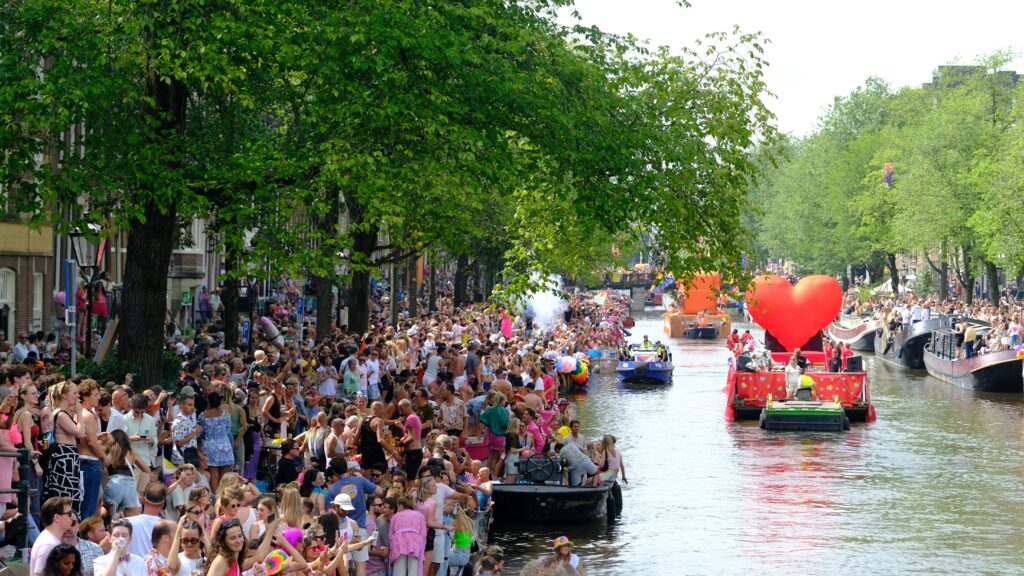
For the uninitiated, Amsterdam’s parade can feel wet and wild; a fleet of outrageously decorated floats that pulse through the central canal zone towards a judging panel who announce their verdict once the full run is through. Those organised enough to rent a boat get front row seats on the banks of the canal, often taking the party out into the Amstel.
But if on-the-ground boat brokers aren’t forthcoming, the best spots to watch the Amsterdam Pride Canal Parade are the Magere Brug (Skinny Bridge) on the Amstel River, the Prinsengracht near the Westerkerk, and the triple-bridge corner at Reguliersgracht – each of which offer purview of the festivities and greater mobility should visitors want to take in a different perspective (unlike the boat-faring onlookers).
A poignant moment to celebrate and show solidarity with the Queer elders who made WorldPride possible. This concert, which takes place in Nieuwmarkt on the Thursday before the parade at 5pm, will see the historic square erupt with live music and performances all in service of forging intergenerational connections between the younger and older members of the community.
Culture
This independent cinema right on the water’s edge in Noord is a neat escape if the partying gets too much. Its restaurant draws local crowds for its small plates which give humble ingredients – sardines, white beans and the like – star billing. But its programming always has something to tantalise Queer viewers. This Pride, the cinema is screening French film Des Preuves d’Amour, an at times sentimental and comical French film illustrating the struggles of lesbian motherhood. Visitors can also catch Azart, Come Make Art, which tells the story of The Ship of Fools, a floating performance art piece that sailed the world for 33 years, tended to by a motley crew of unconventional artists.
Alternatively, join the crowds gathering for open-air film screenings at Mercatorplein. The programme traverses a broad spectrum of Queer experiences, from the plight of a Queer Nigerian asylum seeker in the UK to the unsavoury undertakings of a plainclothes police officer tasked with outing gay men in 1990s New York. Its location – Amsterdam West – has a distinct personality, shaped by its multicultural inhabitants and its distinctive 1960s red-brick apartment buildings. Many of the Surinamese diaspora from the former Dutch colony have settled here, making it one of the city's best places to sample Surinamese cuisine. Pair it with something sweet from Fort Negen, the fashionable bakery supplying some of Amsterdam's most sought-after restaurants.
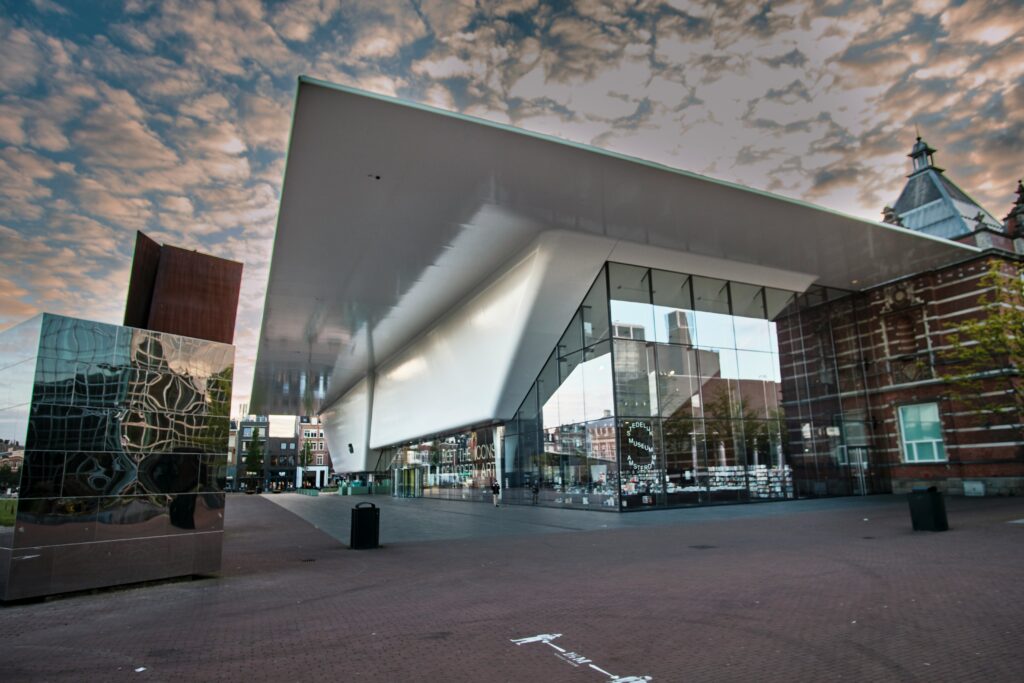
The Stedelijk Museum, affectionately referred to as “the bathtub” by Amsterdammers owing to its design, is often overshadowed by the neighbouring RijksMuseum which houses some of the world’s most precious Old Masters from the Dutch Golden Age. But WorldPride visitors would do well to check out the Stedelijk’s Beyond the Manosphere: Masculinites Today exhibition, which brings together the works of 37 global artists all interrogating what it means to be a man in 2026. First-timers looking to scratch multiple Amsterdam icons off their map with maximum efficiency should make for the museumplein, regardless: just beyond the Rijksmuseum and Stedelijk, the fairytale grounds of Vondelpark beckon.
This gender-neutral clothing brand made waves about a decade ago for being the unofficial off-duty uniform for models the world over. Its classic two-piece suit, designed by native Amsterdammer Bonne Reijn, is a workwear staple. Head to its store near the Red Light District for a souvenir that will stand the test of time – don’t miss the rotating art exhibitions in the store’s furthest recesses.
Eat & Drink
A very endearing breakfast and lunch location, positioned away from the fray, along the grassy verge of Lindengracht with plenty of outdoor table space. Food is light, snacky and European – along the lines of focaccia sandwiches and pistachio cruffins – and the wine list is a highly curated selection that’s delightfully orange-heavy, clearly selected by passionate vinos.
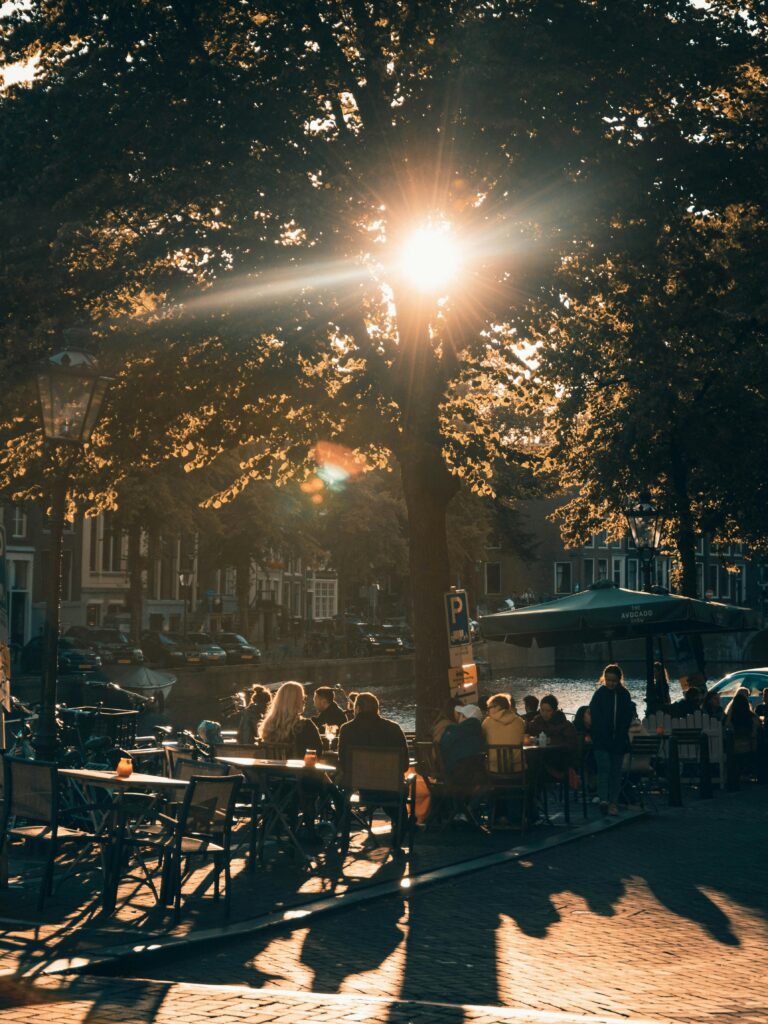
... Or any of the restaurants in the growing Binnenvisser hospitality group that has slowly, one impeccable restaurant after another, infiltrated Amsterdam’s culinary scene in recent years. This spot, one of its most central, offers a casual menu of refined comfort food, plus a sensational natural wine list – the latter being a throughline for the group’s varied restaurants.
For a more adventurous supper, try their east asian-inspired spot, cornerstore, in Noord. It’s an excellent date spot, combining a vinyl sound system helmed by DJs, Japanese-inspired interiors and a menu that wows on the eye as much as the palate. Don’t leave without sampling their legendarily luminous green lotus root dish.
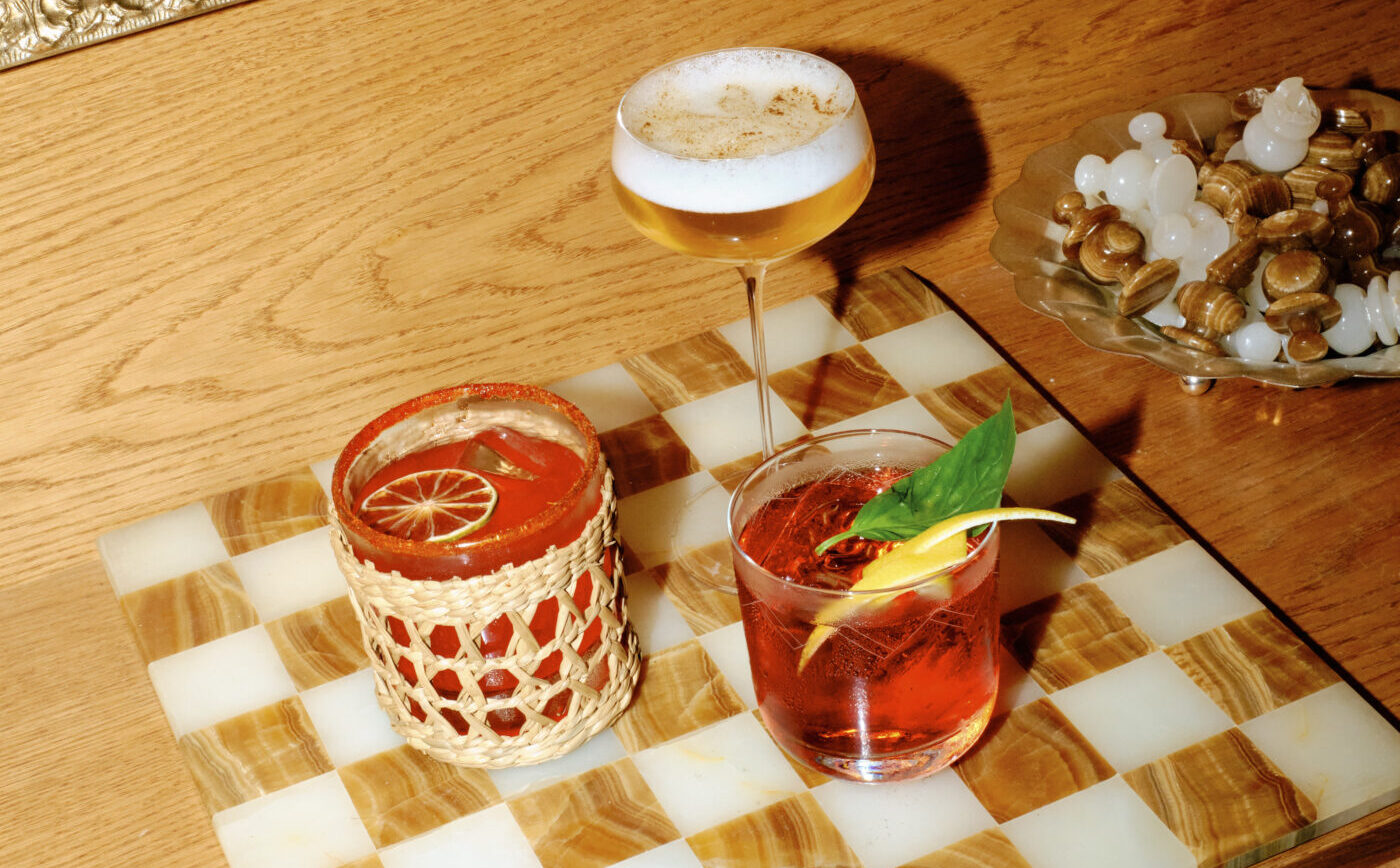
Hop on one of the free ferries that depart Amsterdam Centraal at regular ten-minute intervals and experience a neighbourhood on the up. Situated in the warehouses clustered just east of Vliegenbos park, Benelux Bar is queer in everything but name, pulling a very if-you-know-you-know kind of clientele. It’s a moody, candle-lit spot for exceptional cocktails that spills out onto the pavement in random configurations of suitably steely furniture. Euro Pizza, right next door, is a perfect pairing either before or after.
Explore beyond the centre
First stop, a bike rental. Swapfiets is a pioneer of bicycle rental and something of a Dutch institution, offering thousands of citizens access to wheels and a simple replacement policy should bikes get damaged or stolen (the latter of which almost never happens due to Swapfiets’ next-level tracking technology). Best take it easy in the congested canals, but bicycle is undoubtedly the best way to cross the city and get out to the more enticing, locals-first events happening on the city’s fringes.
This swimming spot in the Ij river is little-known to tourists but an excellent spot for cooling off from the fierce summer sun. Simply bring swimmers, a towel and enough change for an ice cream. It’s free, no need to book, and located just across the water from Noord – now a hub of artists’ studios, galleries and culinary cool after its original shipyard and factories were regenerated. Amsterdam’s outdoor swimming spots aren’t all so urban: in the city’s north-east, Ijburg offers a deep sandy beach with shallow waters and a coastal breeze. It’s perhaps a little too far a stretch for a mid-Pride sojourn, but a prime spot for Sunday rehabilitation.
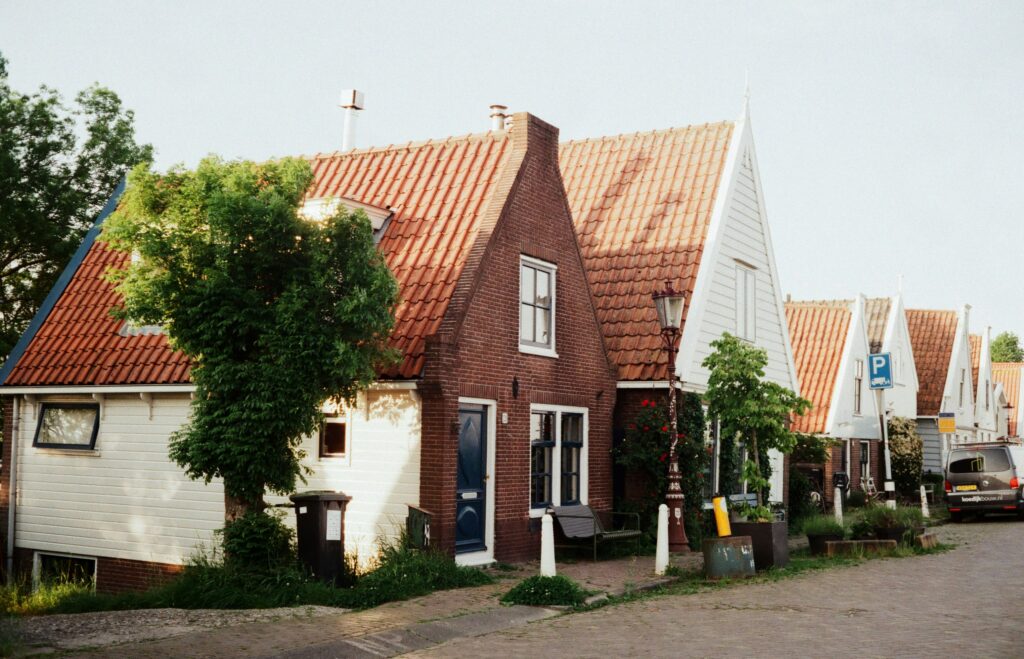
For those extending their visit beyond the main weekend, make tracks for Durgerdam – perhaps the most charming, old-world Dutch-looking village to be found in close proximity of the city. Cycle just 15 minutes out of the city and there, just on the lakeside coast of the IJmeer sits the hamlet of Durgerdam which was once a hive of commerce and is now a slumberous harbour nestled in whispering long grasses. Die Durgerdam is a small boutique hotel with an outsized reputation where lunch is served by the water on wooden decking as a breeze rolls in.
Nightlife
Two reasons to visit this spot: it’s both a brown bar (a typical Dutch-style watering hole; Amsterdam’s answer to the pub) and a queer bar with a fascinating history. Today’s bar is a linchpin of the city’s lesbian scene. It started out as a women-only café, set up by a women’s collective back in 1978 who wanted a safe space to gather on their own terms. In 1999, under new management, the bar loosened its door policy, opening it up to Queer people of all stripes.
If you visit on the day of the parade itself, don’t expect to take a quiet pint and a portion of borrelhapjes (fried Dutch bar snacks): Saarein’s Pride street parties are famously raucous, and this year promises to be no different.
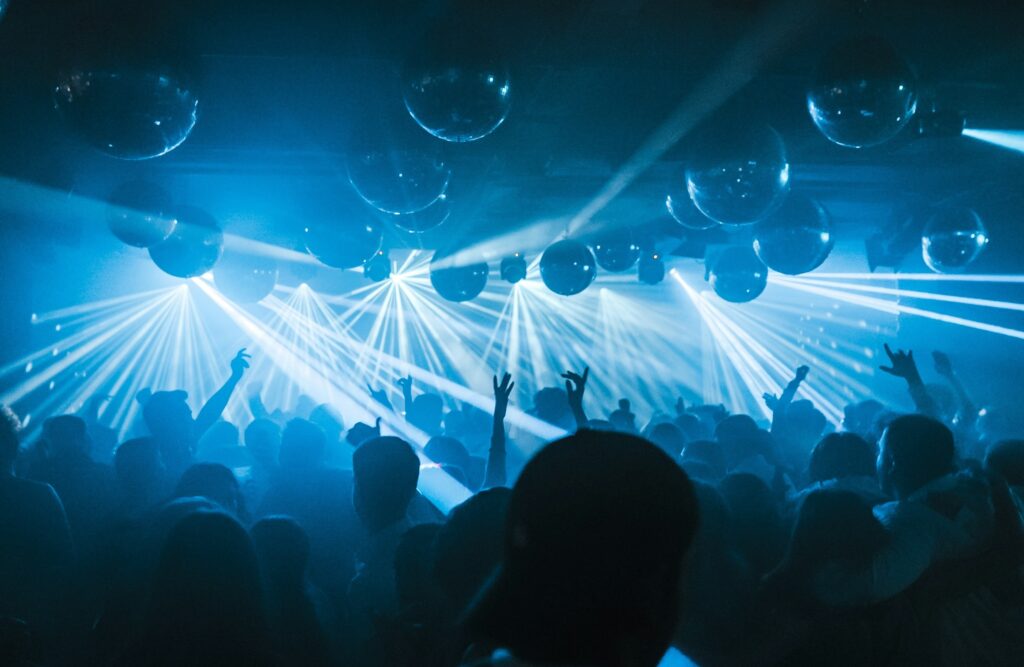
For many years, De School in West Amsterdam was a club that offered guaranteed fun – pulling a Queer and Queer-adjacent crowd owing to its excellent musical line-up, but also its unusual, multi-use space. The building was originally designed as a vocational technical school by modernist architect Ben Ingwersen and, from 2016, served as a restaurant, café, gym, art gallery, concert space and nightclub – cultivating a loyal crowd of creative thinkers.
De School might have closed in 2024, but Tillatec, the club which has since opened in the very same location, has continued its legacy with aplomb. On Saturday, the venue is hosting Berlin-based Herrensauna and Veselka from Kyiv for a 36-hour Pride weekender.