

Kusnacht Practice reveals why UHNW clients are investing in 'peak span'
As the ultra-wealthy shift their focus from living longer to extending their “peak span”, Kusnacht Practice owner and CEO Eduardo Greghi explains the growing demand for cognitive healthcare, precision medicine and even psychedelic-assisted therapies.
For someone unfamiliar with Switzerland's Kusnacht Practice, how would you describe its philosophy and approach to treatment?
Our philosophy begins with understanding the person behind the symptoms. When I started Kusnacht Practice almost 20 years ago, it was one client at a time, mainly treating addiction. I soon realised you cannot separate the mind from the body. Physical health, emotional wellbeing, relationships and environment all influence one another, so we bring them together within one co-ordinated approach to care.
Our clients include business leaders, public figures, artists and young adults. Some arrive with addiction, depression, anxiety or exhaustion; others recognise that something needs attention before it becomes a crisis. Someone can be extraordinarily successful and still be struggling privately.
Each client stays in a private residence overlooking Lake Zürich, with an individual programme and one-to-one treatment. There is no group therapy, and programmes are arranged so that clients never cross paths. That privacy is therapeutic, not just a luxury: people need to feel safe before they can speak honestly. Our medical expertise, hospitality and personal attention all help create the conditions for that trust.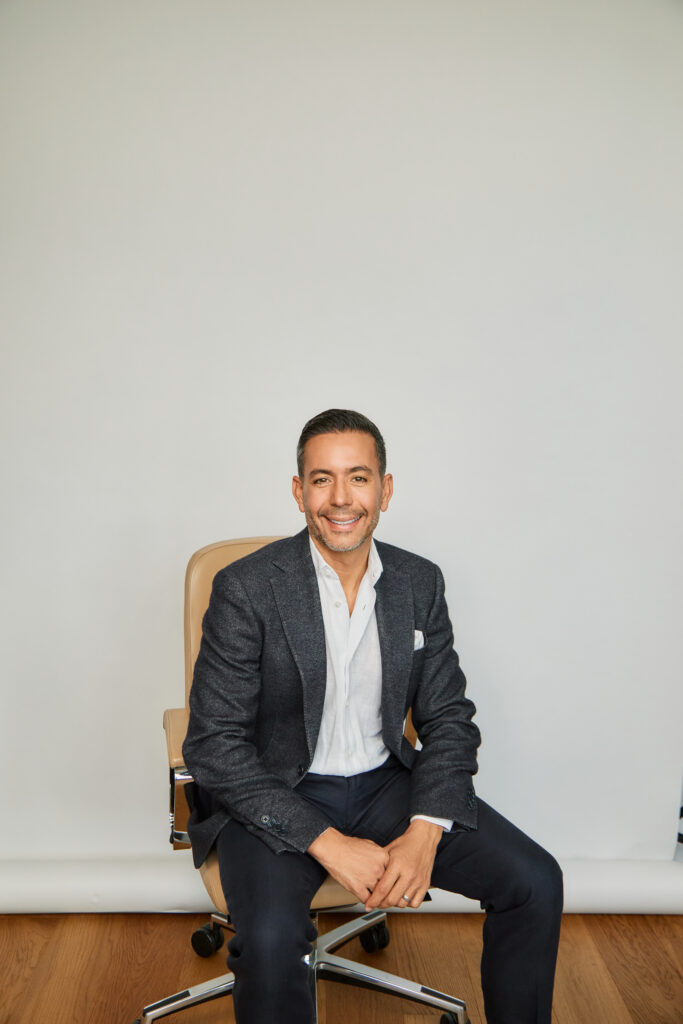
The Kusnacht Practice began as a rehabilitation centre, but you say increasing numbers of clients now arrive before reaching crisis point. What has changed?
We are seeing greater willingness to seek help earlier, although stigma still exists. People increasingly recognise that continuing to work and meet their responsibilities does not necessarily mean they are well. Poor sleep, persistent anxiety, irritability or declining concentration deserve attention before they become overwhelming.
For leaders, the most precious asset is their brain. Their decisions can affect thousands of people. More of them now understand that to stay successful, maintain sound judgement and emotional stability, and uphold strong relationships, they first need to look after their cognitive health. As Dr Sarasin says, you can be healthy and already declining.
Our approach has developed to support that earlier intervention, bringing mental healthcare together with precision medicine, cognitive assessment and long-term health planning. Advanced diagnostics, including brain imaging where appropriate, can contribute to the assessment, but must be interpreted in the context of the individual.
We also increasingly act as a “family office for health”, co-ordinating care over time. Resilience is often misunderstood. It is not about doing more or pushing harder. It is about learning to stop, recover and ask for help.
Privacy and personalisation appear to be fundamental to the experience. What does a typical five-week stay looks like?
Personalisation begins before arrival, when we discuss the client’s history, circumstances and goals. On arrival, medical and psychiatric assessments establish their needs and confirm that the residential setting is appropriate. The first days also allow time to settle in and build a relationship with the team.
Over a five-week stay, the programme develops around the individual’s progress. It may combine psychotherapy, internal medicine, precision medicine with the BIO-R® (Biomolecular Restoration) Method, movement and complementary therapies, and we adjust the pace to what the person is ready for.
Matching people matters enormously. When we assemble the team, including the live-in counsellor, we consider language, cultural background, personality and clinical experience. The chemistry has to be right. Private chefs translate nutritional recommendations into meals the client enjoys, tailored to their individual body and brain chemistry, while doctors and relevant specialists coordinate their care.
Some clients bring their pets, come with young children or invite friends for dinner. You should feel as if you own a house on the lake and are simply living your life, because that makes it much easier to continue the journey at home. Preparation for returning home runs throughout the stay.
The Kusnacht Practice has more doctors than clients at any given time. How does this extraordinary level of medical attention translate into better treatment?
It gives our doctors time to listen, investigate and speak to one another. Our doctors can spend hours with a client when needed. Afterwards, they go back, speak to one another, read the literature and call in wider expertise. A client’s health can become fragmented when each specialist sees only one part of the picture. Our role is to bring those perspectives together.
Psychiatry, psychotherapy, internal medicine and precision medicine work within a co-ordinated clinical structure. Through regular case discussions and ongoing exchanges, the team reviews findings, agrees priorities and adapts treatment as the client responds. Hormonal, metabolic and genetic findings are considered where relevant, alongside the person’s symptoms and history.
For example, someone presenting with low mood may also have disrupted sleep, a thyroid condition and significant emotional distress. Those factors need to be understood together.
The benefit is continuity: findings are discussed, recommendations are reconciled, and the client has one team taking responsibility for the overall direction of care.
Biomolecular Restoration, the BIO-R® Method, is a foundation of your approach. Can you explain what this involves and how it informs treatment?
BIO-R® stands for Biomolecular Restoration. Developed by Dr Antoinette Sarasin (pictured above), it is our proprietary precision medicine methodology. It looks beneath the surface at the biological factors affecting a person’s health, wellbeing and performance. As she says, every protocol is as unique as a biological fingerprint.
If someone is anxious, exhausted or unable to sleep, we want to know what is happening at a cellular level. It begins with a detailed assessment. Depending on the individual, investigations may examine nutrient status, hormonal and metabolic function, inflammatory markers, gut health and relevant environmental exposures. Genetic information can provide additional context where clinically useful. Blood tests are one part of that picture, alongside medical history, examination and other appropriate investigations.
The findings inform an individual plan that may include medical treatment, targeted supplementation, nutrition, exercise, sleep support and stress regulation. Supplements are never one size fits all, because we all have a different biochemistry.
Follow-up testing allows the team to review the response and refine the plan. Throughout, BIO-R® works alongside psychiatric and psychological care, helping us address biological contributors while supporting the person’s wider recovery.
What patterns do you see among your ultra-high-net-worth clients?
In our clinical experience, addiction is rarely the whole story. Underneath, there is often trauma, anxiety, depression, longstanding stress or previously unrecognised conditions such as ADHD. We need to understand what role the substance or behaviour has come to play in that person’s life.
For someone carrying enormous responsibility, alcohol may initially provide relief from a mind that will not switch off. Another person may use substances to sustain performance or manage feelings they find difficult to express.
We also encounter deeply held beliefs – that rest must be earned, that asking for help is weakness, or that personal worth depends on achievement. Those beliefs can keep someone pushing long after they are struggling.
Treatment addresses the addiction itself, including its medical risks, while helping the client understand these underlying patterns and develop healthier ways to cope. We approach that work with curiosity and without judgement.
Longevity has become a major preoccupation among the ultra-wealthy, yet you seem more interested in quality of life than simply extending lifespan. What does healthy ageing mean to you?
For me, healthy ageing is about living not just longer, but more fully. It means being able to think clearly, remain physically capable, enjoy relationships and pursue things that matter to you.
Dr Sarasin describes our ambition as extending “peak span” – preserving the best achievable level of cognitive and physical function for as long as possible. Precision medicine helps us identify individual risks and treatable contributors to poorer health, then monitor how someone responds.
We should be realistic about what it can achieve; no test or intervention can guarantee a particular ageing trajectory. The good news is that, thanks to neuroplasticity, we can improve brain function at any age.
The foundations deserve attention early: sleep, movement, nutrition, mental health and relationships. In midlife, changing hormonal, metabolic and cardiovascular risks may require closer assessment. Later, priorities increasingly include maintaining strength, cognition and independence.
At every stage, the question remains personal: what does this individual need to stay capable, connected and engaged with life?
Health doesn't stop at our skin, which suggests that our surroundings are as important as what happens inside our bodies. How do you assess and address a client's wider environment?
A person returns home to relationships, responsibilities and routines, all of which influence recovery. We therefore need to understand that environment from the beginning.
We explore family dynamics, cultural expectations, work pressures and everyday habits. We also look at the physical environment, from air quality to toxins at home or at work, because exposure matters too.
With the client’s consent, partners or family members may become involved, helping them understand the treatment and how they can support change. Sometimes that means better communication; sometimes it means clearer boundaries or a different balance of responsibilities.
Before departure, we translate progress into practical arrangements that work around the client’s actual life, including travel and demanding schedules.
Our Continuing Care Programme is very comprehensive, with personalised mentoring, scheduled return visits, ongoing monitoring and adjustments as needs evolve. Many people are told to repeat a test in six months and, four years later, still haven’t. Nobody calls them. But we do.
The “family office for health” approach extends that co-ordination over time, helping clients navigate appointments, specialist advice and follow-up. Leaving the residence is a transition within care, and we prepare for it accordingly.
What has working with some of the world's wealthiest people taught you about happiness?
It has taught me how much we share. Whatever someone’s circumstances, they want to feel loved, safe and understood. Wealth can remove many practical difficulties, but loneliness, grief and the feeling of never being good enough can remain.
People often assume my clients have no real problems, and I always defend them on this. Many are sensitive people who feel they have no permission to struggle. Everyone assumes they should be happy, which makes it harder to admit they need help.
There is no greater gift than feeling understood by another person. So we begin by offering a relationship in which they can speak honestly and feel accepted. Alongside treating their health, we help them explore what matters to them, what they have been avoiding and where their lives have moved away from their values.
Joy may return through better sleep, a repaired relationship, the ability to set a boundary or simply feeling present again. For me, a meaningful sign of progress is seeing someone become more comfortable with themselves and more able to enjoy the life they are living.
PSYCHEDELIC-ASSISTED THERAPY
The Kusnacht Practice is beginning to use ketamine and MDMA-assisted therapy with approval from the Swiss government. What role will psychedelic-assisted treatments have in the future of mental healthcare?
Dr László Ürögi says:
We see an important future role for these treatments within comprehensive mental healthcare, particularly for carefully selected patients who have not benefited sufficiently from established therapies.
Switzerland’s legal framework allows restricted medical use of MDMA, LSD and psilocybin through individual exceptional authorisations from the Federal Office of Public Health. This provides a regulated pathway for their potential therapeutic benefits to be considered under medical supervision. Authorisation is specific to the individual patient, rather than a general approval for a clinic or programme. Ketamine follows a different regulatory pathway.
The evidence differs between substances and conditions. Ketamine has evidence in treatment-resistant depression; MDMA-assisted therapy has shown promising results in PTSD trials. Psilocybin has shown encouraging results in depression, including treatment-resistant depression, while LSD has demonstrated potential in anxiety disorders. Important questions remain about longer-term outcomes, patient selection and how best to deliver treatment.
At Kusnacht Practice, our multidisciplinary team and medically supervised, holistic treatment environment position us well to assess suitability carefully and manage risks. Two of our psychiatrists have completed training in this field. Assessment includes psychiatric history, physical health, previous treatment response, medication interactions and vulnerabilities such as psychosis, suicidality, or mania. Informed consent and realistic expectations are essential.
Thorough preparation, close clinical monitoring, psychological support and structured integration into ongoing therapy are central to our approach. These measures help minimise risk and support meaningful therapeutic benefit, while recognising that for some clients these treatments will be inappropriate.