

Why Iceland's Keflavík airport is 'part of the travel story'
Iceland's Keflavík International airport aims to process 9 million annual passengers by 2030. Grétar Garðarsson, director of airlines and marketing, speaks to Globetrender about balancing growth with overtourism, operating in the vicinity of volcanoes and why the role of airports goes beyond infrastructure.
How do you balance increasing passenger numbers with Iceland’s need to protect its natural environment and avoid overtourism?
With passenger numbers doubling in the past decade, we are consistently monitoring how this impacts Iceland’s natural environment and contributes to overtourism. In spite of the figures, the airport’s carbon footprint has remained stable.
This is largely due to targeted environmental actions, particularly the transition to lowemission, electric vehicles and use of biodiesel on the airport fleet, which have been the main source of emissions on the airport premises since electricity in Iceland has an exceptionally low carbon footprint. The aim is for Keflavik airport to be net zero 2030 and we’re confident we can achieve this.
What trends are you seeing in seasonality and how are you working to make Iceland a year-round destination?
KEF Airport works closely with Visit Iceland and one of the goals we have together is to decrease seasonality. From the airport our incentive schemes to airlines are, for example, higher in winter than in summer, and our airport charges are 30% lower for seven months of the year.
That for sure stimulates the winter market to Iceland and we’ve seen a very positive trend towards that in recent years. For example, in 2010 50% of all visitors came in June to August. That has now gone down to around 35%. This just shows that Iceland is a year-round destination.
Keflavík International airport (KEF) is uniquely located within a UNESCO Global Geopark – how are you leveraging this positioning to differentiate the airport and Iceland as a destination?
Keflavík’s location within the UNESCO Global Geoparks specifically the Reykjanes UNESCO Global Geopark is not just a geographic fact; it’s a strategic differentiator for both the airport and Iceland as a destination. With this in mind, we treat the airport as a gateway to geological experience. Not many international airports can say that within minutes of landing, passengers are immersed in dramatic volcanic landscapes shaped by tectonic forces.
We actively incorporate this into our branding, passenger messaging, and storytelling, positioning Keflavík airport as more than a transit hub; it's the beginning of the Icelandic experience. We’re also leveraging this position to advance our sustainability agenda. Being in a UNESCO-recognised site carries a responsibility to protect and educate. We align our operations with environmental best practices and use the geopark designation to communicate Iceland’s broader commitment to renewable energy and conservation.
Finally, from a competitive standpoint, this gives us a clear narrative advantage. Many airports compete on efficiency and connectivity, which are important factors, of course, but few can offer such a powerful sense of place. By anchoring our identity in the geopark, we differentiate KEF airport as a destination in its own right, while reinforcing Iceland’s global brand as a land of natural wonder and geological uniqueness.
What role does Keflavík airport play in positioning Iceland not just as a destination, but as a strategic North Atlantic hub between Europe and North America?
KEF plays a big role in Icelandair’s "hub and spok"e model whereby they use KEF as hub between North America and Europe. The airport’s role is to function as smoothly as possible so passengers can connect seamlessly between the two continents.
Why is Iceland such a popular destination for UK travellers?
In 2012 when Easyjet entered the market we saw a big increase in UK travellers, especially during winter which was at the time a low season market in Iceland. Today, UK travellers are Iceland’s biggest visitor market during winter.
Since then, KEF Airport has seen increases from Icelandair and both British Airways and Jet2.com have entered the market with increased seat capacity every year. KEF Airport expects the market to continue to grow at a steady pace over the next five years. The airport has seen an increase in capacity every year from the UK airlines and expects that to continue.
With London Heathrow now one of your busiest routes, how are you strengthening your relationship with the UK as a priority source market?
We are consistently looking at how we can strengthen relationships with UK airlines but for us it’s about the type of travellers we’re attracting rather than looking to reach volume.
You’ve successfully secured major carriers such as British Airways and United – what are airlines looking for today when choosing to launch or expand routes?
KEF is always looking into what connections are unserved or underserved. When working with airlines they normally look into what the destination has to offer and with Iceland it’s of course our stunning nature and also our culture, music and food scene that are attracting guests to Iceland.
How is the role of the airport evolving beyond infrastructure to become a curator of passenger experience and destination storytelling?
We see the role of the airport as part of the travel story, not purely a functional place you move through. From the food we serve, to the art and design that’s on show for our visitors, we want to embody the Icelandic culture and leave guests with a positive experience. When you commit to a holiday, every moment really does count and that’s the approach we take. We have a really exciting programme of airport activity launching shortly that will take this a step further in terms of cultural immersion which we’ll be announcing very soon.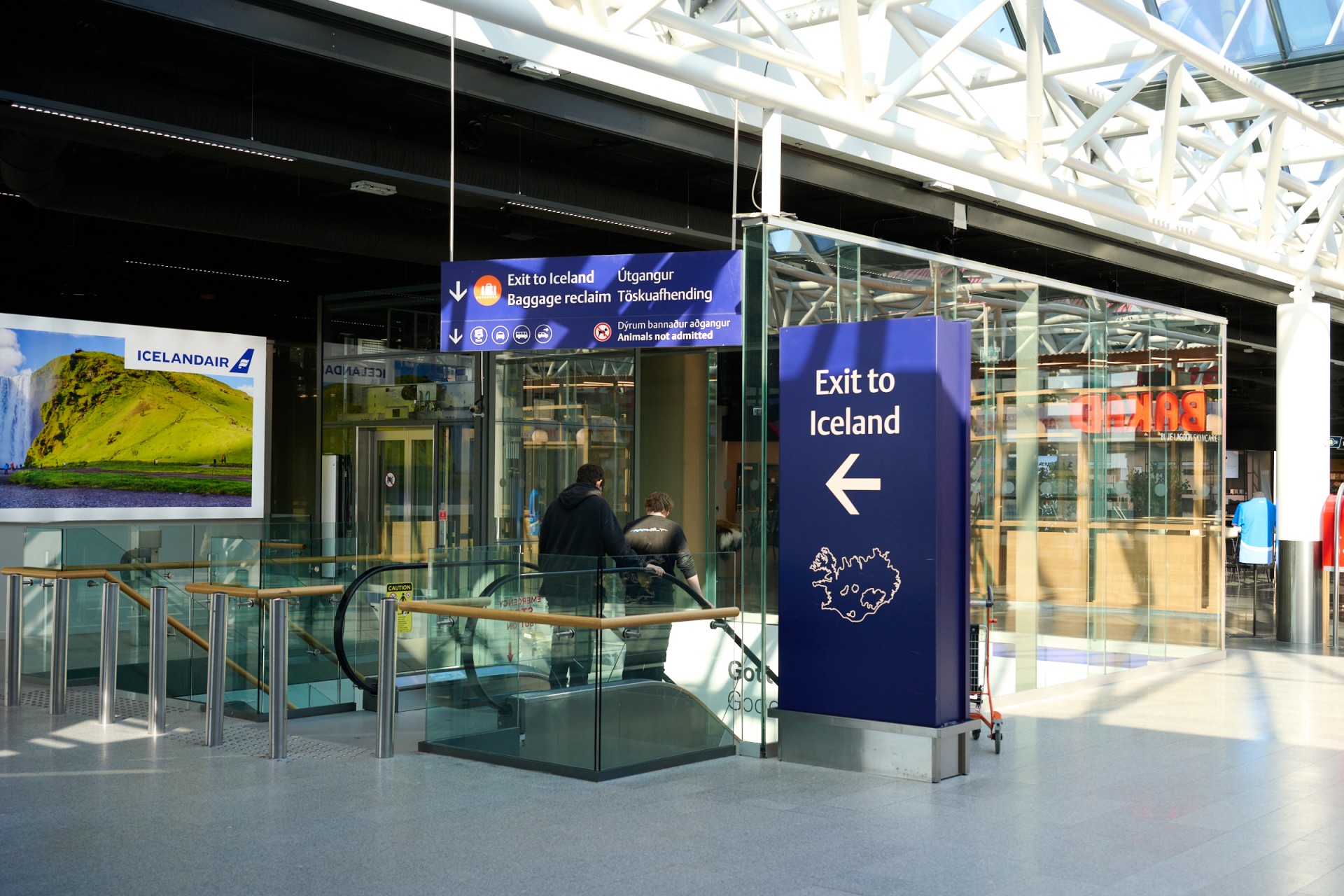
Are you seeing changes in traveller behaviour – such as shorter stopovers, multi-destination trips, or “bleisure” – shaping how routes are developed?
Traveller behaviour is always changing with the political situation in the US impacting this for example. Travellers are interested in getting the total Iceland experience and we must, as the main gateway to Iceland, be able to provide our guests with the information and travel options to get to all ends of the island. This is by bus or rental car to the regional airports that connect all the main points of Iceland. Moreover, we have seen a spike in the trend of "bleisure" travel with travellers combining work with a more fulfilling trip.
Looking ahead to 2030, what will define success for Keflavík Airport – and how do you see the future of aviation hubs evolving in a more sustainability-conscious world?
Success to us looks like more people coming to Iceland to fully immerse themselves in the culture and come away with a well-rounded view of this exceptional country – having seen our landscapes, having met the people, having got under the skin of the destination. We would be honoured for the airport to be just a small part of that experience.