

Seven trends from Condé Nast Traveller’s 2026 summit
From micro-retirements and purposeful wealth to anti-maxxing and innovation tourism, industry leaders reveal the trends shaping luxury travel in 2027 at Condé Nast Traveller’s Points of View summit in London.
As the great wealth transfer begins to take place, a new generation of affluent travellers is seeking purpose, personal connections and experiences that money alone cannot buy. But what happens when the next generation of wealthy travellers has more money, more freedom and fewer conventional milestones to work towards?
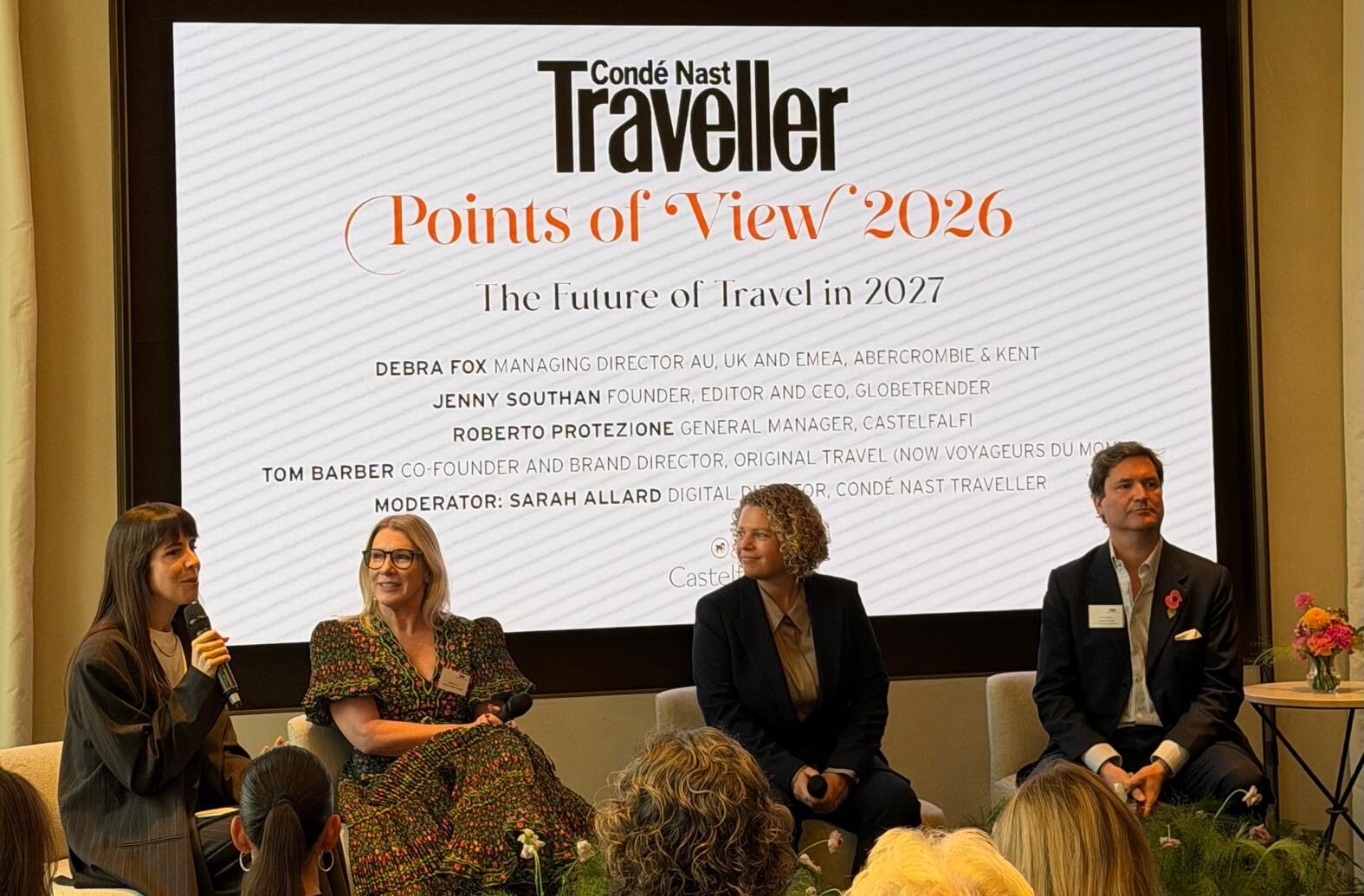
This was one of the questions explored at Condé Nast Traveller's Points of View summit, held at The Chancery Rosewood in London, where Globetrender editor and founder Jenny Southan joined a panel of industry leaders to discuss the destinations, behaviours and emerging trends likely to shape travel in 2027.
Moderated by Sarah Allard, digital editor of Condé Nast Traveller, the discussion also featured Debra Fox, managing director of Abercrombie & Kent; Tom Barber, co-founder and brand director of Original Travel by Voyageurs du Monde; and Roberto Protezione, general manager of Tuscan resort Castelfalfi.
From the implications of inherited wealth to the rise of micro-retirements, the panel revealed an industry increasingly concerned with what travel can offer beyond conventional luxury.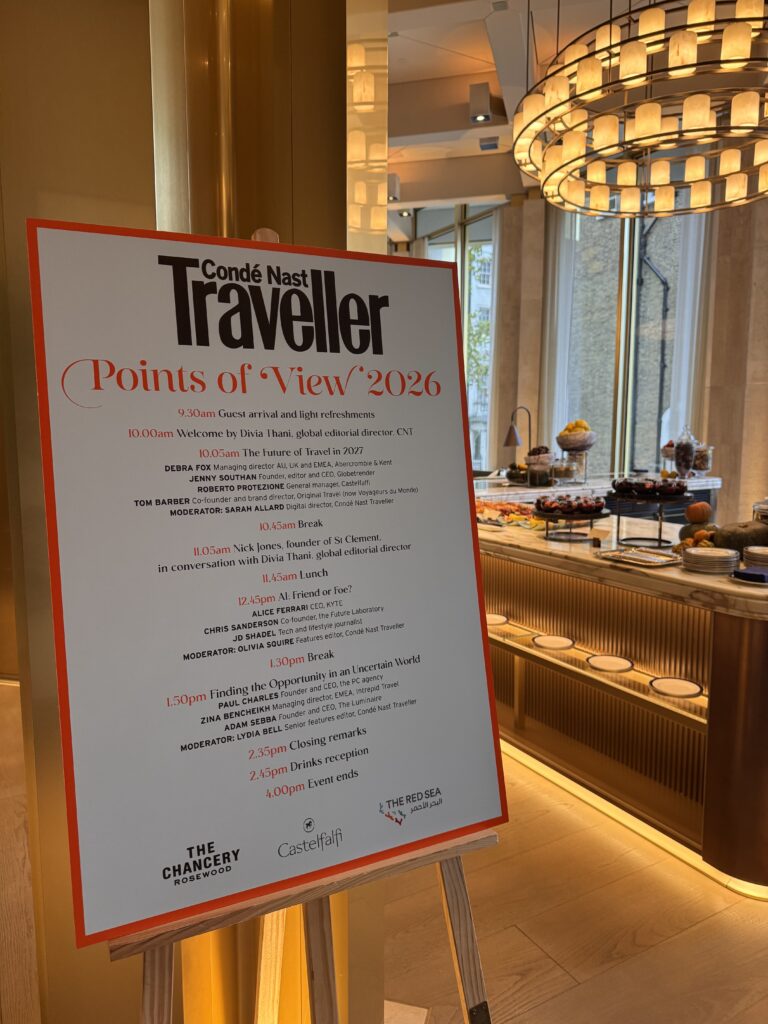
1. Purposeful Wealth: Travel becomes a vehicle for self-discovery
As trillions of dollars are expected to pass between generations over the coming decades, the luxury travel industry is preparing for a fundamental shift in who controls wealth and how it is spent.
However, Southan suggested that the most interesting question is not simply what younger wealthy travellers will buy, but what they will want to achieve with their money.
"I think it's interesting when you're thinking about the distinction between people who are inheriting wealth and have inevitably been brought up around wealth and luxury, and those that are essentially new money," she said.
For entrepreneurs who have accumulated wealth rapidly, she pointed to the phenomenon of "sudden wealth syndrome". Meanwhile, those who inherit substantial fortunes can face a different challenge: finding motivation and direction when many of life's financial obstacles have already been removed.
"I think travel offers an opportunity for people to crystallise a sense of purpose or direction. Maybe that's through philanthropy, maybe that's through new businesses of their own," Southan said.
She also suggested that travel could increasingly become a vehicle for succession planning, with wealthy families using shared journeys to pass on values, strengthen relationships and prepare younger generations for future responsibilities.
The implication is that luxury travel companies may need to move beyond fulfilling personal desires towards helping clients navigate significant life transitions.
2. Living Inheritance: Spending wealth together rather than passing it on
According to Debra Fox, managing director of A&K, one of the most significant changes already taking place is that wealthy families are increasingly choosing to spend their money together rather than waiting for it to pass down through inheritance.
"What we are seeing is a lot of that wealth being spent before it moves into an inheritance," she said. Older generations are taking children and grandchildren on elaborate holidays, sharing the benefits of their wealth while they are still alive to enjoy the experiences.
But designing a trip that satisfies a seven-year-old, a teenager and a grandparent requires far more than simply booking a large villa. Fox emphasised the importance of balancing collective experiences with opportunities for individual exploration.
Barber illustrated the trend with the example of a widowed grandmother who had taken each of her eight grandchildren on a special holiday to celebrate their 13th birthday. Each journey was tailored to the child's individual interests, whether wildlife, conservation or sailing, with a budget of up to £25,000 per trip.
For Barber, these intimate, two-person journeys can be more meaningful than conventional family holidays. The emerging opportunity is for travel companies to develop experiences that facilitate intergenerational bonding, mentorship and the transmission of family values.
Meanwhile, Roberto Protezione, general manager of Castelfalfi, reported growing demand for multigenerational villa stays at the Tuscan resort, which is renovating additional villas to accommodate families travelling together.
3. Micro-Retirements: The end of the conventional career ladder
Another emerging trend is the reinvention of the sabbatical. Barber revealed that younger affluent travellers are increasingly adopting the term "micro-retirements" to describe extended breaks between jobs or entirely different careers.
Rather than following the traditional trajectory of education, employment and eventual retirement, some are choosing to take several months away from work at different stages of their lives. "They're throwing out the rulebook and going, 'Who says?'" Barber said.
He described travellers taking two- or three-month breaks between different careers, rather than waiting until later life to enjoy extended periods of freedom. Inherited wealth can make this lifestyle more accessible, but the wider cultural significance lies in the rejection of conventional career milestones.
For luxury travel businesses, this could create opportunities to design longer, more flexible journeys for people seeking personal reinvention, exploration or simply a different pace of life. Barber cautioned that micro-retirements are not yet a fully established trend, but said he was beginning to see evidence of their emergence among clients.
4. The Human Premium: Access to people, not just places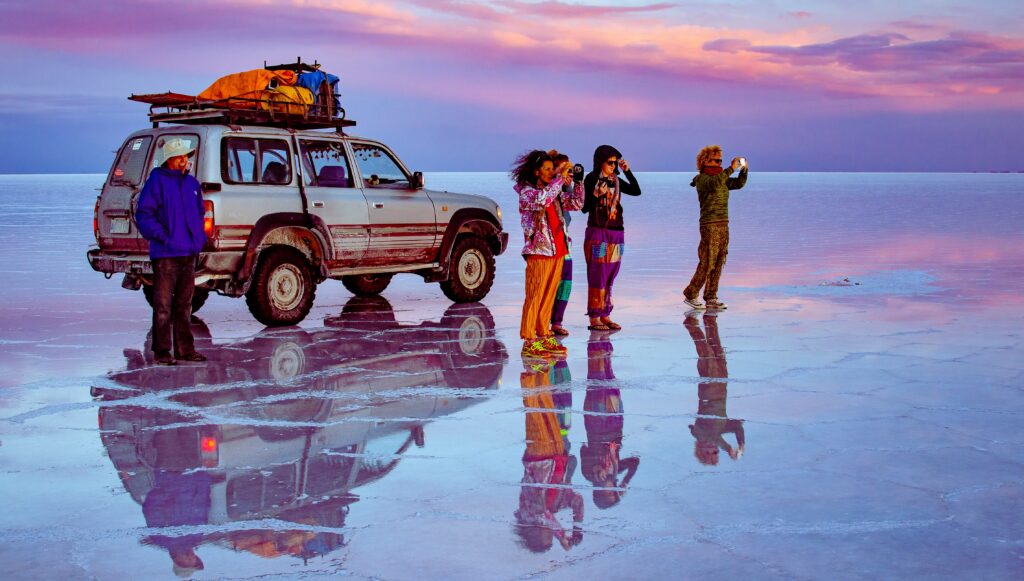
For decades, luxury travel has been defined partly by exclusivity: private islands, extraordinary accommodation and experiences unavailable to the general public. But the panel suggested that the meaning of access is evolving.
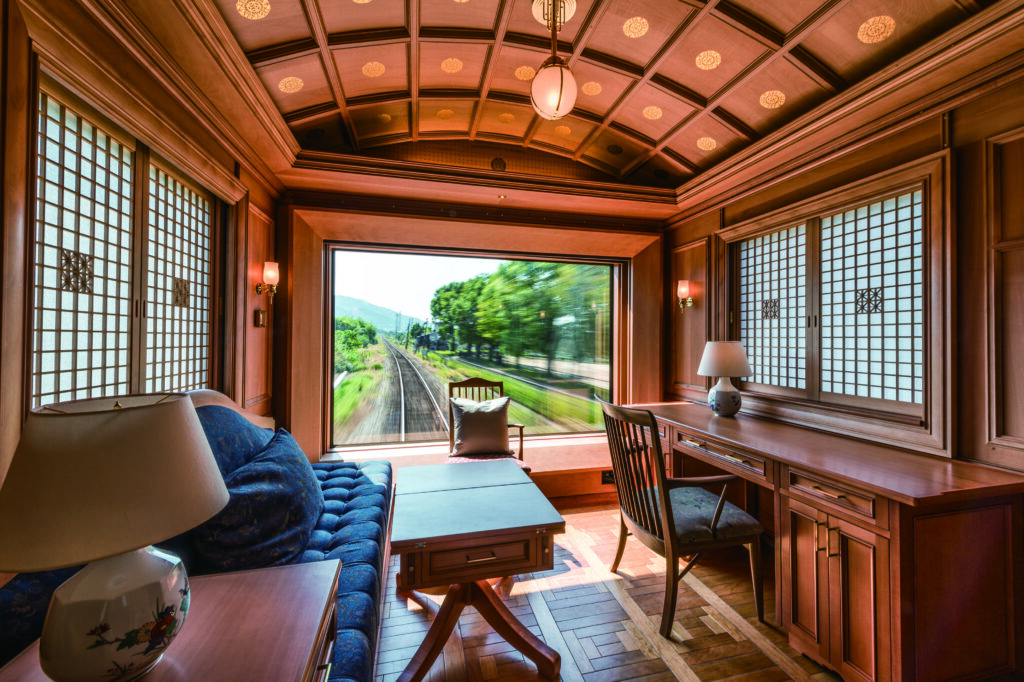
Fox highlighted A&K's five luxury Airstreams on Bolivia's Salar de Uyuni salt flats, designed to move with the seasons, alongside exclusive charters of Japan's Seven Stars sleeper train that it charters in Kyushu. She also described the value of private aviation in reducing travel times and reaching otherwise inaccessible destinations.
However, Barber argued that access to interesting people can be more valuable than access to exclusive places. "We talk about people, not places," he said.
He described opportunities for travellers to meet conservation leaders, journalists, teachers and other local experts who can offer perspectives unavailable through conventional sightseeing.
Rather than simply visiting a destination, travellers can develop a deeper understanding of its culture, politics and communities through personal encounters.
The implication for the luxury sector is that the quality of human relationships may increasingly distinguish exceptional travel experiences from merely expensive ones.
5. Future-Facing China: A destination for innovation tourism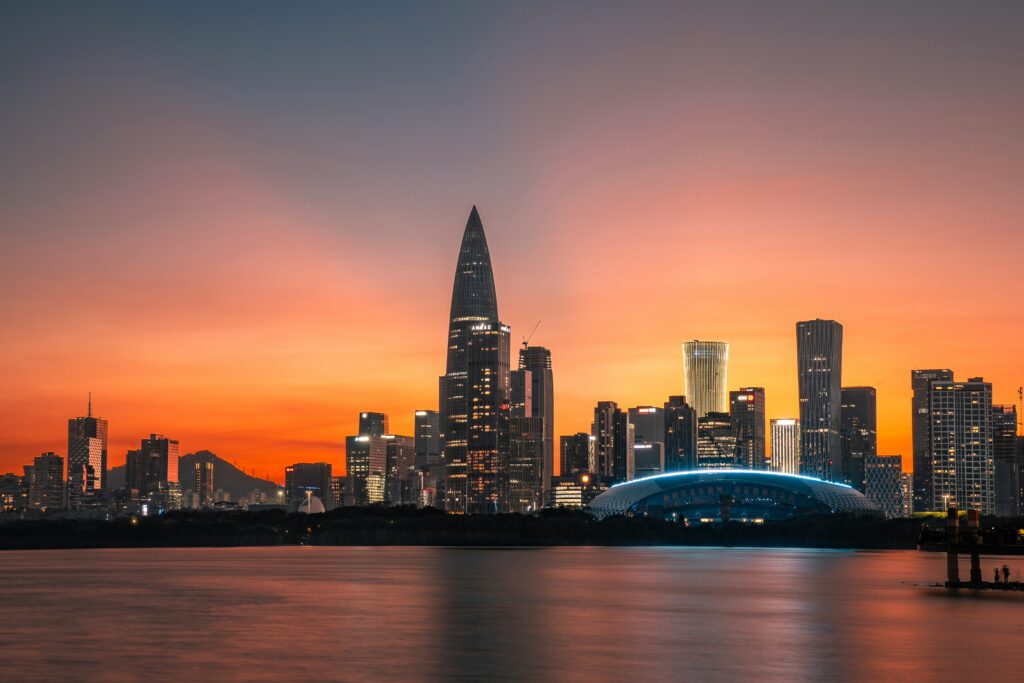
When asked which destinations are likely to gain momentum in 2027, Southan identified China as one of the most compelling. "I think China's going to continue to be on the rise," she said, pointing to growing social media interest in destinations such as Chongqing, alongside expanding air connectivity.
But her enthusiasm was driven by more than China's cultural and natural attractions. "As a trend forecaster, I'm obsessed with the innovation that's taking place there. It really feels like stepping into the future," Southan said.
She described the experience of staying in ordinary four-star hotels where robots move through the corridors delivering room service, illustrating how futuristic technology is already becoming part of everyday hospitality. Southan also identified Shenzhen as a destination she would particularly like to visit because of its reputation as an innovation hub.
The discussion suggests that China's appeal could increasingly extend beyond its historical landmarks and landscapes to include its technological infrastructure, urban experimentation and emerging hospitality innovations.
6. Anti-Maxxing: Why doing less could be the ultimate luxury
Perhaps the most revealing moment came when the panel was asked to identify a travel trend it would like to see disappear. Southan singled out the relentless proliferation of the suffix "maxxing", which has become attached to everything from travel and trips to loyalty points.
"Do we have to max everything? Can we just do half?" she asked. Her criticism reflected a wider concern that travel is becoming another aspect of modern life to be relentlessly optimised.
Rather than encouraging people to extract maximum value, visit as many places as possible or pack every available moment with activities, Southan argued for the benefits of slowing down.
"If you go slow, you see more, you hear more, and you feel more when you travel. So let's not always try and optimise everything."
Her comments also challenged the assumption that more experiences necessarily translate into more meaningful holidays. Fox echoed the sentiment, arguing that the industry should move beyond the traditional bucket-list mentality of ticking off destinations.
She suggested that purposeful, slower travel, connecting with nature and the wider world, could play an important role in wellbeing and longevity.
Meanwhile, Barber criticised the emerging phenomenon of extreme day-tripping, where travellers fly abroad for a single day to avoid paying for accommodation. He questioned both its environmental sustainability and its practical appeal in an era of airport congestion and flight delays.
Together, the comments pointed towards a potential cultural shift away from travel as a competitive exercise and towards travel as an opportunity to escape the pressure to constantly achieve more.
7. Desert Island Survival: The appeal of voluntary discomfort
While much of the luxury industry continues to invest in increasingly sophisticated comforts, Southan highlighted a very different type of experience: learning to survive on an uninhabited tropical island.
She revealed that she would be travelling to Panama's Pearl Islands in December for a ten-day experience with Desert Island Survival. The expedition will involve foraging for food, spearfishing, learning to make fire and encountering wildlife in a relatively undeveloped natural environment.
For Southan, the attraction lies partly in the rarity of visiting places that remain completely untouched by tourism infrastructure. In time, they will likely be sold to resort developers.
The company also operates expeditions in destinations including Tonga, the Maldives and the Philippines, selecting islands according to their suitability for wilderness survival experiences – namely no deadly creatures and enough flora and fauna to sustain a small group.
Such journeys represent a striking counterpoint to the conventional luxury proposition of effortless comfort. They also suggest an appetite for experiences that challenge travellers physically and psychologically, creating opportunities for self-reliance, practical learning and immersion in nature.
However, Southan acknowledged the paradox of promoting places precisely because they remain pristine. The challenge for operators will be balancing demand for remote, undeveloped environments with the need to preserve the qualities that make them appealing.
What does this mean for luxury travel in 2027?
Taken together, the panel's insights suggest that the next phase of luxury travel will not simply be defined by greater spending power or more exclusive experiences. Instead, the industry faces a more complex set of expectations.
Wealthy travellers may increasingly look to travel to navigate family succession, explore their identities, build relationships and develop a stronger sense of purpose. At the same time, the growing appeal of micro-retirements, wilderness adventures and slower journeys suggests a willingness to challenge traditional assumptions about how time and money should be spent.
For travel companies, the opportunity lies in understanding the emotional and personal motivations behind these decisions, rather than relying exclusively on the conventional markers of luxury.
And as Southan's critique of "maxxing" suggests, perhaps the most radical luxury of all will be the freedom to stop optimising every moment.