

Max Space's Thunderbird space station rethinks life in orbit
Transport design studio Omi has unveiled its concept for Max Space's expandable Thunderbird space station, with private sleeping pods, 360-degree Earth views and an interior designed around life in microgravity.
Transport design studio Of My Imagination (Omi) has revealed the first concept for Thunderbird Station, an expandable space station being developed by US company Max Space.
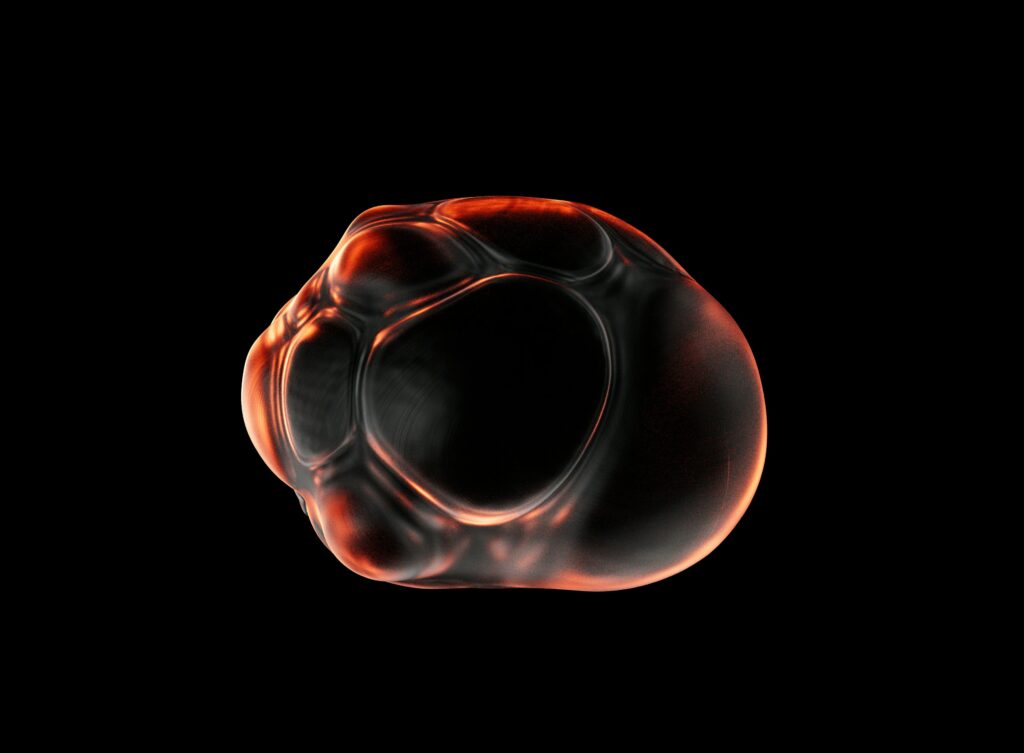
The proposed 350 cubic metre habitat is designed to launch compacted inside a single SpaceX Falcon 9 rocket before expanding in orbit, removing the need for complex assembly in space. Max Space says the finished habitat would offer around a third of the volume of the International Space Station (ISS).
OMI has approached the interior as a place where astronauts could live for months or years, rather than designing it primarily as a laboratory. Plans include private crew quarters, scientific laboratories, mission control facilities, exercise areas, communal spaces and modular research equipment.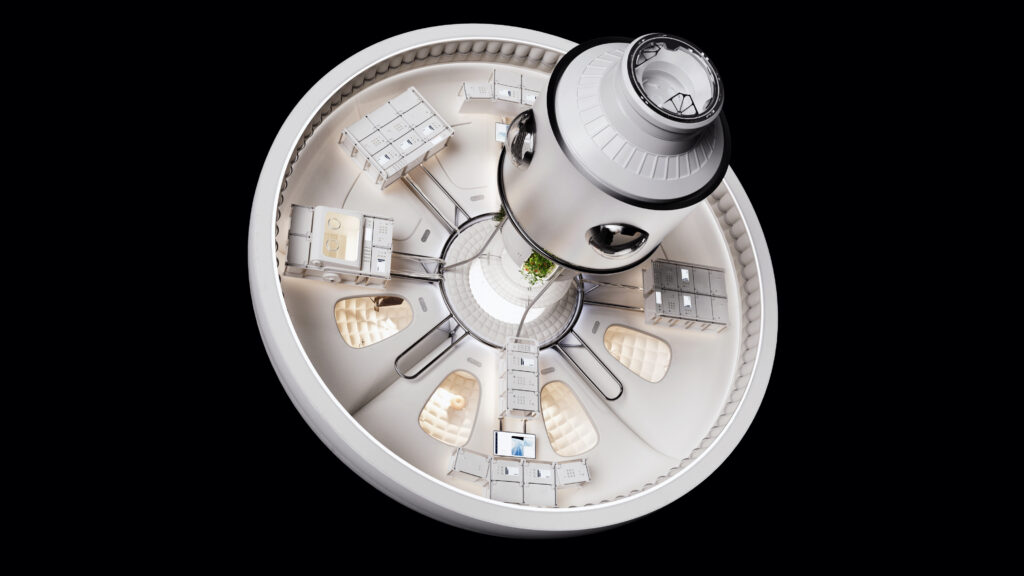
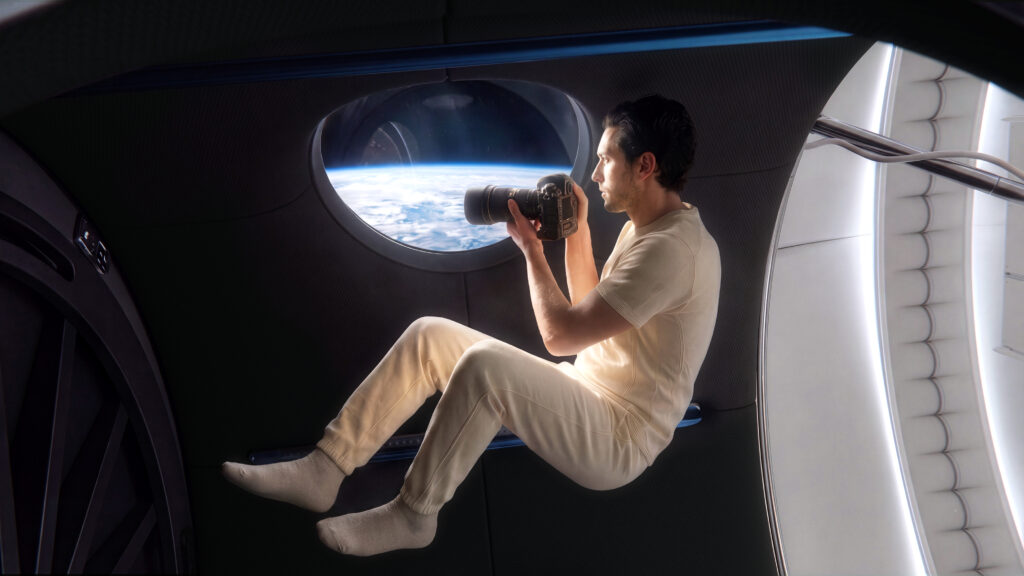
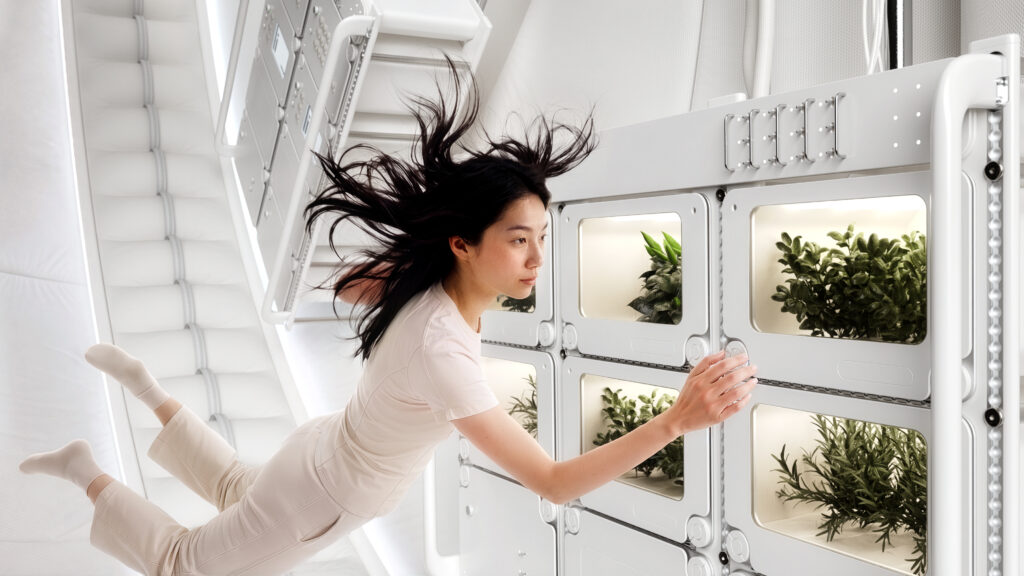
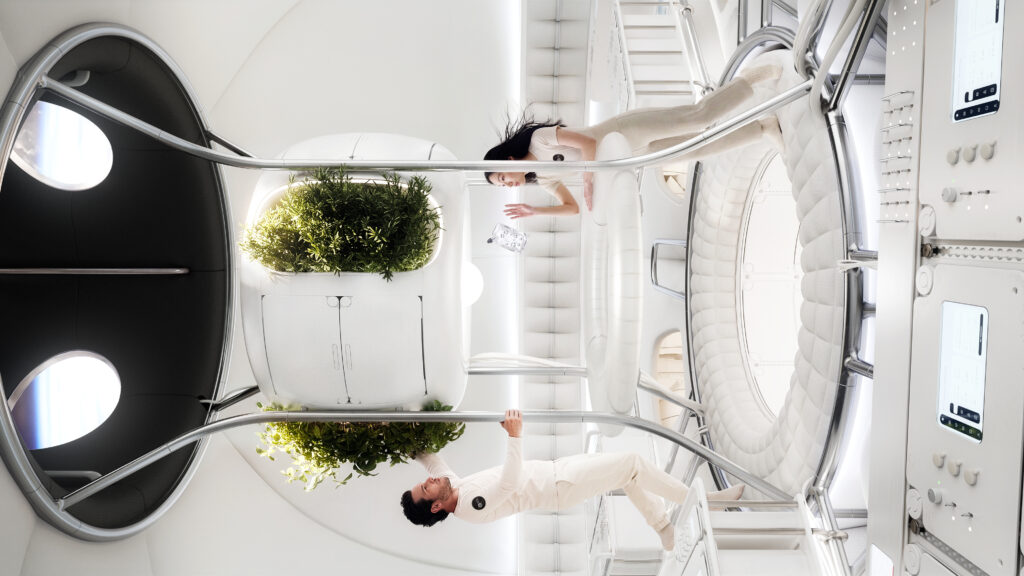
The elliptical station has no conventional floor or ceiling because of its microgravity environment. Instead, Omi has created a radial layout around a central equipment core, with handholds and a foot-tether system allowing astronauts to move through and use surfaces in different orientations.
The design draws inspiration from 2001: A Space Odyssey and Nasa's Skylab space station. Lighting is intended to reproduce natural daily cycles and help maintain astronauts' circadian rhythms while keeping the crew aligned with the time zone used by teams on Earth.
At the centre is a shared social area with kitchen facilities and plants, while hygiene areas sit behind bulkheads to provide privacy. A separate retreat has four windows providing 360-degree views of Earth.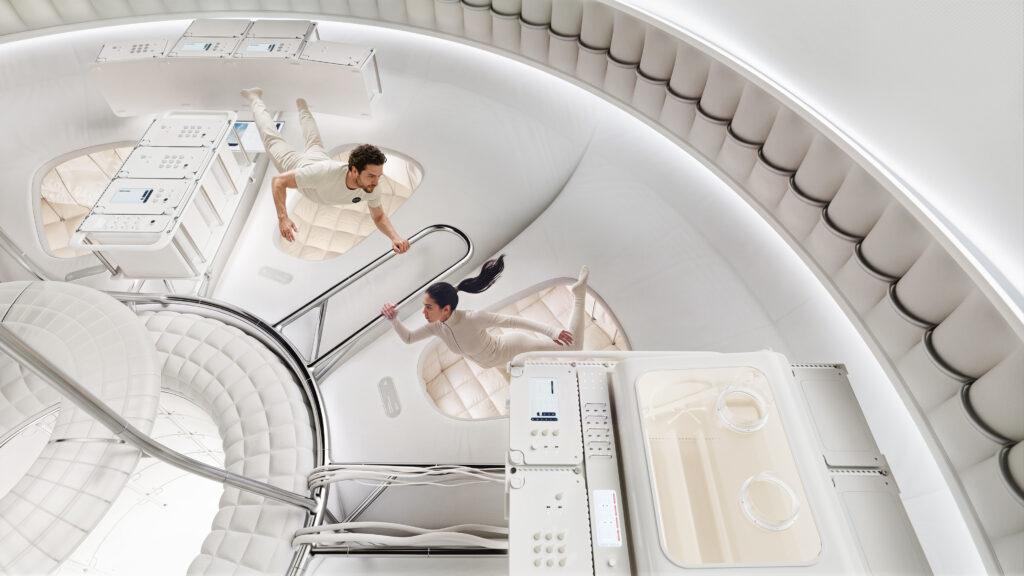
Private textile sleeping pods give astronauts room for personal belongings, photographs and devices. The soft structures are designed to be customisable and repairable, while separating private areas from work and communal spaces.
Dan Window from Omi says: “At Omi our best work happens when challenging what is possible in transport design. By engaging at the very start of the Thunderbird project, we were able to employ our unique expertise to create a completely novel habitat which rethinks how humans live in space. It is incredibly exciting to define a new system to work in micro-gravity, especially when there are no existing reference points. Our design language for the project is focused on creating an environment that is as functional as it is liveable.”
Omi worked with former Nasa astronaut Nicole Stott on the concept, drawing on her experience in space as well as the studio's previous work designing the Space Perspective Neptune capsule.
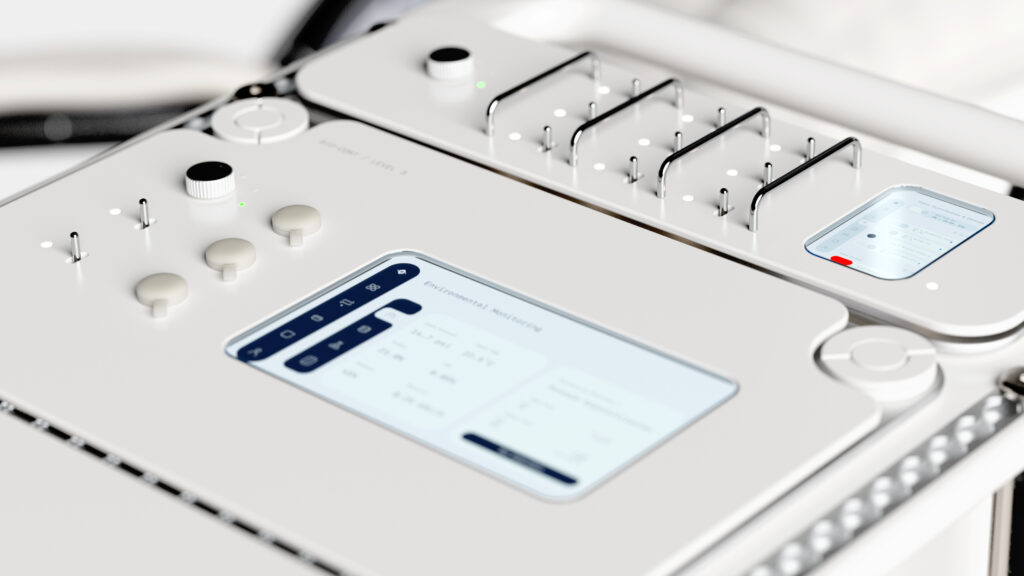
Research remains a major part of Thunderbird. More than 60 reconfigurable payload lockers are planned, based around the Nasa ISS Express rack system. A modular track and tubular frame will allow astronauts to attach and reposition experiment racks, cameras, laptops, grab bars and other equipment as mission requirements change. Integrated cable management is intended to reduce clutter.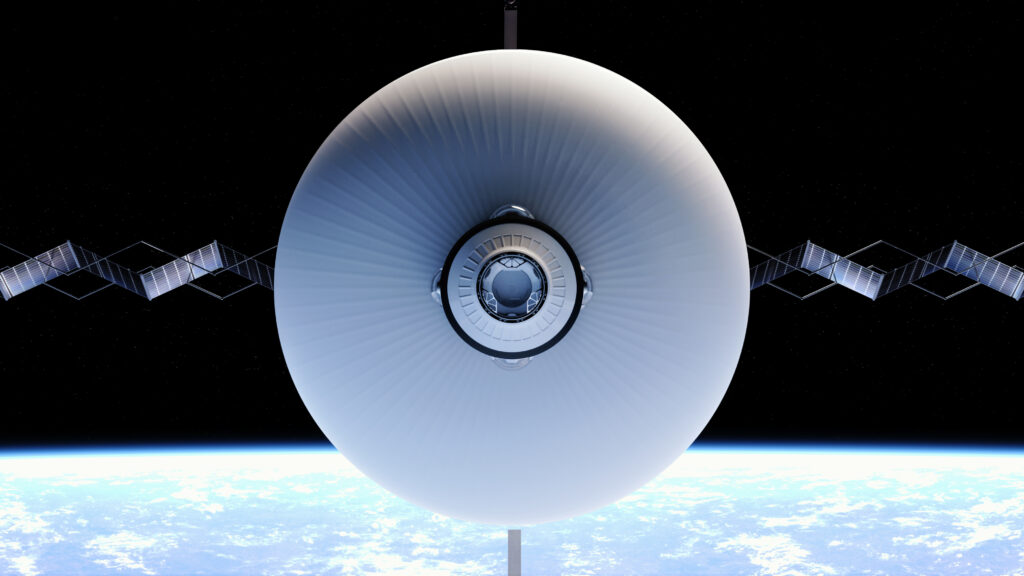
Max Space says the expandable structure uses multiple layers of materials including Kevlar and has been designed with three times the required safety factors. Testing completed so far meets or exceeds Nasa standards covering thermal conditions, compression, vibration, vacuum and micrometeoroid protection. The project is being developed with industry partners and ongoing Nasa support through Space Act agreements.
Saleem Miyan, co-founder and CEO of Max Space, says: “Finalising the concept for the Thunderbird platform marks a significant step towards commercial reality for Max Space. Working with strategic partners and NASA, we are incredibly proud to present this design. Working closely with Omi, our partners and our ex-NASA astronauts team members, the habitat design is a viable and evolutionary leap towards the future of human habitation beyond Earth.
“With the committed involvement of our lead astronaut who spent months in space at the ISS, the team has done a beautiful job of relieving the frustrations involved in current space habitats (privacy, small spaces, and laboratory environments), and I’d love to experience the Thunderbird station myself.”
Max Space says its expandable habitat technology can increase to 20 times its packed volume after deployment. The company is developing the system for potential use in Earth orbit and, longer term, on the Moon and Mars.