

MBM Chalets on the future of luxury Alpine rentals
Matthew Burnford, founder of MBM Chalets, speaks to Globetrender about next-generation chalet service, the changing needs and demands of owners, and the growing importance of guest vetting.
You started as a chalet owner yourself. What frustrations or gaps in the traditional agency model prompted you to launch MBM Chalets?
The gap between what agencies promised and what they delivered was a major driver for me. There was often a one-size-fits-all approach that ignored the character of the property, no transparency on financials or occupancy decisions, and poor communication with slow response times. Agency interests consistently came first, not the owner’s. MBM was founded to put the owner genuinely at the centre of everything.
How would you characterise the biggest pain points luxury chalet owners face today?

There can often be a lack of proper vetting of guests, and agencies may focus on filling dates rather than protecting the owner’s home. Service standards can be inconsistent and may deteriorate through the season, while communication is sometimes limited, with owners needing to follow up for updates. Agencies can, at times, act in their own commercial interests rather than the owner’s, and there isn’t always recognition that owners have widely differing objectives.
Some want to let all season, others specific weeks; some need full management, others a lighter touch. There may be limited bespoke or flexible offering tailored to the individual property or owner, and a lack of personal service can mean owners feel like one of many. Maintenance and presentation standards can also slip when no one is watching.
Why do so many high-end chalets underperform financially despite significant investment?
A lot of this comes down to how properties are positioned. They’re often priced and marketed generically rather than to their specific strengths, with photography, copy and marketing that does not always fully reflect the level of investment. There can also be an over-reliance on agency databases instead of targeting high-net-worth channels directly, and revenue strategy isn’t always built around the property’s individual peak demand windows.
Letting calendars are driven by what suits the agency, rather than what maximises the owner’s return. On top of that, limited guest vetting can lead to the wrong clientele, impacting both the property and its market reputation.
Are we seeing a structural shift away from agency-first models, and what is driving it?
Yes, and it has been building for some time. Owners are better informed and far less willing to accept opaque arrangements, and those who treat their chalet as a serious asset now expect serious asset management. Technology has given owners greater visibility and made direct marketing more accessible, while boutique operators are winning business by offering genuine flexibility, personal service and transparency.
The pandemic really sharpened awareness; owners who spent more time in their properties saw the shortfall clearly. There’s also a growing recognition that poor guest vetting can cause damage and reputational harm that falls entirely on the owner.
How have owner expectations evolved over the last five years?
Owners have widely differing objectives and expect those to be understood – rental strategy, management scope and personal use should all reflect the individual. Flexibility around owner use is non-negotiable, and there’s stronger demand for wellness, privacy and exclusivity over the traditional heavily staffed model. They want a genuine partner, proactive and always accessible, not a company that has to be chased.
Regular, clear and unsolicited communication is now the baseline expectation, alongside greater scrutiny on net returns and what they’re actually paying for. Owners are also no longer willing to accept their home being let to anyone who can meet the weekly rate.
Why is the classic fully catered chalet model starting to feel outdated?
Younger ultra-high-net-worth guests want flexibility rather than a fixed daily programme, and the model itself was designed for scale and simplicity, not around the individual guest or property. High staffing costs are increasingly hard to justify when guests prefer curated, on-demand experiences.
Privacy and autonomy are now central to luxury travel, and a house full of staff can actually work against that. Owners are also questioning whether the overhead serves their financial interests, and historically the model made guest vetting a low priority where volume mattered more than quality.
What does next-generation chalet service look like across Switzerland, France and Italy?
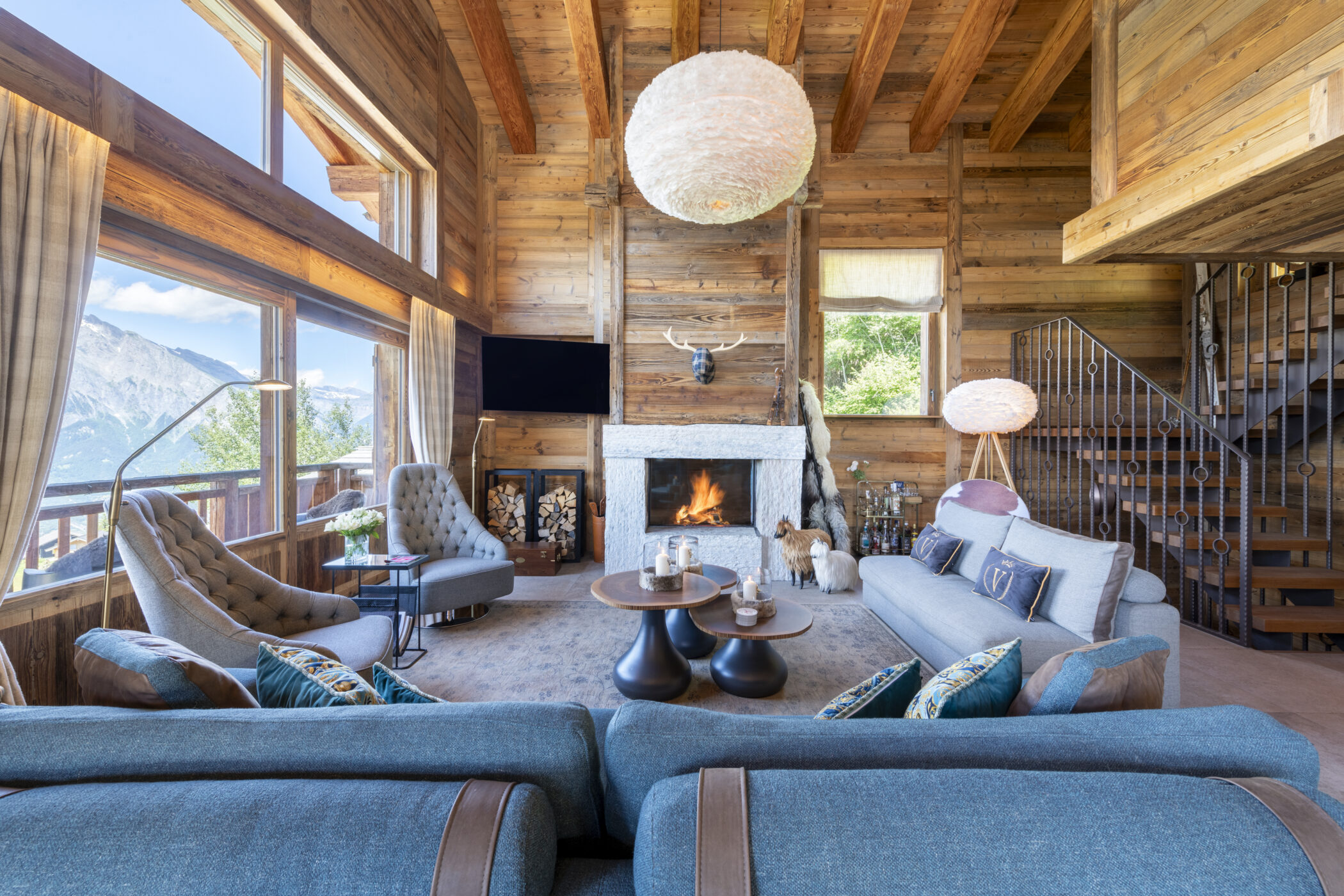
It starts with rigorous guest vetting as standard, with every booking assessed against the owner’s expectations. From there, it’s a personalised guest journey from first contact through to post-stay follow-up, with flexible service formats – fully catered, self-catered or hybrid – built around both the property and the guest.
Concierge capability needs to be grounded in genuine local relationships in each market, alongside real-time owner reporting on bookings, financials and maintenance. Staff should be selected and trained specifically for each property and its clientele, with consistent standards across all three markets for owners operating in more than one country.
How important is integrating design, management and rental under one roof?
It’s becoming increasingly essential. Fragmented relationships create gaps in accountability and inconsistent standards, and owners want the original vision behind their property protected, not handed over to operators with no part in creating it.
An integrated model means rental strategy informs design decisions from the outset, and guest vetting is more consistent when the same team manages both the property and the bookings. Having a single point of accountability drives faster decisions and higher standards, and owners who engage us during a build or renovation see the benefit from the first season.
Where are the strongest investment opportunities in the Alps, particularly within the 4 Vallées?
The 4 Vallées and Verbier in particular, remains our strongest market for capital appreciation and rental demand. At the same time, there’s growing interest in less saturated resorts that offer better value per square metre with strong rental fundamentals. Italy is increasingly compelling – Cervinia and Courmayeur are attracting serious buyers, and we are well positioned in both.
The most attractive properties are those that combine genuine owner-use appeal with real rental flexibility, although that combination is becoming harder to find. Buyers who move now in the right locations are well placed ahead of a tightening in quality supply, and we’re already seeing that properties with strong vetting records are achieving better resale valuations – the market is beginning to price quality of management.
Looking ahead to 2030, how will the luxury chalet experience evolve?
Guests will expect hotel-level consistency delivered with the privacy of a personal home, and guest vetting will become part of the premium proposition – both discerning owners and guests will seek operators with rigorous standards. Sustainability will shift from being a footnote to a genuine differentiator, and smart homes, seamless booking and real-time owner dashboards will become standard at the top end.
Ultimately, the winners will be those who can deliver genuinely bespoke service at a consistently high level, with the reach to perform across multiple markets. The generic agency model is in structural decline and MBM was built for exactly the market emerging in its place.