

New slimline seats to give Easyjet passengers more legroom
From 2028, Easyjet will introduce ultra-lightweight economy class seats, alongside a slew of carbon-reduction innovations. Jenny Southan reports
Easyjet is introducing a new generation of ultra-lightweight seating as part of efforts to reduce fuel consumption and improve operational efficiency. The rollout of the new Easyjet seats will begin from 2028 on newly delivered aircraft, marking a shift towards simpler, fixed designs that prioritise weight reduction over traditional comfort features.
The airline will become the first to install the new Kestrel seats, developed by Mirus Aircraft Seating, on Airbus A320neo and A321neo aircraft. These will be delivered as part of a wider order of 237 aircraft, with the updated seating rolled out gradually across the fleet.
Johan Lundgren, CEO of Easyjet, says: “We are constantly looking at ways to make our operations more efficient while delivering a great experience for our customers. These new seats are an important part of that journey, helping us to reduce weight and therefore fuel burn, while maintaining comfort.”
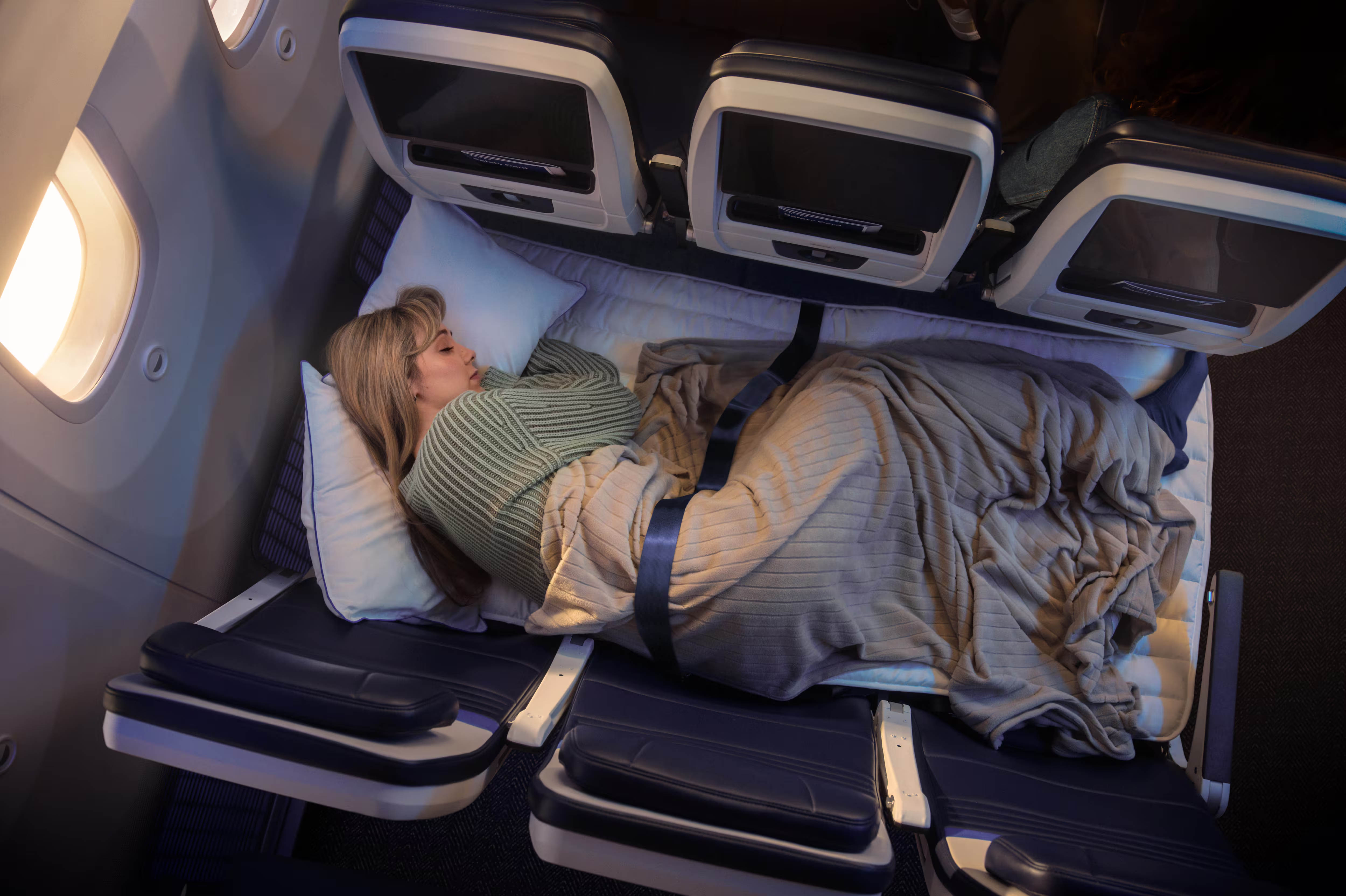
A key feature of the new Easyjet seats is that they do not recline or adjust in any way. The fixed design removes mechanical components typically used for seat movement, helping to reduce both weight and maintenance requirements. This reflects a broader trend among low-cost airlines, where cabin design is increasingly focused on efficiency and durability.
Thanks to a preset recline of 22 degrees and less chunky proportions, Easyjet says the seats will effectively offer up to two inches of additional legroom without the airline having to change the "pitch" between rows. There also be new back-of-seat "sheaths" to store bottles and other personal items.
The airline states that the design has been developed to improve comfort through shaping and materials, particularly for short-haul journeys which make up the majority of its network.
Ben McDonald, director at Mirus Aircraft Seating, says: “The Kestrel seat has been designed to deliver a step change in lightweight seating, offering airlines meaningful fuel savings while maintaining passenger comfort and durability.”
The seats are more than 20% lighter than those currently in use, which is expected to deliver significant environmental benefits. Easyjet estimates the change will reduce carbon emissions by around 40,000 tonnes of CO2 annually, as lighter aircraft require less fuel to operate.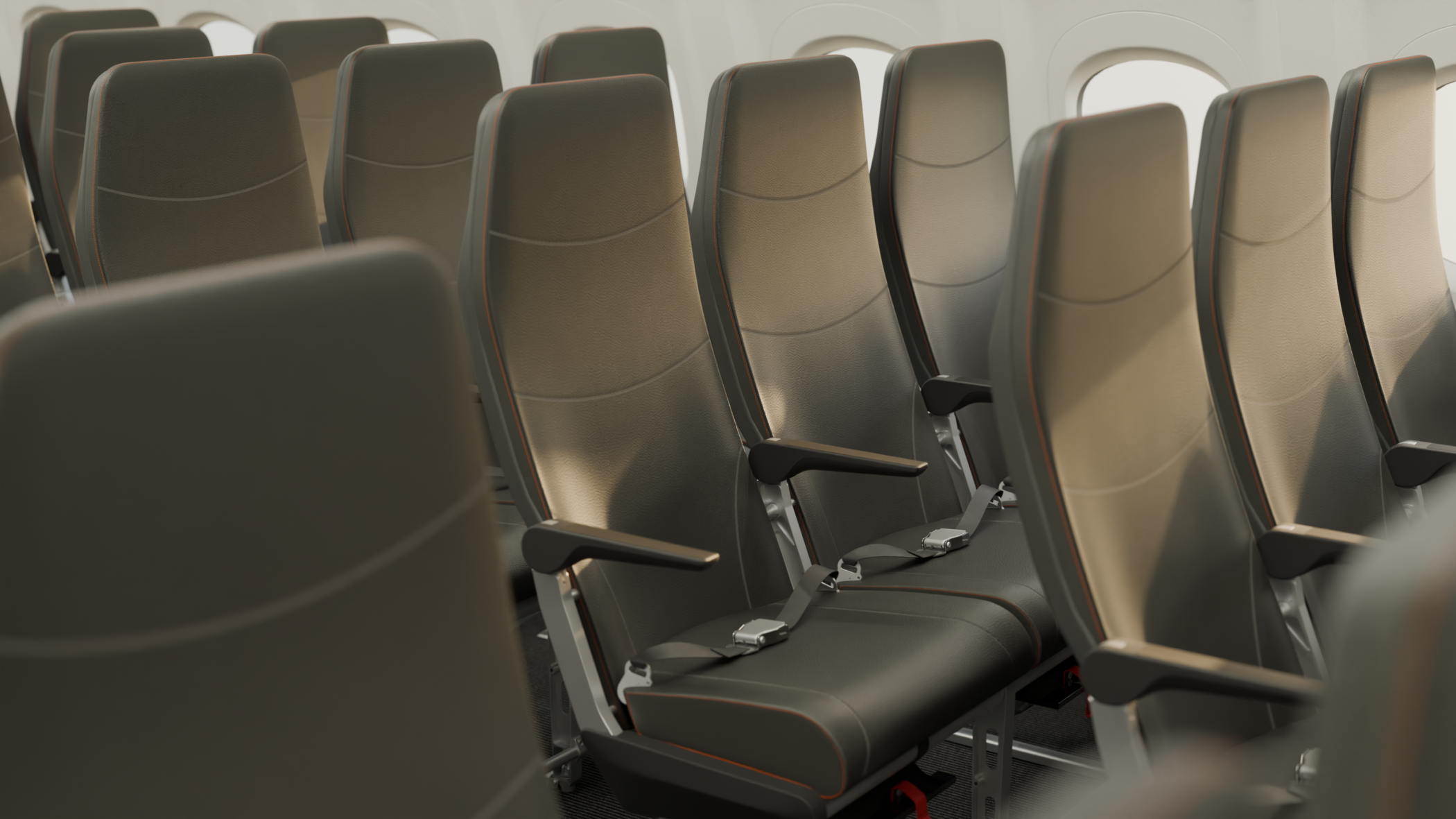
Easyjet eco innovations
NEO fleet expansion: A critical component of Easyjet's strategy in the near to medium term is the continuous renewal of its fleet with the latest generation of aircraft. The airline is proactively phasing out its oldest aircraft (A319 and A320ceos) and replacing them with newer, highly efficient, models from the NEO family (A320neo and A321neo).
Over a quarter of the fleet is currently comprised of these new aircraft, which significantly reduces emissions and minimises fuel burn. These NEO aircraft offer substantial benefits, offering at least 13% more efficiency and reducing noise by 50%.
Sharklet upgrades: Easyjet is enhancing its A320ceo fleet with advanced sharklets by summer 2026, a crucial medium-term solution developed in partnership with Airbus. Sharklets are blended winglet devices installed at the tips of the wings which significantly reduce drag by weakening wingtip vortices, leading to an annual saving of approximately 308 tonnes of fuel and 970 tonnes of Co2 per aircraft, delivering immediate and measurable reductions across the fleet.
Taxi Management Optimisation: This brings together Single‑Engine Taxiing, which cuts fuel use and carbon emissions during ground movements, with data‑driven taxi‑time calculations that ensure only the fuel needed for taxiing is loaded, reducing unnecessary weight, cost and emissions
Lighter paints: In 2025, Easyjet announced the adoption of a new lower-weight paint system, which is expected to achieve fuel savings of 1,296 tonnes and CO₂ reductions of 4,095 tonnes once fully implemented across the entire fleet by 2030. Easyjet is the first airline to test this paint solution developed by Mankiewicz Aviation Coatings.
APU Reduction: Easyjet has equipped all contact stands at Milan Malpensa Airport with Pre-Conditioned Air units, 16 in total. These units enable our pilots to switch the APU off for the majority of the turnaround, regardless of temperature enabling significant APU savings, with an average of 2kg of fuel and 6kg of C02 per minute.
FANS-C: Easyjet has invested in Airbus‑developed FANS‑C navigation software across its A320neo and A321neo fleet, enabling aircraft and air traffic control to share precise, real‑time flight trajectory data. This improves route planning and communication, helping reduce congestion, fuel burn, emissions and delays, while supporting more punctual operations as European airspace becomes increasingly busy.
SpaceFlex upgrades: Starting 2026 Easyjet is enhancing a number of its 180-seat A320ceo aircraft with SpaceFlex rear galley and lavatory arrangements, a highly space efficient cabin enabler developed by Airbus. SpaceFlex facilitates the installation of an extra row of seats on each aircraft, helping further reduce the airline's carbon intensity per passenger with no loss of passenger comfort.