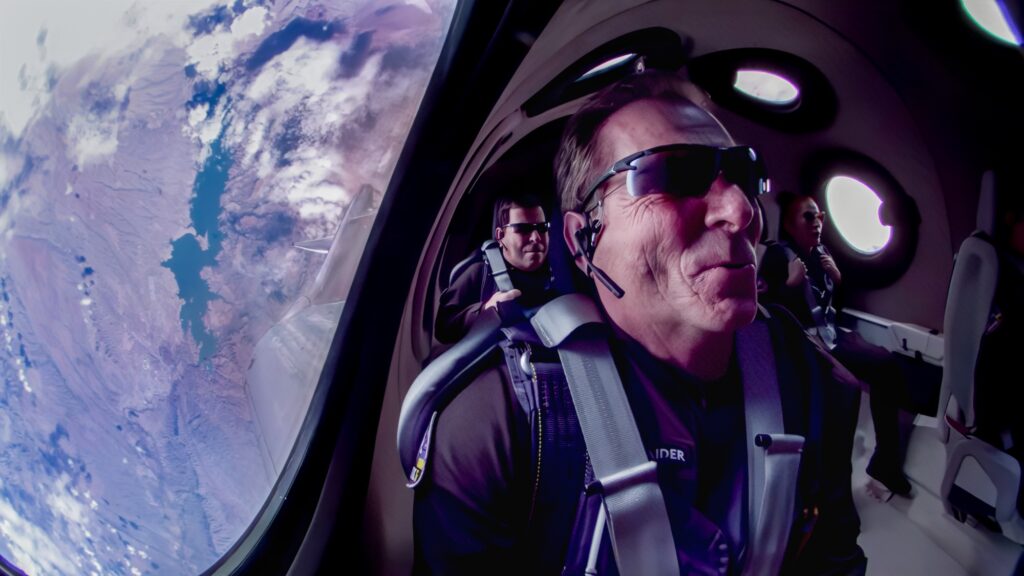


Space tourism raises fertility concerns as commercial flights increase
With billionaires racing to open up space tourism and plans for Mars colonies taking shape, scientists are warning that we still don't understand how zero-gravity space flight affects human reproduction. Olivia Palamountain reports
With commercial space flights burgeoning and civilians beginning to travel beyond Earth for leisure, scientists have warned that the risks to reproductive health from zero-gravity and radiation remain dangerously under-examined.
A team of international experts, including a Nasa scientist, has published a study in the journal Reproductive BioMedicine Online highlighting urgent gaps in understanding how spaceflight affects human fertility, pregnancy and foetal development.
Giles Palmer, a clinical embryologist and one of the paper's authors, says guidelines are needed before "things get out of hand", according to The Times.
Last year saw a record 70 people launched into space, including singer Katy Perry. With Elon Musk, Jeff Bezos and Richard Branson competing in the space tourism market – and Musk hoping humans will eventually establish colonies on Mars – reproduction in space has moved from abstract possibility to practical concern.
While Nasa says there is no record of humans having sex in space (let alone giving birth), it is known to be a hostile environment for human biology.
Drawing on limited laboratory and human data from past missions, the report characterises space as a hostile setting for healthy reproductive processes. Known adverse factors include altered gravity, exposure to cosmic radiation and disruption of circadian rhythms, all of which can interfere with normal physiology relevant to fertility and pregnancy (Space Daily).
Fathi Karouia, a senior research scientist at Nasa and study co-author, says: "As human presence in space expands, reproductive health can no longer remain a policy blind spot. International collaboration is urgently needed to close critical knowledge gaps and establish ethical guidelines that protect both professional and private astronauts."
Palmer adds: "As human activity shifts from short missions to sustained presence beyond Earth, reproduction moves from abstract possibility to practical concern."