

Strategic foresight gains urgency amid Middle East conflict
In our Executive Travel Pulse survey of C-suite and director-level travel leaders, respondents identified a key emerging risk from the ongoing Middle East conflict: brands failing to adapt, innovate and apply strategic foresight in a rapidly shifting landscape. Robbie Hodges reports
With limited reliable data on travel industry sentiment towards the ongoing conflict in the Middle East, we turned to our network of C-suite and director-level travel leaders to understand how the ongoing conflict is shaping consumer behaviour and business strategy. This is one of three dispatches drawn from the findings, with the remaining two linked at the end of the article.
The results reveal a landscape defined by both disruption and opportunity: while the conflict is reshaping demand flows, operations and traveller priorities, it is also creating openings for agile brands to respond strategically. We asked executives to identify the biggest perceived risks and opportunities emerging from the crisis. While responses varied, three clear themes stood out.
The redistribution of demand
At a macro level, executives point to a geographical reshuffling of global travel demand. One respondent noted the biggest risk to their business as regional contagion, in which “a conflict in one geography depresses demand across an entire hemisphere”.

However, as instability deters travel to affected regions, alternative destinations are absorbing displaced demand. This includes short-haul shifts within Europe, alongside long-haul redirection towards the US, Caribbean, South Africa, Asia and South America. More niche “safe haven” destinations, such as the Swiss Alps, Norway, Iceland and remote regions of Africa, are also gaining traction.
“Gepolitical instability effectively redraws the map of desirability,” said one respondent, who identified stability as the new luxury asset. “In a less predictable world, destinations where institutions function, infrastructure is reliable, and travel feels safe will pull decisively ahead.”
Domestic travel is another key beneficiary. UK-based respondents, in particular, highlighted renewed potential for staycations, echoing patterns seen during the Covid-19 pandemic, when coastal and secondary destinations such as Margate, Cornwall and Northumberland experienced a surge in demand.
Layered onto this is a broader climatic shift. With rising temperatures already pushing travellers away from equatorial hotspots, geopolitical instability may further accelerate interest in cooler, northern European destinations during peak summer months.

From investing in efficiency to strategic foresight
Beyond geography, the conflict is acting as a catalyst for organisational transformation. For some, this means moving away from over-reliance on specific regions or customer segments; for others, it involves building more adaptive marketing and distribution strategies.
There is also growing recognition of the need for strategic foresight capabilities. As one respondent put it: “The biggest opportunity will be around new innovations that are emerging and will emerge that help to facilitate disruption. The biggest risk is that certain companies fail to adapt or identify ways forward.”
Scenario planning, horizon scanning and futures thinking, once considered niche, are increasingly seen as essential tools for navigating uncertainty – all of which feature in Globetrender's Futures Literacy workshop, recently delivered for travel curator Up Norway. As one respondent implied, resilience is no longer just about recovery, but about anticipation, with “complacency” identified as the biggest risk to the sector.
“Once the shoots of recovery start there is the risk of short-term memory loss in favour of rebuilding quickly. There should be time spent on preparation for future disruption to build business resilience,” the respondent said.

The limits of automation
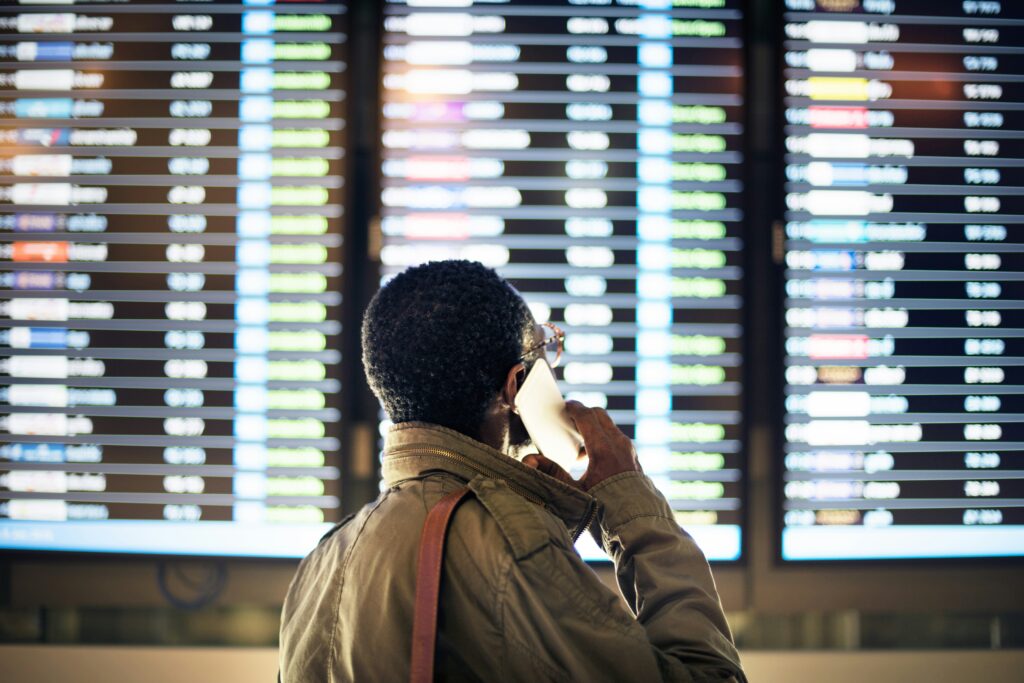
If the pandemic accelerated automation, the current crisis is exposing its limits. A recurring theme among respondents was the failure of purely digital customer service models during moments of disruption. Travellers stranded or forced to change plans reported frustration with AI-powered chatbots and a lack of access to timely, human support.
One respondent identified the biggest opportunity as consolidating the “reassurance and expertise of booking with a travel agent,” while another posited that “those who offer flexibility, loyalty and support to travellers during the crisis, will bounce back quicker as the loyalty from customers will be reciprocated”.
What’s clear is that many executives see an opportunity to reinvest in human connection by being empathetic and responsive to the nuanced, ever-shifting circumstances. Providing clear, up-to-date information, offering flexible rebooking policies, and maintaining open lines of communication are all seen as critical to retaining customer loyalty.
Brands that demonstrate reliability and care during periods of uncertainty are likely to emerge stronger – deepening relationships and reinforcing their value proposition in the eyes of travellers.
Explore the full findings of Globetrender's Executive Travel Pulse
- Destination switching is redrawing global travel map
- Travel execs remain hopeful amid Middle East conflict
Methodology
Globetrender surveyed 41 senior travel industry leaders from globally operating brands, with 63% of respondents at C-suite level (including CEOs and founders) and a further 32% at director level. The 20-question online survey was conducted in March 2026, capturing perspectives across sectors including hospitality, aviation, travel technology and tour operations.
Responses were anonymised and analysed to identify key quantitative trends and emerging qualitative insights, reflecting industry sentiment at a specific moment in time amid ongoing geopolitical uncertainty.