Global business travel spending is projected to reach US$1.64 trillion in 2025, up from US$1.48 trillion last year, according to the Global Business Travel Association (GBTA). As the sector grows, the way employees travel – and how companies manage that travel – also continues to evolve.
Alongside partners at travel trend forecasting agency, Globetrender, Amadeus Cytric has explored the biggest developments and transformations anticipated this year and share a report on "Business Travel Trends 2025", which is free to download.
Thanks to investment in AI-driven technologies, business travel is becoming more flexible, streamlined and tailored to the needs of everyone. Travellers themselves have a greater awareness of the impact of their trip on their wellbeing and on the world around them. By embracing these shifts, companies can maximise the value of corporate travel, empower their workforce, and stay competitive in an ever-evolving world.
Jenny Southan, CEO and founder of Globetrender, says: "Business travel is evolving in response to shifting workforce expectations, new technologies and a greater emphasis on wellbeing and human connections. In 2025, companies that adapt – whether through AI-driven automation, reimagined meeting spaces, or a more strategic approach to traveller health – will be best placed to maximise the value of corporate trips. This report explores the key trends transforming the future of business travel, providing insights that will help organisations stay ahead in a rapidly changing landscape."
1. Agentic AI is transforming the way corporations manage travel and expense 
The next wave of AI will move the technology from passive assistance to proactive functionality, with Agentic AI working behind the scenes allowing travelers, travel managers travel agents and finance teams to focus on more valuable tasks. Over the last two years, Generative AI has been all about offering supportive assistance; from 2025 onwards, and the next stage will be defined by ‘proactive functionality’.
Rather than simply responding to requests, Agentic AI will autonomously anticipate traveler needs, helping them to rebook flights in real-time, optimize itineraries based on changing schedules, and even help travel managers negotiate hotel rates, as well as create, audit and approve expense reports. This shift means business travelers will experience a seamless, highly personalized journey with minimal manual input, allowing them to focus on productivity instead of logistics.
2. Biometric Gateways are enabling seamless, digitised airport experiences
 As airports and airlines increasingly seek to offer travelers smooth, fuss-free journeys, physical passports and even smartphone boarding passes are becoming outdated. Soon, travelers will be able to move through the airport without repeatedly showing travel documents or waiting in long queues, by simply having their face scanned at key touch points.
For frequent flyers, being able to move through an airport with minimal queuing is key to keeping stress levels down, so it’s no surprise to learn that 73% of global air passengers are interested in using biometric data instead of passports, according to IATA’s GPS 2024 report.
Vision-Box is leading the way with its facial recognition and smart automation technology that makes airport experiences smoother and safer.
3. Jetset Hacking is a growing trend as business travelers choose to prioritise their wellbeing on trips
 From sleep labs to cryo chambers, wellness-focused innovations are redefining business travel, helping professionals stay healthy and productive while on the move. Whether due to late dinner meetings with clients or sleepless nights caused by jet lag, business travel can take a toll on people's wellbeing.
However, as wellness becomes a growing priority for travellers, high-flying professionals have been paying far more attention to taking good care of their mental and physical health when travelling for work.
Mark Cullen, Chief Commercial Officer for Amadeus Cytric, says: “In 2025, business travelers are increasingly aware of the impact their journeys have on both their well-being and the environment. They are open to investing in more sustainable travel options that benefit themselves and the planet. Factors such as hybrid working arrangements, economic uncertainty, and geopolitical tensions are reshaping the priorities of travel managers and suppliers. Meanwhile, investments in new transformational technologies are helping travel providers enhance the overall experience, making business trips smoother and more efficient while also allowing providers to allocate resources more effectively.”
Clive Wratten, Chief Executive, The Business Travel Association, says: "This report makes it clear that business travel in is evolving at pace, shaped by advancements in AI, changing preferences for ways of working and what a modern-day workplace culture looks like, as well as a continued push for efficient travel solutions that also help travelers to inform themselves about the sustainability of a chosen trip.
"AI-driven automation is transforming corporate travel management, while biometric innovations are streamlining airport experiences – all of which are key developments as our national aviation sector faces ongoing pressures to improve efficiency and boost passenger capacity.
"Against a backdrop of economic uncertainty and changing trade relationships, we’re also seeing a renewed emphasis on domestic and regional business travel. As both our rail and air transport networks undergo reform and investment – including efforts to improve connectivity between key UK business hubs – it’s crucial that our travel infrastructure keeps pace with these shifting demands. We need to ensure that UK businesses and everyone travelling for work can move efficiently, affordably, and get information about sustainability – the key to maintaining our position as a global leader in business and innovation.”
This year, business travel spending will likely exceed pre-pandemic levels for the first time (US$1.5 trillion, compared with US$1.4 trillion in 2019) according to the Global Business Travel Association.
However, the way employees are traveling – and corporations are managing that travel – is changing. In Business Travel Trends 2024 (a report that is free to download), Globetrender (the UK’s leading travel trend forecasting agency) and Cytric Easy by Amadeus have together identified seven trends that will define business travel in the coming year.
Jenny Southan, CEO and founder of Globetrender, says: "When looking at the future of business travel in 2024, it's clear that two macro shifts are happening in parallel: technology is making the planning and execution of trips ever-more seamless; but there is also a desire to 'go back to basics', which is manifesting in nature-based corporate retreats and the revival of 'power lunches'.
"This highlights the enduring value of human connection in building good business relationships. Ultimately, every journey needs to be optimized to justify the return on investment, and the subsequent carbon impact of flying."
She adds: “If there is one word to sum up business travel in 2024, that will be 'discernment'. Employees no longer want to sacrifice areas of their personal lives to be constantly on the road, and companies need to balance the fulfillment of financial and ESG targets, which will mean all parties need to be more selective about what trips they commit to."
Deborah Mahoney, head of sales and business development – Americas, Amadeus Cytric Solutions, says: “Face-to-face meetings have many benefits, from increasing social capital to fostering ideas and engaging in more complex thinking together. In-person contact provides a competitive advantage when it comes to meeting clients and customers, as real conversations can generate more effective, efficient, and trust-building interactions.
“Value is key when it comes to business travel. A trip must fulfill multiple objectives, be increasingly sustainable, simple to book, and have a positive impact on both the employee and organization for it to be worth the time and money investment. Cytric Easy by Amadeus, the only travel booking tool embedded into Microsoft Teams unlocks new ways to travel, recommending employees who to meet with and when to achieve their business goals.”
 For corporate travellers, the emergence of Generative Artificial Intelligence (Gen AI) has catalysed the arrival of "AI PAs". These intelligent, 24/7, solutions can patiently help with everything from advising on itinerary options, to using natural language that guides the traveller on their company’s travel policy.
They can respond to a detailed trip brief: after inputting an initial prompt, the output generated is friendly and helpful in tone, and it is easy to continue the dialogue with follow-up questions.
 Scheduling team building days has often been used to bring people together, but a shift towards longer trips away, often in nature, is giving rise to the burgeoning trend. These corporate off-sites are being taken to the next level with an ever-greater array of immersive, surprising, and sometimes even extreme experiences, in domestic locations as well as abroad.
Forging camaraderie is seen as essential to cementing positive relationships between employees, boosting company loyalty and motivating people to work towards a common goal. To facilitate this objective, people need to be taken out of their comfort zone and forced to leave their ego at the door, with everything from white water rafting to tropical bushcraft being added to the agenda on these enhanced trips.
 As pressure grows to adhere to company sustainability mandates and manage outgoings in the face of soaring prices, there will be increased demands on employees to justify work trips. In the coming years, “Objective Stacking” – a term coined by Globetrender to describe trips that are planned to fulfill multiple goals – will become the default way of operating to maximize efficiency and value.
Instead of flying in and out for one meeting, sales pitch or event, business travellers will be required to build in time to meet clients, conduct reconnaissance, forge deals, investigate expansion opportunities, conduct competitor analysis or they might even want to tag on a vacation.
 A new corporate mindset and automated systems are enabling Blended Itineraries for business travellers, which go beyond simple "bleisure" trips that see a weekend tagged on to a few days of meetings. Central to what is taking off in 2024, though, is the relaxation and personalisation of these once rigid corporate travel policies that now place employee experience at the heart.
 In December 2023, the COP28 global climate summit concluded with an agreement to “transition away” from fossil fuel consumption and ramp up clean energy production, with the goal of achieving net-zero carbon emissions by 2050.
Sustainability ambitions are being taken seriously by the corporate travel world, with a survey of 896 senior decision-makers commissioned by Amadeus revealing that 90 per cent of travel companies had a strategy in place to reach environmental sustainability objectives or are planning to implement one in 2024.
As pressure grows to justify the environmental impact of business travel, companies will increasingly embrace Objective Stacking as a way of ensuring employees maximise the value of trips, as well as Blended Itineraries, which will facilitate this thanks to more flexible travel policies.
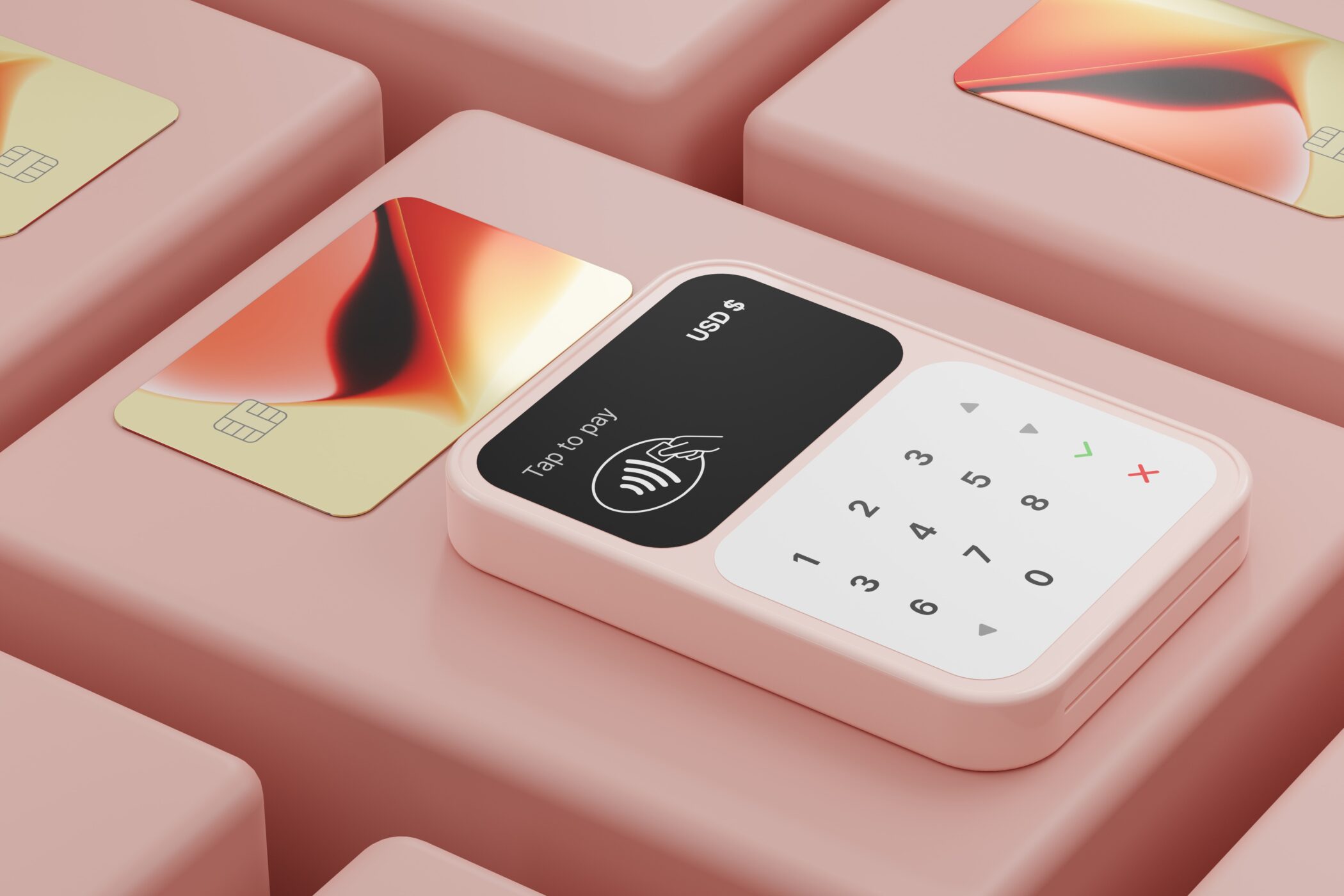 The world of corporate finance is leveling up, propelled by the transition to digital expensing and virtual cards for on-the-go expenses. The shift marks the end of an era dominated by cumbersome manual management of expense forms and the constant juggle of paper receipts.
For many companies this change signifies not just a procedural update, but a fundamental overhaul of how business transactions are recorded, processed, and analysed. Digitised Expenses will boost personalization and enhance the user experience, while ensuring data security and travel policy compliance.
 Finally, Power Networking will emerge as a new hyper-focused approach to acquiring and building new connections. Gone will be the days when delegates sneak off early from conferences or hide in their hotel room to avoid making small talk – in 2024 and beyond, every opportunity will need to be maximised.
After all, if employees are taking time away from their desks and families then they will need to ensure it is worthwhile. This means crafting richer itineraries with multiple meetings outside of the core agenda.