

Viking Libra is a zero-emissions cruise ship
Viking has floated out the world’s first hydrogen-powered cruise ship, marking a milestone for zero-emission cruising and signalling a shift towards cleaner maritime travel. Robbie Hodges reports
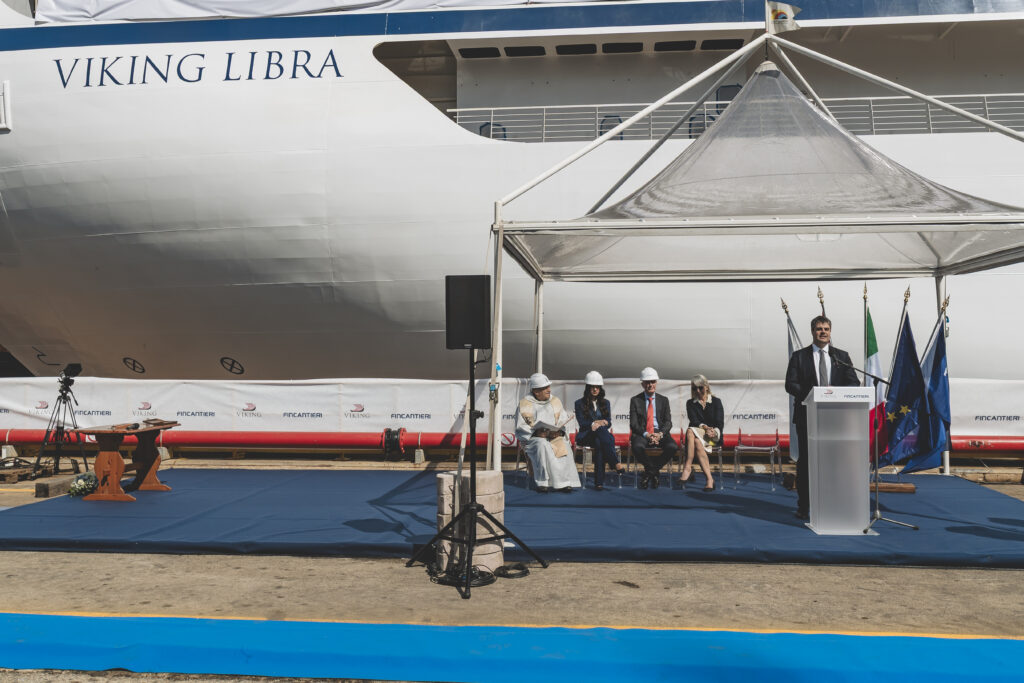
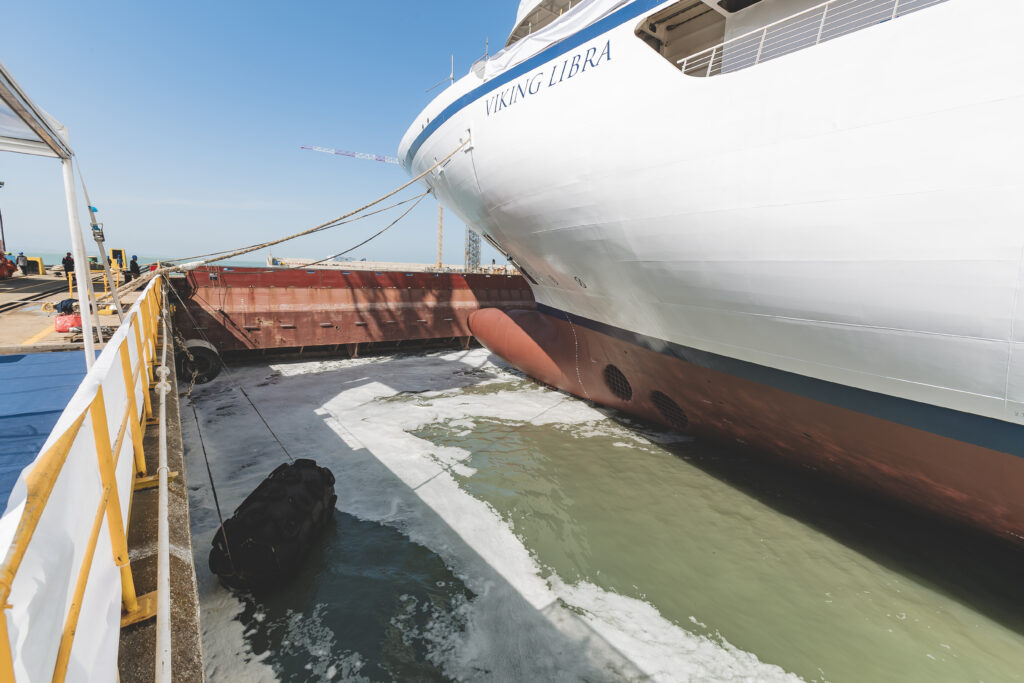
Viking has announced the float out of the Viking Libra, described as the world’s first hydrogen-powered cruise ship capable of operating with zero emissions. The milestone marks the first time the vessel has touched water and signals its transition into the final phase of construction ahead of its planned delivery in November 2026.
The ceremony took place at Fincantieri’s Ancona shipyard in Italy, where the ship was moved from dry dock into the water following a controlled flooding process. The float out is a key stage in shipbuilding, after which the vessel will undergo final outfitting and interior completion before entering service.
Torstein Hagen, Chairman and CEO of Viking, says: “The float out of the Viking Libra represents another milestone for Viking and our continued partnership with Fincantieri. From the beginning, our approach to ship design has focused on reducing fuel consumption, and the Viking Libra is our most environmentally friendly vessel yet. Investing in hydrogen was a principled choice for Viking, offering a true zero emission solution, and we look forward to welcoming the world’s first hydrogen-powered cruise ship to our fleet.”
Classified as a small ship, the Viking Libra will have a gross tonnage of around 54,300 tonnes and feature 499 staterooms, accommodating up to 998 guests. It will sail its inaugural season in the Mediterranean and Northern Europe, offering itineraries that could include access to environmentally sensitive areas due to its low-emission capabilities.
The ship’s propulsion system is based partly on liquefied hydrogen and fuel cell technology, developed in collaboration with Isotta Fraschini Motori, a subsidiary of Fincantieri. This hybrid system is expected to generate up to six megawatts of power, enabling the vessel to operate without emissions under certain conditions.
The introduction of hydrogen propulsion represents a significant step in the cruise industry’s efforts to reduce its environmental impact. Traditional cruise ships rely on heavy fuel oil or liquefied natural gas, both of which produce emissions. By contrast, hydrogen fuel cells generate electricity through a chemical reaction, producing only water as a by-product when operating in zero-emission mode.
Viking has confirmed that a second hydrogen-powered ship, the Viking Astrea, is already under construction and scheduled for delivery in 2027. This suggests that the company is investing in hydrogen as a long-term solution rather than a single experimental project.
The development comes as the wider travel industry faces increasing pressure to adopt more sustainable practices. Cruise operators in particular have been under scrutiny for their environmental footprint, prompting investment in new technologies and alternative fuels.
By introducing a ship capable of zero-emission operation, Viking is positioning itself at the forefront of this transition. The ability to sail in sensitive regions without producing emissions could also open up new routes and experiences that were previously restricted due to environmental concerns.
The Viking Libra will join the company’s existing ocean fleet, which has been designed with a focus on smaller ships and destination-led itineraries. With hydrogen technology now entering the mix, the next phase of cruise travel may see a stronger emphasis on both environmental performance and access to less-visited locations.