

Banyan Group co-founders share vision for next 30 years of business
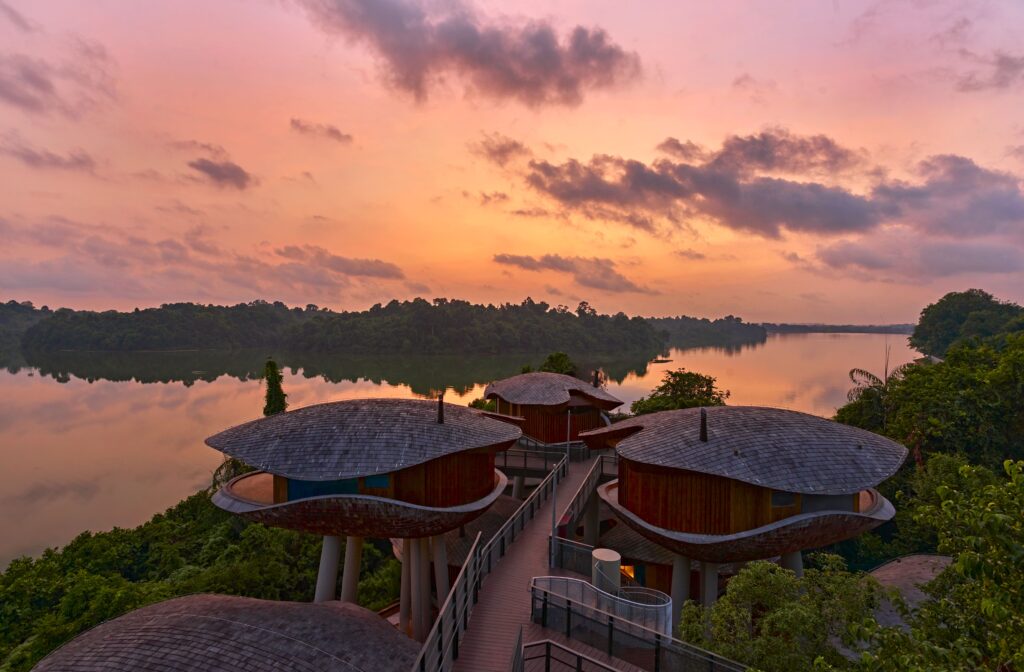
Operating for three decades, Banyan Group now has 100 properties globally – the latest being the Mandai Rainforest Resort by Banyan Tree in Singapore. Co-founders Ho Kwon Ping (KP) and Claire Chiang share their ambitions for the 'last independent hotel chain standing'. Jenny Southan reports
What does the next 30 years of Banyan Group look like?
KP: “More of the same – more of the good things that have taken us this far. We want more properties; we want more quality properties; and we want more distinctive guest experiences – all without changing our fundamental DNA.
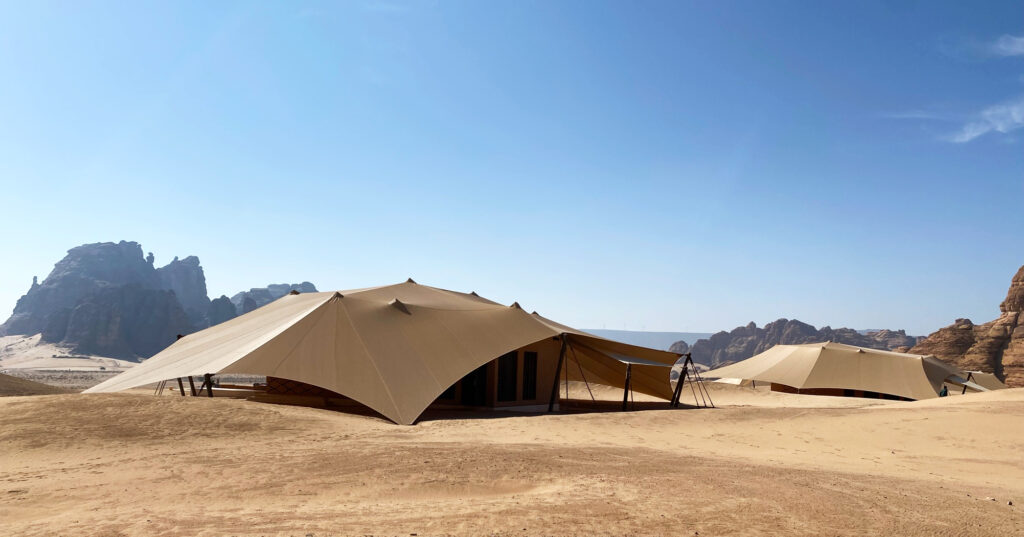
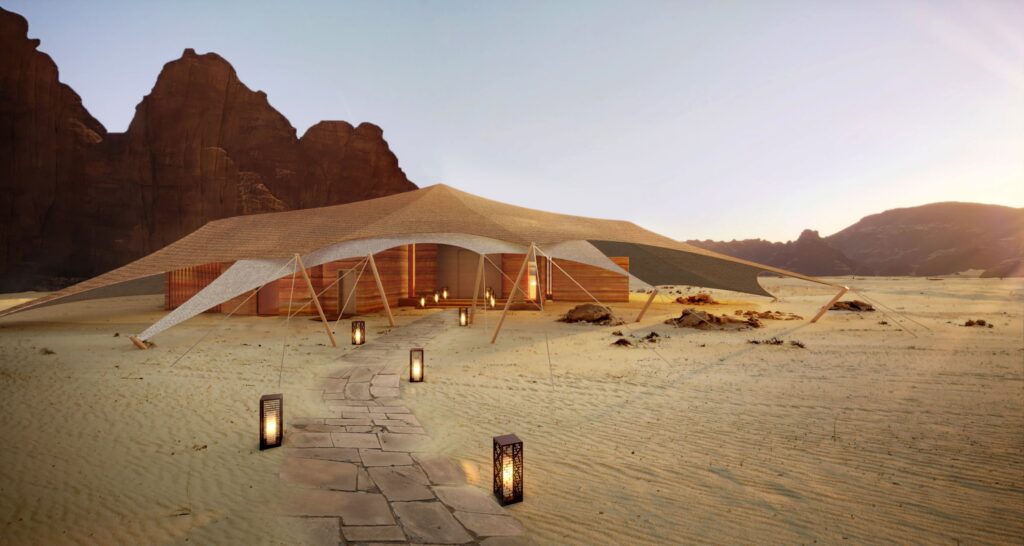
“In terms of how we want to evolve the guest experience, I say to people I would love to have one under the sea. I’d love to have one on the moon. On the coast of Norway. Meaning: different types of guest experiences. We’ve already done some of this with amazing places like AlUla in the desert (pictured below). We want to do mountain resorts. We want to grow in other parts of the world.
"We have always said that being global is not a reward for success; it’s an imperative for survival.

“We are probably the last independent hospitality chain of our kind still standing. Everyone else has been absorbed – some because they wanted to cash out, others because they had to exit due to financial issues. All the big names in my industry, especially the boutique companies, they’re all gone. They’ve all been absorbed into IHG, Marriott, or other entities.”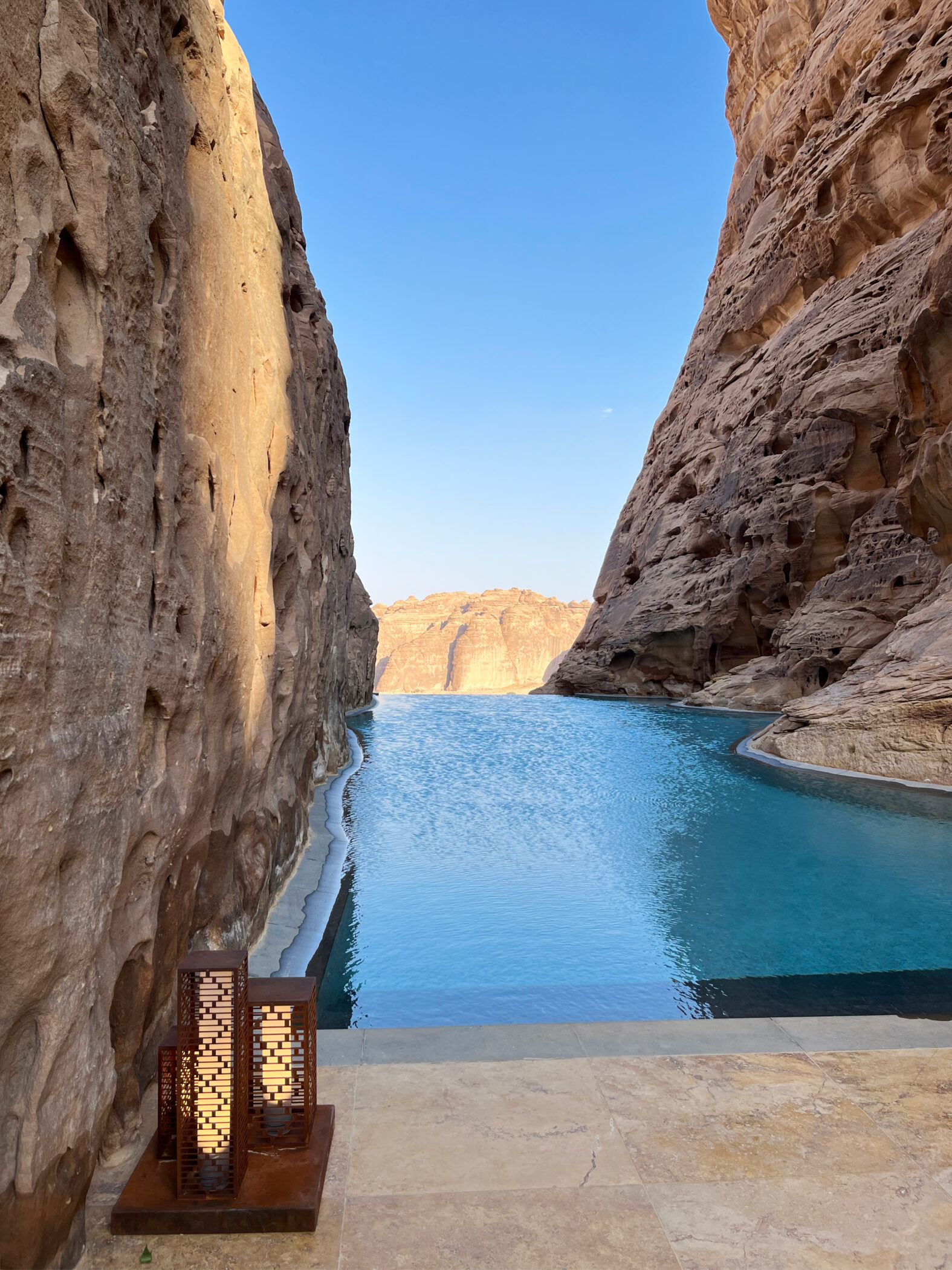
How do you balance purpose with profit?
KP: “The idea of tourism for profit cannot exist without tourism for impact. Profit is important – I want to be absolutely clear on that – but it cannot be the only purpose, or the dominant purpose. It cannot ignore the negative impacts that tourism brings.
“Profit is not the purpose, but you need profit to fulfil your purpose.
“I don’t want to over-praise Banyan Tree, but from day one, we’ve always recognised this. Among the big hospitality companies, we were one of the first to create an internal unit with a sustainability mandate like the one we have.
“Profitability is a hygiene factor – many companies can deliver it. But what differentiates you is your ethos – what you stand for, and the reality of your impact.”
How are you adapting to the evolving needs and demands of luxury travellers?
Claire: “We’re finding that travellers want places of interest; they want places where they can find purpose and meaning; they want to find themselves. Travel is a journey of discovery, and also a chance to network with people.
“With that in mind, I am creating a business direction called ‘the Life-cation’, which knits together our hundred properties to bring people of the world together around themes – to network and scale together.”
KP: “Conceptually, what’s interesting is that the world of travel works on two levels. One is the discovery of the new. The other is the re-discovery of the old, in new ways. Whether it’s London, Paris, Singapore, Hong Kong or Bangkok – tourists know these capitals well because they’ve been many times. The initial discovery is gone. But what about the Other Tokyo, the Other Bangkok, the Other London?
“The idea of ‘the other’ means rediscovering new elements in a place you think is familiar. That gives us two elements of travel: the initial discovery of something new, and the discovery of something new inside something old."
Claire: “That will be our differentiator, because our DNA is very focused on culture, heritage and legacy. Yesterday, a French guest told me he was going to China and didn’t want to see another temple. He asked: ‘What is the other Beijing?’
“My next programme will be the Other Shanghai. It is up to us to refocus on the soul and meaning of a destination and uncover its human narratives. It is content-based, enhancing guest experiences so they feel they have experienced the Other China or the Other Singapore.”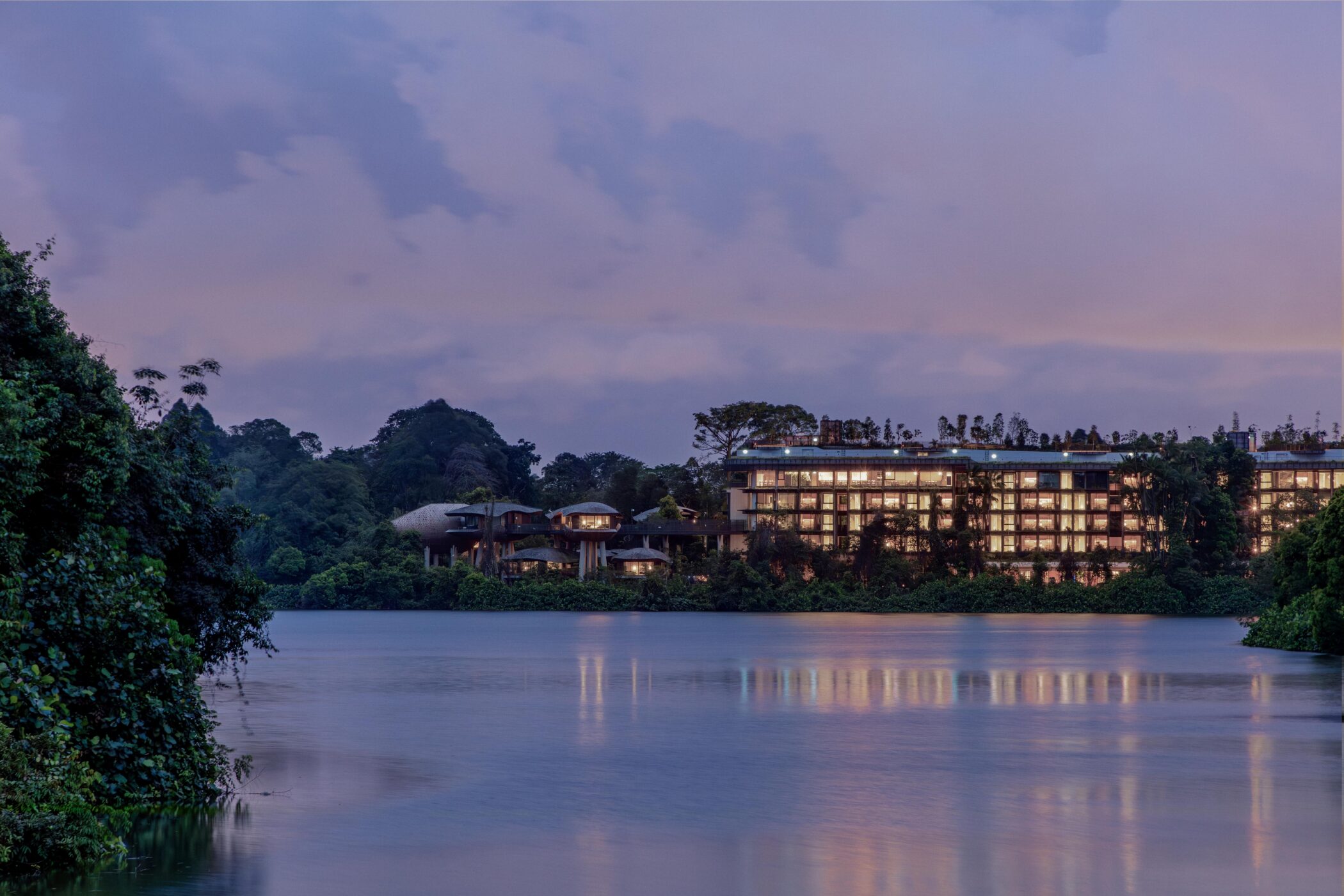
KP: “We’ve discussed internally that China has expanded its visa-free travel for many European countries out of necessity. And despite geopolitical tensions, people still love each other – even when politicians don’t. Chinese travellers want to go to Europe; Europeans want to go to China.
“But the feedback we hear from European travel agents and consumers is: ‘We don’t want to go back and see 10,000 temples in China.’ There is real demand for discovering new aspects of places that may otherwise feel over-familiar.
“Experiential tourism – as everybody calls it today – is what we’re talking about. I think the distinction between travel agencies, DMCs, and hotels, which existed over the last 30 years, is disappearing. The lines of differentiation are blurring.
“Travellers around the world are getting far more sophisticated. First-time outbound travellers are increasing, but we’re also seeing many travellers who are returning again and again. And with those lines blurring, we in the Banyan Tree Group see ourselves more as a hospitality provider and not just a hotel rooms provider.”
What hope is there that tourism can truly be a force for good in the future?
KP: “Yes, we are an industry, but there is something about our work that can be inspirational. In a world that is becoming more divisive, the more people from different cultures interact and understand one another, the more they are able to transcend geopolitical tensions. People-to-people interaction is actually critical to harmony in the world.
“It may sound like a big idea, but those of us in hospitality can play our part in something quite noble. This shouldn’t be seen as a ‘grubby industry’ where people slog long hours for low pay and deal with dissatisfied customers.
“There is something inspirational and idealistic about this industry. And it’s our responsibility, as practitioners, to cultivate that sense of idealism for our younger associates. That is what we intend to do for the remaining time we have on this planet.
“I hope we can redefine travel as something no longer seen purely as a privilege or a luxury. Travel has become a necessity – a time for people to pause. We hope to curate activities that give guests a sense of self-discovery and self-awareness, to enhance their sense of agency so that when they leave, they feel empowered to live their normal lives more fully.
“People who are otherwise strangers come together, and when they meet, they talk, they exchange ideas, they enrich each other. That is meaningful. That is impact. And it should be the north star of hospitality.
“Going forward, whether it is a Banyan Tree resort in Morocco, or a Banyan Tree in South East Asia, or anywhere else, we have to think about how we can be a catalyst for cross-cultural dialogue. The hospitality industry, after all, is one of the few industries in the world that truly promotes peace – and I know that sounds lofty, but it is true.
"When you bring strangers together, and they connect, and they affirm each other as human beings, something transformational happens. At its best, hospitality is not just about running hotels – it is about creating the conditions for a more tolerant and interconnected world.”