


Lonely Planet is set to release its first dedicated LGBTQ+ travel guide, highlighting the top 50 most Queer-friendly destinations across the globe. Olivia Palamountain reports
Lonely Planet is gearing up to publish its first-ever LGBTQ+ travel guide, featuring 50 Queer-friendly destinations worldwide.
The guide, written by Queer, neurodivergent travel writer Alicia Valenski, aims to help LGBTQ+ travellers explore the world with confidence and pride, addressing a significant gap in the travel market.
Beyond traditional tourist information, the coffee table book features personal stories and recommendations from LGBTQ+ locals, offering authentic insights into vibrant communities from São Paulo's thriving gayborhoods to the literary scene of Edinburgh and the seaside sanctuary of Brighton. Chris Zeiher, Lonely Planet's senior director of trade sales & marketing, explains the motivation behind the guide: "We recognised the Queer community was looking for a guide that understands them, especially given the challenges they continue to face when travelling. By example Booking.com recently revealed 59% of LGBTQ+ travellers have experienced discrimination when on holiday."
He adds: "Creating a guide that is community-led, inclusive and a little bit surprising in terms of destinations featured felt absolutely essential."
The publication comes at a time when the Queer travel market is experiencing significant growth. Before the pandemic, travel spending from Queer people reached $218 billion worldwide, with experts predicting this could increase to $568.5 billion by 2030.
This growth is partly attributed to the increasing number of people identifying as LGBTQ+, with the 2021 UK census finding that 6.9% of Gen Zs identified as part of the community.
 Despite this expanding market, a Gay Times survey of 15,000 LGBTQ+ people found that 65% struggled to find relevant travel information when researching destinations, highlighting the need for specialised resources.
The LGBTQ+ Travel Guide addresses these challenges by providing essential information on local rights, safety precautions, and emergency resources alongside destination recommendations. Each location features "Know Before You Go" boxes with details on local languages, currency, and Pride celebrations.
The guide also includes specialised hit lists for travellers with specific interests, covering everything from adventure and art to family-friendly festivities and island escapes.
The Lonely Planet LGBTQ+ Travel Guide is priced at £22.99 and available to purchase at WH Smiths amongst other retailers.
Research finds two-thirds of LGBTQ+ travellers are open to using AI to plan and book their trips and travel experiences. Rose Dykins reports
According to a recent survey from Matador Network, nearly two-thirds of LGBTQ+ travellers (62.1%) said they may use artificial intelligence to plan and book travel.
The survey highlights an increased reliance on AI within the LGBTQ+ community to enhance travel experiences.
It also found that LGBTQ+ travellers are nearly 16% more likely to have already used AI for travel and are 25% more likely to have planned to use AI for summer travel.
The LGBTQ+ travel market is worth over US$200 billion globally with the LGBTQ+ community in the US using approximately 10% of its purchasing power to travel.
Given that 25% of American Gen Z secondary school students now identify as LGBTQ+, the findings are likely a reflection of the upward trajectory of non-cis, non-heteronormativity, and the growing influence of this trend on the travel industry as a whole.
In 2023, Globetrender launched its first The Future of Queer Travel report, which identifies eight trends that will shape the future of travel for the LGBTQ+ market.
The report called for a better understanding and appreciation of this distinct and richly varied market group, and highlighted the opportunities for the industry to cater to this demographic of travellers.
Matador Network's free GuideGeek AI travel tool is designed to streamline trip planning and better support travellers with specific requirements. Travellers access GuideGeek through WhatsApp, Instagram and Facebook Messenger, so they message the AI tool just like they would a friend.
GuideGeek then offers instant travel recommendations – from full itineraries to quick tips – that are tailored to the user’s specific needs and preferences.
One user shares their experience of using GuideGeek to help them curate a last-minute, ten-day road trip from British Columbia to Palmer, Alaska. Tori Jackson from New York, says: “The Alaska Highway is a long stretch of road with little to no service. To plan ahead, we used AI to find gas stations with the distance apart so we would never run out of gas.
"Using GuideGeek allowed my friend and I to find hikes and places to camp along the route. My favourite feature was the suggestions for places to eat. Having a restrictive diet makes finding places to eat difficult, but using GuideGeek helped curate a list of vegan-friendly places.”
Since launching in 2023, GuideGeek has answered more than four million questions for travellers in dozens of languages. In addition to using GuideGeek to plan travel, approximately 25% of GuideGeek users are now also getting instant recommendations from the tool while they are on holiday.
A new study ranks Lisbon, Copenhagen and New York among the best destinations globally for LGBTQ+ people to visit. Marisa Cannon reports
A new study has revealed the world’s best tourist destinations for LGBTQ+ people.
Conducted by Emisil, a company that produces prosthetics for trans men, the study measures destinations according to their position on the 2023 Global Trans Rights Index – which ranks based on gender recognition, laws against discrimination and a low rate of hate crimes – as well as the number of queer clubs and bars that visitors can search for on Google Maps.
Top 10 queer tourist destinations
- Lisbon
- Copenhagen
- New York
- Amsterdam
- Taipei
- Barcelona
- Reykjavik
- Toronto
- Tokyo
- Paris
Lisbon scores highly as one of the world’s safest cities for LGBTQ+ people, and enjoys Portugal’s leading status on the Global Trans Rights Index with a number of headline queer events taking place across the city as well including Lisbon Bear Pride, Europride 2025 and Lisbon Gay Pride.
Copenhagen took second place, with a higher safety index than Lisbon but a smaller queer scene, however there are more queer events throughout the year such as Draghouse Copenhagen Presents and Copenhagen Winter Pride.
New York came third, mostly thanks to its number of queer venues, with 65 bars and clubs listed on the maps app, plus big-name highlights such as NYC Pride March and the Stonewall Riots anniversary. Its safety index, however, ranked third lowest on the list.
Amsterdam took fourth position as the first country on this list to legalise same-sex marriage in 2001, with gender recognition legislation first passed in 2014.
Taipei meanwhile came fifth with one of the list’s highest safety scores, with 30 queer nightlife venues available to visitors, while Barcelona was sixth, scoring well on the Global Trans Rights Index.
Reykjavik came seventh with just five queer nightlife spots but a high safety score; Toronto was eighth with a smaller queer scene again but a strong safety record.
Tokyo was ninth with more than 40 queer venues despite Japan not recognising same-sex marriage; and Paris was tenth with the lowest safety index but a thriving LGBTQ+ scene, home to Festival des cultures LGBT, Marche des Fiertés LGBT, and Paris International Lesbian and Feminist Film Festival.
A spokesperson from Emisil.com says: “Safety is an important criterion for every tourist but especially for the LGBTQ+ community. This study shows that Europe is a leading destination for queer people, but we see more and more destinations all over the world that have become queer-friendly.
"Nevertheless, It is still important to check laws and tourist tips before traveling to any country to make sure you will have a safe experience.”
To learn more about the Future of Queer Travel, download Globetrender's free trend report.
A positive development for the LGBTQ+ travel community, Greece and Thailand have become the latest countries to recognise same-sex marriage. Rose Dykins reports
Thailand and Greece have both legalised gay marriage – meaning it's now legal for same-sex couples to marry in 36 countries.
Thailand has become the first South East Asian country to legalise same-sex marriage, with a landslide parliamentary vote in favour. The bill gained 147 votes in support, with just four votes against it, and seven abstaining. The legislation will also change references to "men", "women", "husbands" and "wives" in the marriage law to gender-neutral terms.
Prime Minister Srettha Thavisin said he was "proud of our pride" after the bill was approved. Writing on X, he said: "The passing (of this law) in the parliament today is a proud moment for Thai society who will walk together towards social equality and respect differences."
In Asia, only only Taiwan and Nepal currently recognise same-sex marriage. In 2023, India's highest court deferred the decision to parliament, and Hong Kong's top court stopped just short of granting full marriage rights.
Meanwhile, Greece has become one of the first Orthodox Christian countries in the world to legalise same-sex marriage. The bill was approved by 176 out of 300 lawmakers in the nation's parliament. Despite members of the Prime Minister Kyriakos Mitsotakis' centre-right New Democracy party abstaining or voting against the bill, it gained enough support from the country's left opposition party.
The step forwards for Greece's human rights record is still dividing opinion, due to the powerful influence of the Orthodox Church in the nation, which strongly opposes same-sex marriage. Meanwhile, many LGBT citizens feel the bill doesn't go far enough – particularly since it doesn't extend the right to surrogate pregnancies for LGBT people (although it does recognise children already born via this method abroad).
The news about Greece and Thailand will be welcomed by the global queer travel community. As same-sex couples and queer families are forced to be much more discerning and thoughtful about where they visit to ensure they won’t encounter homophobia, a country's legal recognition of gay marriage should signal a move towards a more progressive stance – and a more positive, safer holiday experience for more people.
In 2023, Globetrender launched its first The Future of Queer Travel report, which identifies eight trends that will shape the future of travel for the LGBTQ+ market. Globetrender also created a new Queer section on its website for LGBTQ+ travel content to help consumers become better informed.
Globetrender's founder, editor and CEO, Jenny Southan, said: "Over the past ten years, the queer travel market has grown enormously... By 2030, experts predict that travel spending by queer travellers could reach US$568.5 billion.
“Why? Firstly, queer travellers are more intrepid and hungry for travel than ever before. Secondly, in many cases they also have more disposable income. And thirdly, the population of people who identify as queer is increasing. In 2021, a landmark UK Census revealed that 6.9 per cent of Gen Zs identified as LGB+ compared with 3.5% of Millennials, and 1.6% of Boomers.
“For the travel industry, this is a clear indication of distinct market opportunities (particularly among people under the age of 45). It is also an urgent call for better understanding and appreciation of this growing and richly varied consumer group.
“In terms of progress for LGBTQ+ human rights, there are steps forward and steps backwards....homosexuality is still illegal in 67 countries. In 2023, the president of Uganda signed one of the world’s toughest anti-LGBTQ laws, but at the same time, Latvia welcomed the modern world’s first openly gay president.
"At Globetrender, we are optimists. We strongly believe in travel as the ultimate expression of freedom, and a unifying force that brings people closer together.”
Increasing numbers of LGBTQ+ people are willingly travelling to intolerant destinations. Why? Tommy Trivett (not his real name) explains his motivations for being a 'Rainbow Rebel'.
Being an international gay traveller definitely has its challenges, especially when your interests are off the beaten tourist path. I have learned to be semi-closeted in my lifestyle and to very careful to whom I open myself up to. Doing overland trips from Reykjavik in Iceland to Cape Town in South Africa via Western Africa, travelling alone in Ethiopia and Somaliland, doing a bicycle trip from Northern Norway to Istanbul, Turkey via Eastern Europe, and spending the winter in Antarctica, you learn quickly that even though there are kind, helpful people everywhere in the world, not everyone is open to the LGBTQIA+ community.
People often ask me, “Why do you travel to such dangerous areas?” and “What motivates you?” Even though the path to travelling while being closeted is a lonely one, you will find many unexpected rewards. Setting aside your own interests to learn and grow from different communities around the world can be very enlightening and life changing. You will soon be humbled by the generosity of others who have far less than you and will be inspired to help out other communities.
While traveling in Somaliland, I quickly met a group of guys who were very willing and excited to show me their country. I was travelling overland by myself from Addis Abba, Ethiopia to Harare and eventually into Somaliland. I could not believe the kindness and generosity of the Ethiopian people, and as I approached the border of Somaliland the people just became nicer and nicer. I had no idea where I was going and what bus to take next, but local people were extremely helpful would grab my bags and carry them for me to the next mode of transport. This is where the traveller’s trust comes into play. Sometimes, one just has to trust that deep down most people are genuinely good and want to help.
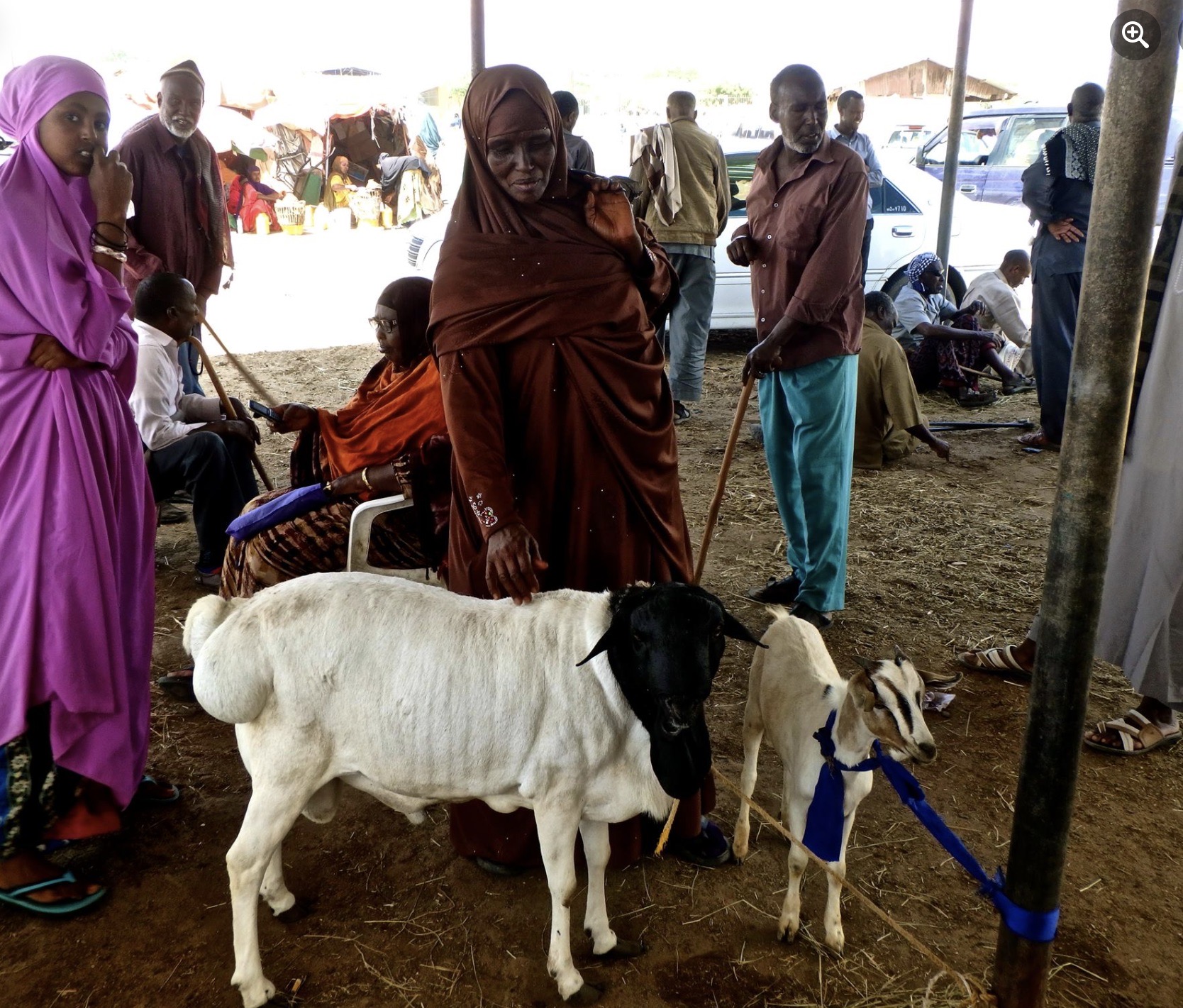
 After riding a tuk tuk like vehicle with three local women, giggling as we tore down the dusty roads in a border town, I crossed the border into Somaliland and hopped a taxi to Hargeisa. On the ride there, I quickly met a guy who invited me to hang out with his friends. I agreed, and they met me at the hotel I stayed at in the city centre the next day, where we had lots of great conversations and laughs. His friends were very enthusiastic and willing to show me around their country. I, unfortunately had booked my permits and transport for Las Geel and Berbera the night before, so I had to politely decline.
Fast forward to a couple of years later, I stayed in contact with my Somali friends on social media. I was working in Greenland and received a message from one of the guys that I met at the hotel. The message asked how I was doing, invited me back to his country and asked if I was “a gay.” I paused, my heart sank, and many thoughts ran through my head. Was he trying to out me? Was this a trap? Was his friendship a ploy? In many African countries, being gay is illegal and often results in imprisonment or worse – death.
I vehemently said no and that I wasn’t, as I’m so used to doing when the question arises in awkward situations in foreign countries. Then he asked me again and said that he was. He seemed disappointed and said that he thought that he could read something from me. That’s when it clicked in my head. He’s not trying to out me, but rather, relate and reach out to me, as why would he put himself at risk and in a vulnerable situation? I immediately apologised and told him that I was gay, and that I was afraid of what his initial motives were.
Months later, I found myself working in Antarctica again and received another message from my Somali friend. This time it was more urgent and a cry for help. He had expressed that Somaliland had just made it illegal to be gay and the police were actively hunting down people that were suspected of such acts. My friend said that they had arrested some of his friends and put them in jail. One of his good friends was tricked by the police. He received a message from an unknown number on his phone saying that he forgot some of his things at a certain location. His friend denied that he did and said that they must be mistaken.
The messages continued coming, insisting that he forgot some of his things. Being the nice guy that he is, his friend went to the location to tell the person that the items were not his. Upon arriving, the police instantly jumped him and arrested him. From jail, he texted my friend immediately and told him to flee, because it was only a matter of time before they got him too. My friend hopped the first flight to Mogadishu where he was messaging me.
Being outted as being gay in Somaliland is worse than a death sentence, as my friend described me. It is humiliating and the entire community, including your family will reject you. You are basically treated like a nonhuman, and there is no gaining that respect back. I received this message while at work in Antarctica and became overwhelmed. I could not even imagine what he was going through, and I felt awful for his friends. I went to work straightaway to help him. I started to contact friends that I was out to asking if they would donate money to get him to a safer location. He couldn’t stay in Somaliland and living in Mogadishu wasn’t safe either for different reasons.
After pooling my money and donating funds from friends, I had to get help to wire the money to him which was no easy task. After we found a way to send the money, my Somali friend bought a plane ticket to a different country in Africa. This country is also not LGBTQIA+ friendly, but at least here he can live in hiding and avoid being locked up for the rest of his life.
It is this very reason why I think international travel to non LGBTQIA+ friendly countries is important. Our queer community is everywhere, and how can we turn a blind eye to reaching out to those who need help in dire situations? Being a rogue, closeted traveler isn’t necessarily a desired path, but it can be a rewarding one.
Read more about "Rainbow Rebellions" in Globetrender's Future of Queer Travel trend report.
Tapping into the growing market for queer travel, Variety Cruises is launching its first LGBTQ+ cruise in the Seychelles in autumn 2023. Jenny Southan reports
Departing on October 28, 2023, Variety Cruises will launch its first LGBTQ+ cruise to the Seychelles archipelago, with an array of onboard entertainment and offshore excursions.
Setting sail on the Pegasos, the 44-person cruise will start and finish in Mahe on St Anne Island. Every night there will be entertainment either from local dancers or musicians, and an Off Broadway Musical at Sea.
Stops will include: Curieuse island, which has giant tortoises; Cousin island, for a visit to the local bird sanctuary; and Praslin island for sightings of rare black parrots and "coco de mer" double coconuts.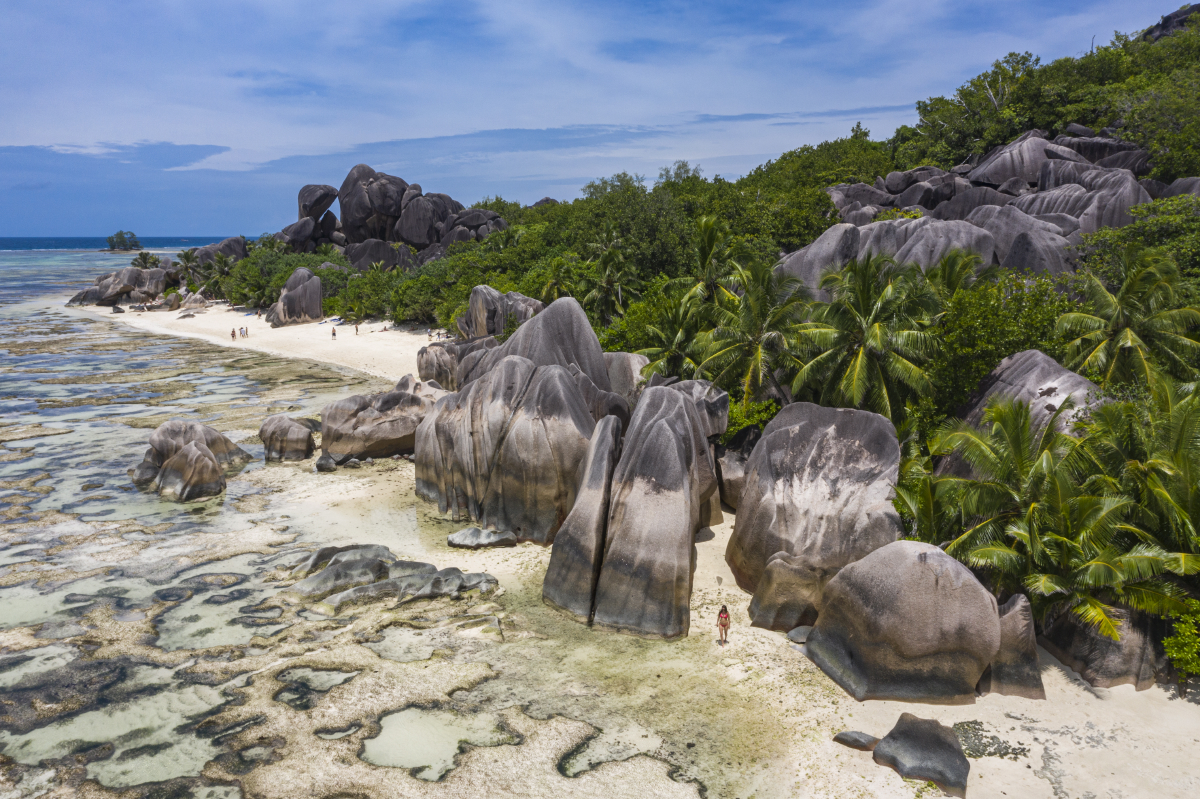 LGBTQ+ activist Constantine Venetopoulos, part of the family that founded Variety Cruises, will join the "straight-friendly" seven-day adventure. During the trip, guests will be able to connect with the LGBTQ+ community, explore the destination's gender history, and enjoy "signature activities".
Constantine is a leader in gender equality, a volunteer counselor for The Trevor Project, and the director of the film Draw With Me, which was presented at the United Nations during the 50th anniversary of the Stone Wall riots. Edward Chlerich, a model and actor, will also be joining and leading the cruise.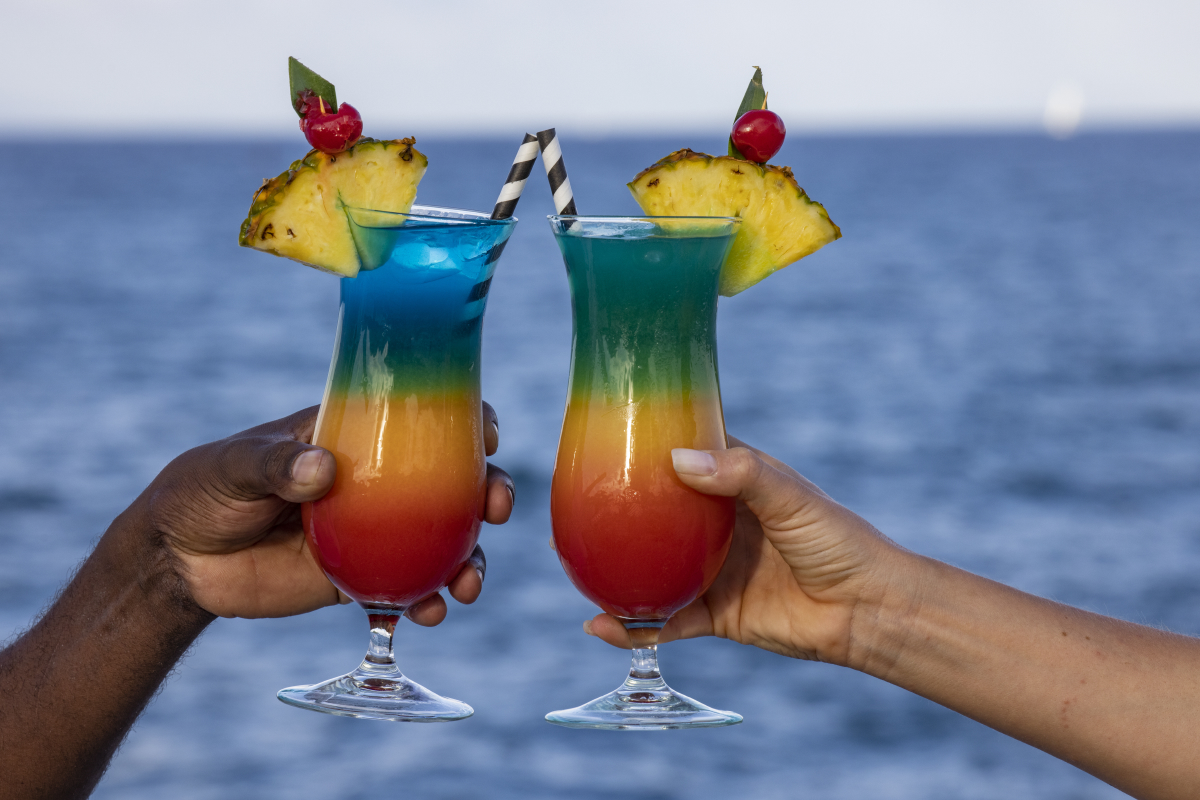 Prices start from £2,026 per person and include accommodation in an air conditioned double or twin en suite cabin; full board catering (buffet breakfast and two meals daily); a welcome cocktail; theme night party; captain’s dinner; coffee, tea and water; use of snorkelling equipment; and an English-speaking cruise director.
Not included are port charges per person, soft drinks and alcohol, shore excursions, crew tips and wifi.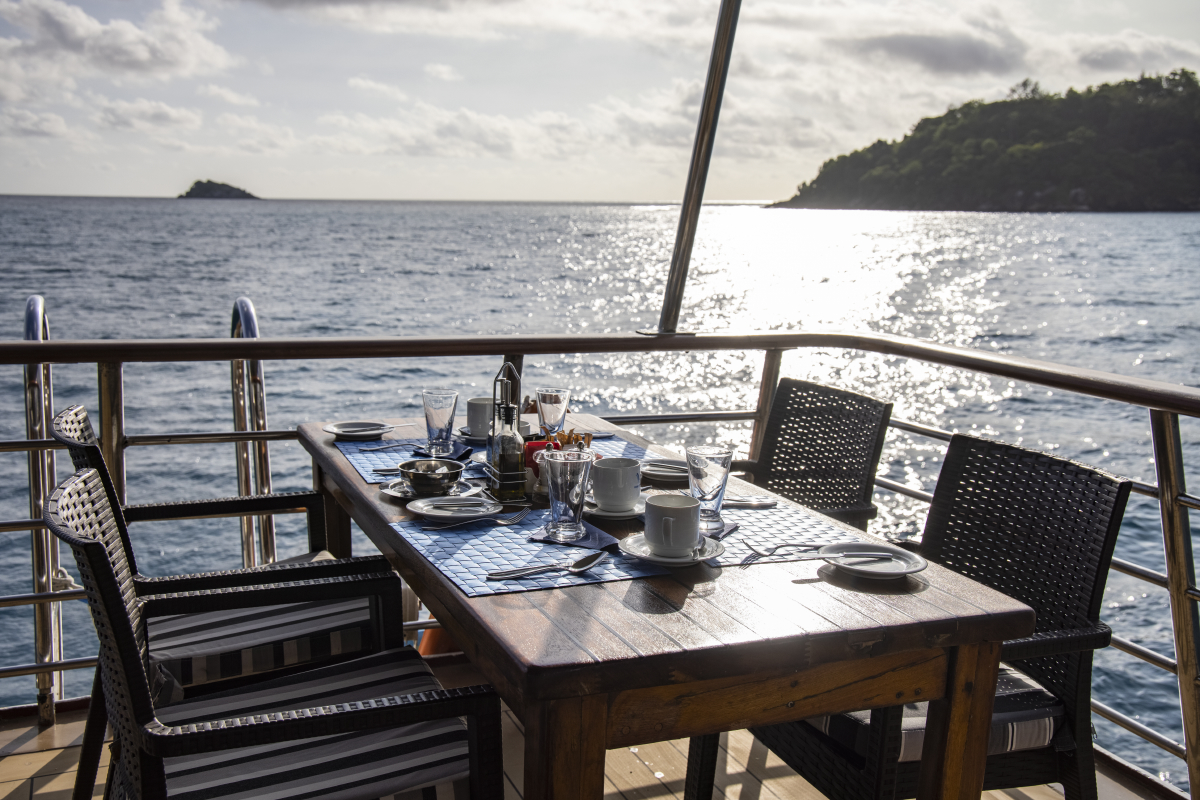 The Seychelles is one of the few African nations with laws protecting LGBTQ+ employees from workplace discrimination. Homosexuality is legal in the destination but gay marriage is not.
Variety Cruises states on its website: "As a tourist in Seychelles, your gender identity and sexual preferences are personal and should not be a concern to anyone else. Unless your behaviour is deemed unacceptable, there have been no reported issues related to travellers' sexuality."
Variety Cruises is a specialist in small ship cruises, and serves destinations including Greece, Tahiti and the islands of French Polynesia, the Red Sea, West Africa and Cape Verde.
Download Globetrender's Future of Queer Travel report to learn more about emerging LGBTQ+ travel trends.
The W Costa Navarino in Greece has earned the first IGLTA Accredited certificate in the world for being consciously supportive of LGBTQ+ guests. Jenny Southan reports
Part of Marriott International's W chain, the W Costa Navarino opened last year in the sustainably driven vacation destination of Costa Navarino in the Greek region of Messinia (just over a three-hour drive from Athens).
The property has implemented a number of practices to ensure a welcoming experience for LGBTQ+ travellers, including staff training that involves role-play inclusivity seminars, establishing an LGBTQ+ associates ambassador, and the creation of gender-neutral room amenities, spa treatments and restrooms.
Unfortunately, the hotel doesn't cater to families with children under the age of 12, however, so Globetrender will be on the look out for certified hotels for queer parents with young kids. (Queer Family Travel is a key trend in our Future of Queer Travel trend report.)
At the moment, gay people cannot get married in Greece but this summer, Greek Prime Minister Kyriakos Mitsotakis announced plans to legalise same-sex marriage, a huge step forward for LGBTQ+ rights.
“The foundation of Costa Navarino is built upon a deep respect for our guests. Our commitment is not only to meet but to exceed their expectations,” says Stephanos Theodorides, managing director of Temes, the developers of Costa Navarino. “We strive to anticipate diverse needs, ensuring that everyone feels as comfortable as they would in their own home,” he says.
The destination of Costa Navarino (where there are a number of other high-end resorts such as the Westin and Mandarin Oriental), says it wants to become a "fully inclusive destination". Over the past year, Costa Navarino has also formed partnerships with the University of Piraeus and HospitableMe so that it can conduct research on the needs of different consumer groups and how these can be met in the tourism sector.
In light of the results, Costa Navarino has applied several practices to ensure that the needs of people from different cultural backgrounds, gender identities, ethnicities, and people with autism, visual, hearing and mobility impairments, are successfully met.

IGLTA Accredited – a new stamp of approval for queer-friendly hotels
Recognising its efforts to welcome queer travellers in particular, leading LGBTQ+ travel association the IGLTA (International LGBTQ+ Travel Association) has created a "groundbreaking" accreditation for hotels that "genuinely welcome LGBTQ+ guests through their actions, not just empty words".
Since launching, the Swissotel Nankai Osaka, Sofitel Legend the Grand Amsterdam, and the Gild Hall, a Thompson Hotel in New York have also earnt the accreditation.
In today’s cultural climate, trust has become a rare commodity. The 2022 Edelman Trust Barometer, which surveyed 28 countries, showed that nearly six in ten people currently say their default emotion is "distrust". It is no longer enough for brands to claim authenticity, it must be proven. This is especially true for the LGBTQ+ community.
To make it easier for queer travellers to choose where to stay, IGLTA Accredited recognises hotels that are consciously catering to the queer travel market. Unveiled in June, IGLTA Accredited has opened applications to hotels and accommodation providers worldwide, in anticipation of "rapidly building momentum" as travel organisations globally seek to champion LGBTQ+ inclusivity.
As Globetrender highlights in its Future of Queer Travel report, before the pandemic, travel spending from queer people reached US$218 billion worldwide but by 2030, experts predict that travel spending by queer travellers could reach US$568.5 billion.
IGLTA Accredited sets the standard as an independent quality assurance process, “providing concrete evidence that participating hotels genuinely welcome LGBTQ+ guests through their actions, not just empty words”.
To obtain the accreditation, hotels must successfully document the fulfilment of eight criteria, showcasing their dedication to creating a safe and welcoming environment for their staff and LGBTQ+ travellers.
The eight criteria of IGLTA Accredited are built upon the pillars of diversity, equity, inclusivity, policy, community, advocacy, transparency and sensitivity.
They encompass the implementation of non-discriminatory policies protecting both LGBTQ+ travellers and hotel staff, comprehensive sensitivity training, a proven commitment to inclusive marketing practices, and tangible evidence of genuine support for the LGBTQ+ community.
“We believe allyship should be year-round, not just for pride,” says IGLTA president and CEO John Tanzella. He says: “LGBTQ+ travellers are looking for real accountability in their travel experiences, and travel advisors want to know they are directing LGBTQ+ clients to hotels/accommodations that truly welcome them.
“We invite properties around the world to join us in championing integrity within the travel industry and elevating the standard of travel for all. IGLTA Accredited strives to provide peace of mind for all LGBTQ+ travellers, wherever their adventures might take them.”
Spain, Costa Rica and Mexico have been ranked among the top ten places for LGBTQ+ people to take a honeymoon. Jenny Southan reports
According to a survey of 2,000 LGBTQ+ British people by Asda Money Travel Insurance, 43 per cent of LGBTQ+ travellers say that when choosing a honeymoon destination, they would want to go somewhere they felt able to show affection in public, but over half (53 per cent) don’t feel safe kissing, while abroad and 41 per cent won’t even hold hands.
At the same time, almost 50 per cent of LGBTQ+ travellers say they feel frustrated that they must avoid certain countries, while 40 per cent feel disappointed.
Even though gay marriage is now legal in 34 countries, there are still 64 UN member states where is still illegal to be gay, making it more difficult for LGBTQ+ couples to travel safely and leaving them forced to consider different factors that heterosexual couples would not usually think about.
To make travel planning easier, the "LGBTQ+ Honeymoon Index 2023" reveals the best romantic destinations around the world for LGBTQ+ couples and has ranked countries based on factors such as marriage equality, safety, and the country’s “shareability” factor (how popular the location is on Instagram and TikTok, based on hashtag data).
The research found that Spain was the most LGBTQ+ friendly place in the world with a score of 57 out of 60, closely followed by the UK in second place and Costa Rica in third, both with a score of 55.
The top 10 LGBTQ+ honeymoon friendly destinations are:
- Spain
- UK
- Costa Rica
- US
- Mexico
- France
- Brazil
- Greece
- Portugal
- Australia
Spain, UK, and Costa Rica are among the top picks for LGBTQ+ couples due to their high scores in marriage equality, safety and shareability. Spain stands out for its hot weather, stunning beaches, and impressive architecture, as well as its thriving LGBTQ+ community. Spanish entertainment, including film and TV, has been greatly influenced by LGBTQ+ culture, and the country has made progress in supporting LGBTQ+ rights in social and political spheres.
The UK is known for its picture-worthy landmarks, love of football, and classical literature, but also for its large LGBTQ+ communities. Birmingham, Brighton, Cardiff, Liverpool, Manchester and London are known for their annual Pride festivals, and the country scored highly for marriage equality and travel safety – making it perfect for a honeymoon or romantic holiday.
Costa Rica offers a range of stunning natural features which are bound to leave every tourist in awe. In addition to its breath-taking landscapes, it is also widely considered one of the safest places for members of the LGBTQ+ community to visit. This is because same-sex relationships have been legal in Costa Rica for over 50 years, making it a welcoming destination for all couples.
However, it is worth noting that while queer culture is thriving in Costa Rica, the more rural areas tend to be home to people who have strong religious beliefs due to the country’s Catholic background. It would be wise to plan your trip around the main tourist areas to ensure a comfortable and enjoyable stay. Consider using Costa Rica guided tours to navigate these regions and get the most out of your visit.
The top-scoring country for each continent:
Best country for LGBTQ+ Romantic Holidays in Africa: South Africa
Best country for LGBTQ+ Romantic Holidays in Europe: Spain
Best country for LGBTQ+ Romantic Holidays in North America: US
Best country for LGBTQ+ Romantic Holidays in South America: Costa Rica
Best country for LGBTQ+ Romantic Holidays in Oceania: Australia
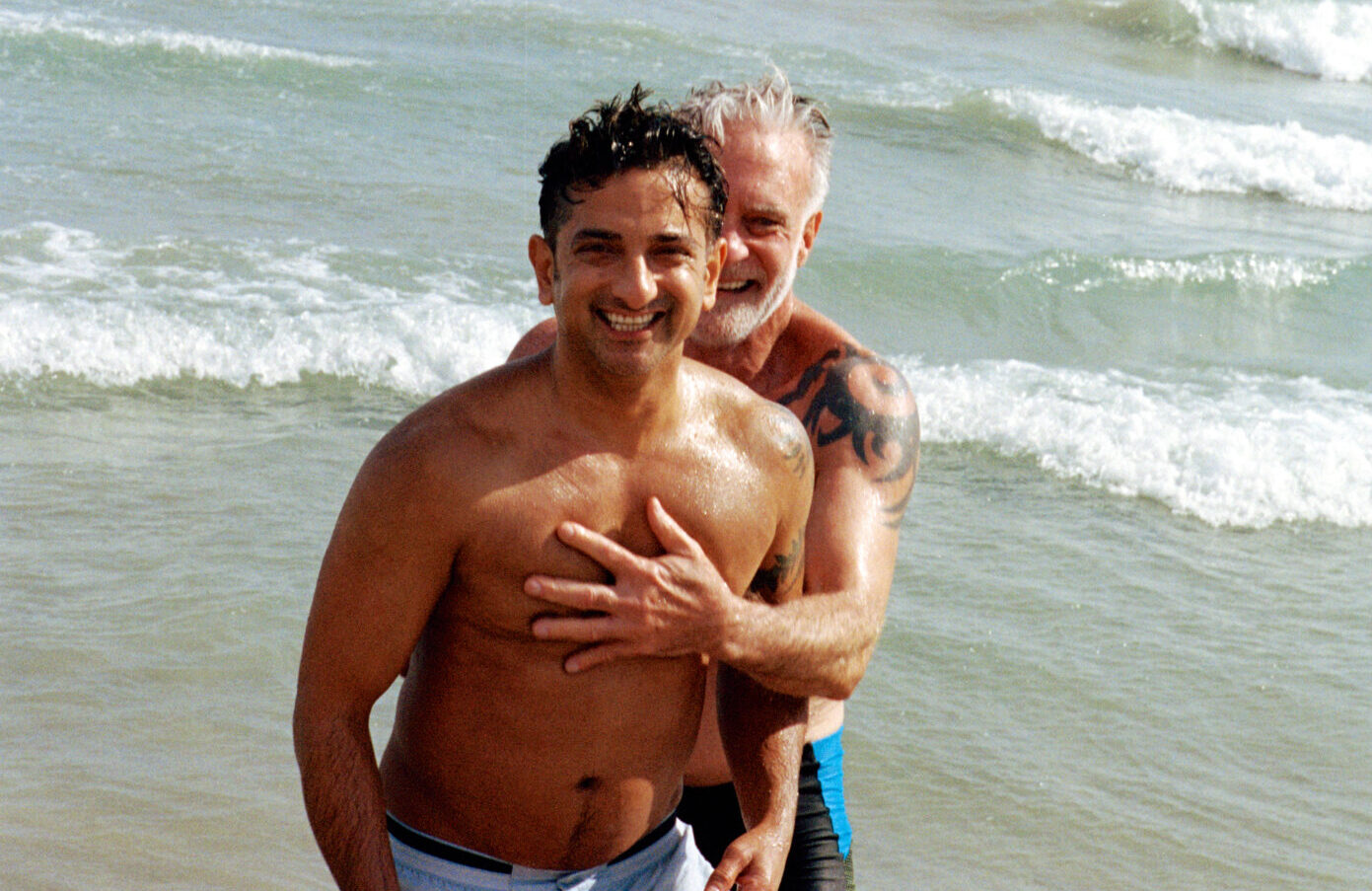 As part of the research, Asda Money Travel Insurance looked at hashtag data from both TikTok and Instagram to discover each destination’s shareability, which was a factor in the overall rankings. Bali (121,981 posts), Hawaii (48,282 posts), and Paris (16,314 posts) were crowned the top three most Instagrammable and TikTok-worthy destinations.
This was further supported by a survey of 2,000 Brits which revealed how UK couples feel about getting married and honeymooning abroad, and the difficulties faced by LGBTQ+ couples specifically.
The survey found the top ten ideal honeymoon destinations for Brits were the Maldives (27 per cent), Hawaii (20 per cent) and Barbados (18 per cent), while LGBTQ+ couples specifically would rather jet off to Amsterdam (58 per cent), New York (55 per cent) or Paris (54 per cent).
When asked about the things they want the most from their honeymoon, nearly half of Brits (49 per cent) agree that great food and drink is the number one priority, while 41 per cent simply want somewhere romantic to enjoy each other’s company.
Interestingly, 59 per cent of LGBTQ+ respondents are more likely to stick to a city break rather than a tropical honeymoon, as they are concerned they might be judged.
The Asda Money Travel Insurance Honeymoon Index disputes this, as both Costa Rica and Mexico made their way into the top ten, in third place and fifth place respectively. Both countries scored full marks for marriage equality, while Costa Rica was ranked 36th in the world for LGBTQ+ travel safety, and Mexico came 28th.
Christian Suen, a LGBTQ+ travel influencer, says: “For the most part, travelling as an openly gay couple is no different to anyone else, but there are a few things we have to do differently. For instance, we always make sure the hotel we’re staying at is LGBTQ+ friendly – I actually recently found out that a lot of websites have this as a search function now.
"We also always have to stay vigilant, and we always ensure we have travel insurance in place. Not just because it covers medical expenses etc., but because it gives us that extra layer of legal protection if and when necessary.
“As an LGBTQ+ couple, the main thing I look out for with travel insurance is having clarity that same-sex couples count as “dependents” within family bundles, even if they haven’t chosen to get married officially or anything like that.
“It’s great to see a comprehensive list like this being pulled together, that focuses not just on where LGBTQ+ couples can be safe but also factoring in those romantic elements that you would be looking for from your honeymoon destination. A lot of studies don’t do that, negating all the typical aspects of a holiday to simply focus on safety (which, of course, is very important).”
Ed Doherty, Product Manager at Asda Money Travel Insurance, adds: "As a travel insurance provider, we believe that everyone deserves to explore the world without fear of discrimination or prejudice. It’s great to see that there are a range of countries, all over the world, that are safe for LGBTQ+ couples to enjoy on their honeymoon, and we’re really glad this index can go some way to helping our LGBTQ+ customers find a destination that’s right for them.
“We understand the unique challenges that LGBTQ+ travellers may face while abroad, and we are committed to providing comprehensive coverage and support. That’s why our family travel cover is inclusive of parents or guardians in same sex relationships of marriage.’’
The full index analysed the top 50 countries in the world to find the best LGBTQ+ honeymoon destination, with the complete dataset available on Asda Money Travel Insurance blog.
Download Globetrender's free Future of Queer Travel trend report to learn about Put A Ring On It Trips, Queer Family Travel, Limelight Gaycations, Polydays and other trends.
From group 'gaycations' to 'Rainbow Rebellions', where queer people defiantly travel to countries with anti-LGBTQ+ laws, a diverse panel of experts share their views on the future of queer tourism. Jenny Southan reports
Globetrender's new Future of Queer Travel trend report was launched at a live event in June at the Mondrian Shoreditch, with contestants from UK’s first gay reality dating show I Kissed a Boy. (Pictured below is Globetrender founder Jenny Southan with contestants Vitor, Bobski and Kailum.)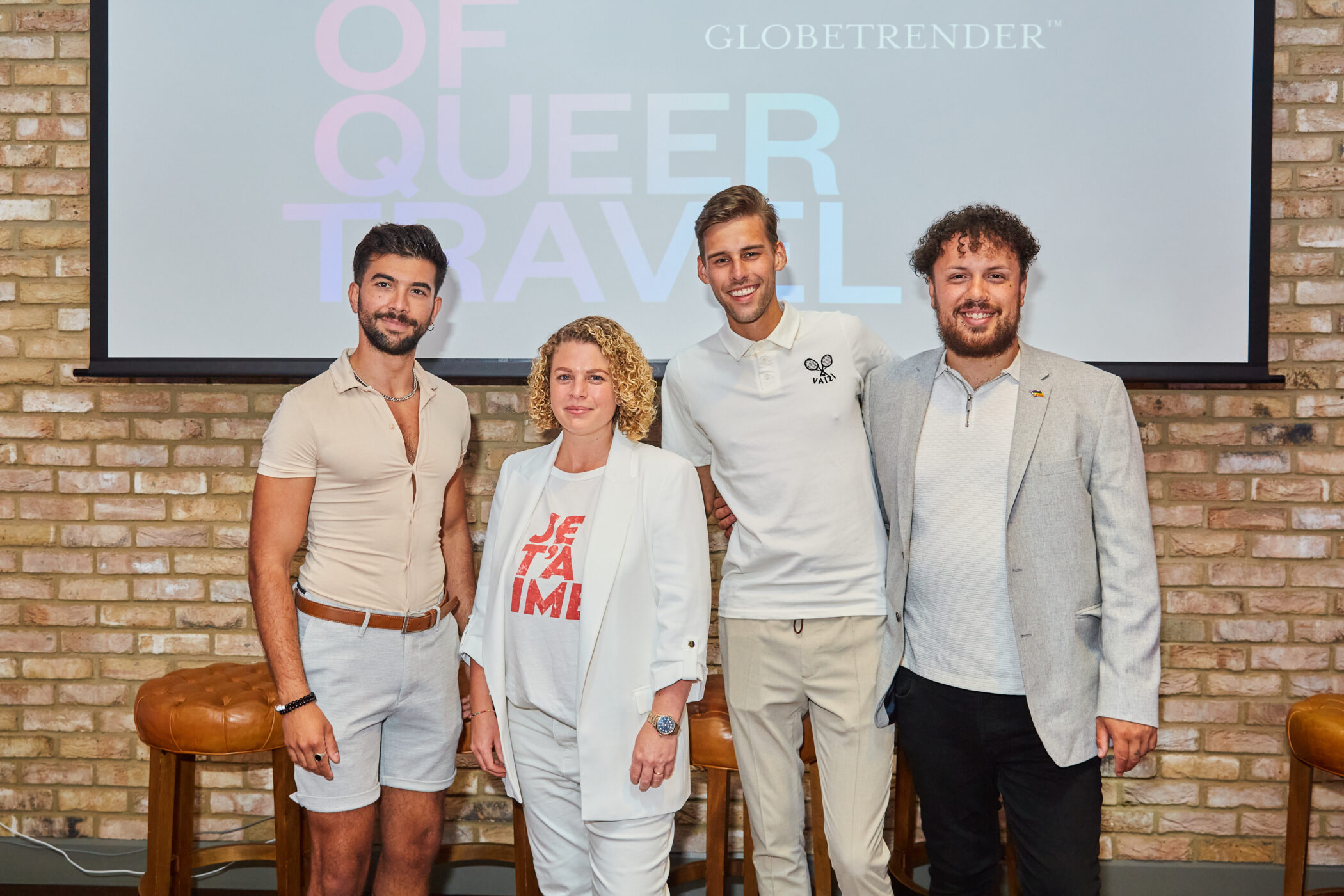 In a welcome speech from David Lockhart, general manager of the Mondrian hotel, he said: “I have been with my husband for 13 years, we have children and we travel a lot, but I have had more than one or two complicated eyebrow raises. So this is something I am very passionate about. It is something we should all be very passionate about.
“Service and hospitality are all about discretion and humility. And it should always be about inclusion. This event is something we thought we should definitely be a part of. You can programme for Pride but it’s some important that corporations do it with some style and some substance.”
The forecast, which is free to download from globetrender.com, identifies eight trends that will shape the future of travel for the LGBTQ+ market. These include: “Queer Family Travel”, “Limelight Gaycations”, “Rainbow Rebellions”, “Polydays” and “Pride Power”.
During the event there was also a panel discussion between five diverse queer commentators:
- Kailum Webster, travel consultant and contestant on BBC reality dating show I Kissed a Boy
- Sophie Griffiths, editor and chief purpose officer for TTG Media
- Stu Oakley, founder of Assemble Publicity, and co-author of The Queer Parent. He is also the co-host of podcast From Gay to Ze
- Aisha Shaibu-Lenoir, founder of Moonlight Experiences and LGBTQIA+ Ambassador for Contiki
- Chris King, CEO of Lightning Travel Recruitment
The conversation around the future of queer travel was wide-ranging. Griffiths discussed TTG’s editorial strategy when it comes to LGBT content and their commitment to "never promoting any destination where, based on recent evidence, members of your team would not feel comfortable to travel for fear of arrest due to their sexuality or profession".
Webster spoke about what it was like to spend two months living in a masseria in Italy with a group of gay guys for a reality TV show, while Oakley explained why shows like this so important when it comes to accepting and supporting the queer community, and what he has learnt about queer family holidays as a gay dad.
Alongside this, Shaibu-Lenoir spoke about the new queer group trips her company is launching, why she would travel to Saudi Arabia, and why is it so important for travel companies and tourist boards to invest in diverse and inclusive imagery.
Finally, King raised some important points about what people in the travel industry need to understand about being trans, what the experience of being a trans person and business leader is like, and the rise of gender neutral passports, which you can read more about in Globetrender's Future of Queer Travel trend report.
The central European country of Estonia has become the first ex-Soviet state to legalise same-sex marriage, with the amendment going into effect from January 1, 2024. Jenny Southan reports
In another important step forward for LGBTQ+ rights, Estonia's parliament passed a law on June 20 legalising same-sex marriage, making it the first ex-Soviet country to do so. (To learn more about "Put A Ring On It Trips", download Globetrender's free Future of Queer Travel trend report.)
The fellow Baltic states of Lithuania and Latvia appear likely to follow suit in the coming years. Ukrainian citizens are also pushing for equal marriage rights in a bid to further distance itself from Russia
According to a press statement, two adults will be able to marry “regardless of their gender” following parliament-approved amendments to the country’s Family Law Act. The change will go into effect from January 1, 2024.
The update will also mean that same-sex couples will be able to adopt children. (In Estonia, only married couples can adopt, although single gay, lesbian and bisexual people can petition to adopt.)
“Everyone should have the right to marry the person they love and want to commit to,” Prime Minister Kaja Kallas said. “With this decision we are finally stepping among other Nordic countries as well as all the rest of the democratic countries in the world where marriage equality has been granted.
“This is a decision that does not take anything away from anyone but gives something important to many,” she continued. “It also shows that our society is caring and respectful towards each other. I am proud of Estonia.”
Same-sex relationships have been legal in Estonia since 2016, when the Registered Partnership Act took effect, but arriage was only allowed to take place between people of the opposite sex.
A survey undertaken by the Estonian Human Rights Centre in April 2023 found that 53 per cent of the Estonians believe that “same-sex partners should have the right to marry each other.”
This is the highest percentage recorded since the survey began in 2012. At that time, 60 per cent of people surveyed were against marriage equality so sigificant progress has been made in improving public sentiment.
“I am genuinely very grateful for the patience and understanding the LGBT+ community has shown for all these years,” said Signe Riisalo, Estonia’s Minister of Social Protection.
“I hope that, in time, those opposed to marriage equality come to see that we don’t lose anything from taking such steps, but rather that we all gain from them,” Riisalo added. “I am delighted that the decision has now been taken for a more forward-looking Estonia that cares for all.
Queer Family Travel, Limelight Gaycations, Rainbow Rebellions and Polydays are among the trends shaping the future of LGBTQ+ tourism, a market that will more than double in value by 2030.
With support from media partners Gay Times, TTG and Out There magazine, the Future of Queer Travel was launched at a live event at the Mondrian Shoreditch with contestants from UK’s first gay reality dating show I Kissed a Boy (pictured below).
The forecast, which is free to download from globetrender.com, identifies eight trends that will shape the future of travel for the LGBTQ+ market. These include: “Queer Family Travel”, “Limelight Gaycations”, “Rainbow Rebellions”, “Polydays” and “Pride Power”. Jenny Southan, editor, founder and CEO of Globetrender, said: “A big reason we chose Queer Family Travel as our number-one trend is because more and more rainbow families are emerging – in 2019 there were almost quarter of a million same-sex families in the UK, an increase of 40% since 2015.
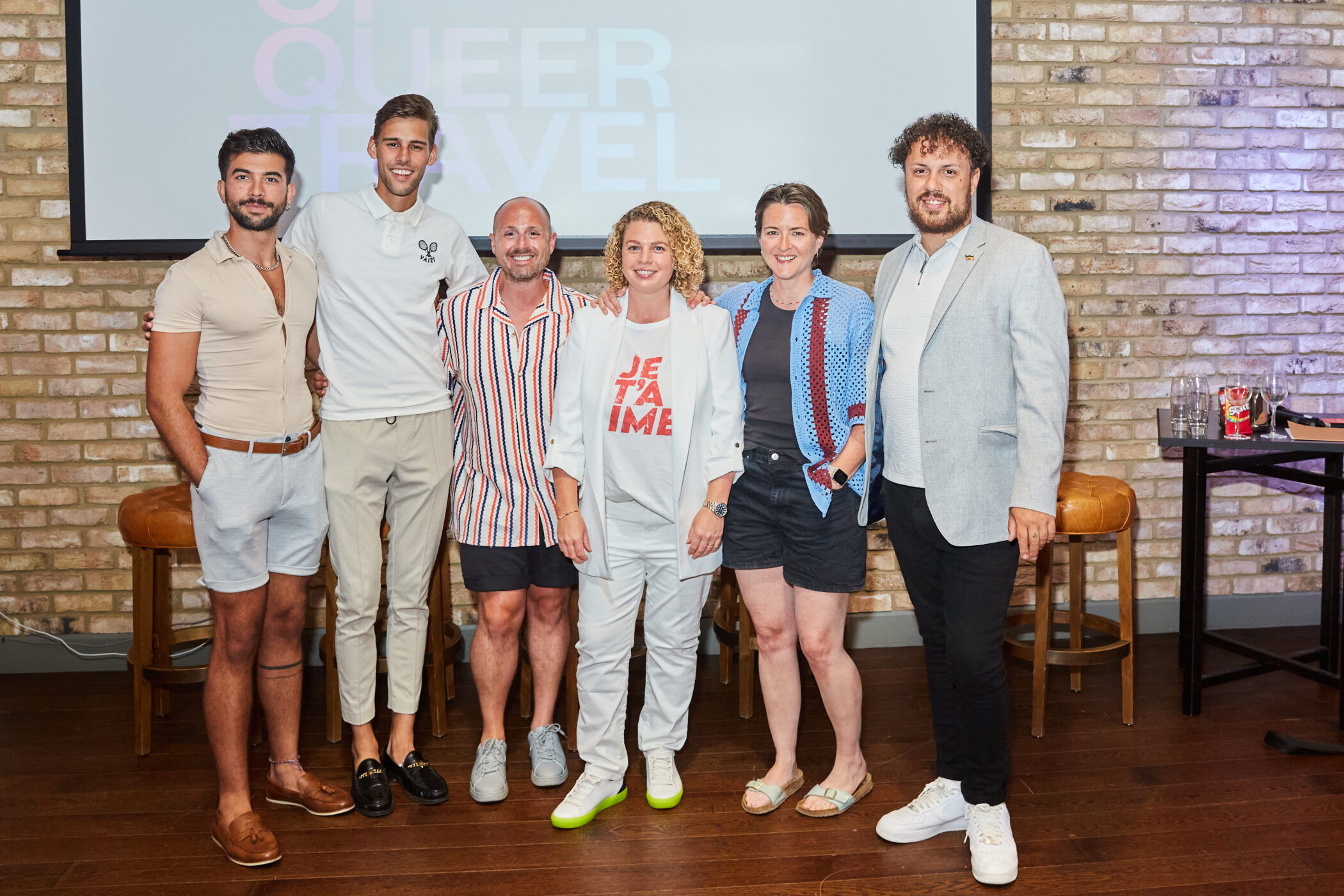 “It was also because of the publication of an important milestone book last month – The Queer Parent: Everything you Need to Know from Gay to Ze – which was co-authored by my wife Lotte Jeffs and Stu Oakley (pictured above centre). My wife and I have a young daughter and Stu is a gay married man with three adopted children.
“In this book they highlight some of the unique challenges we face when travelling as queer parents, such as how we are ‘outed’ all the time by cries of ‘Mummy, Mama’ or ‘Daddy, Papa’. What this means is that queer families need to be far more discerning and thoughtful about where they visit to ensure they won’t encounter homophobia.”
THE EVENT
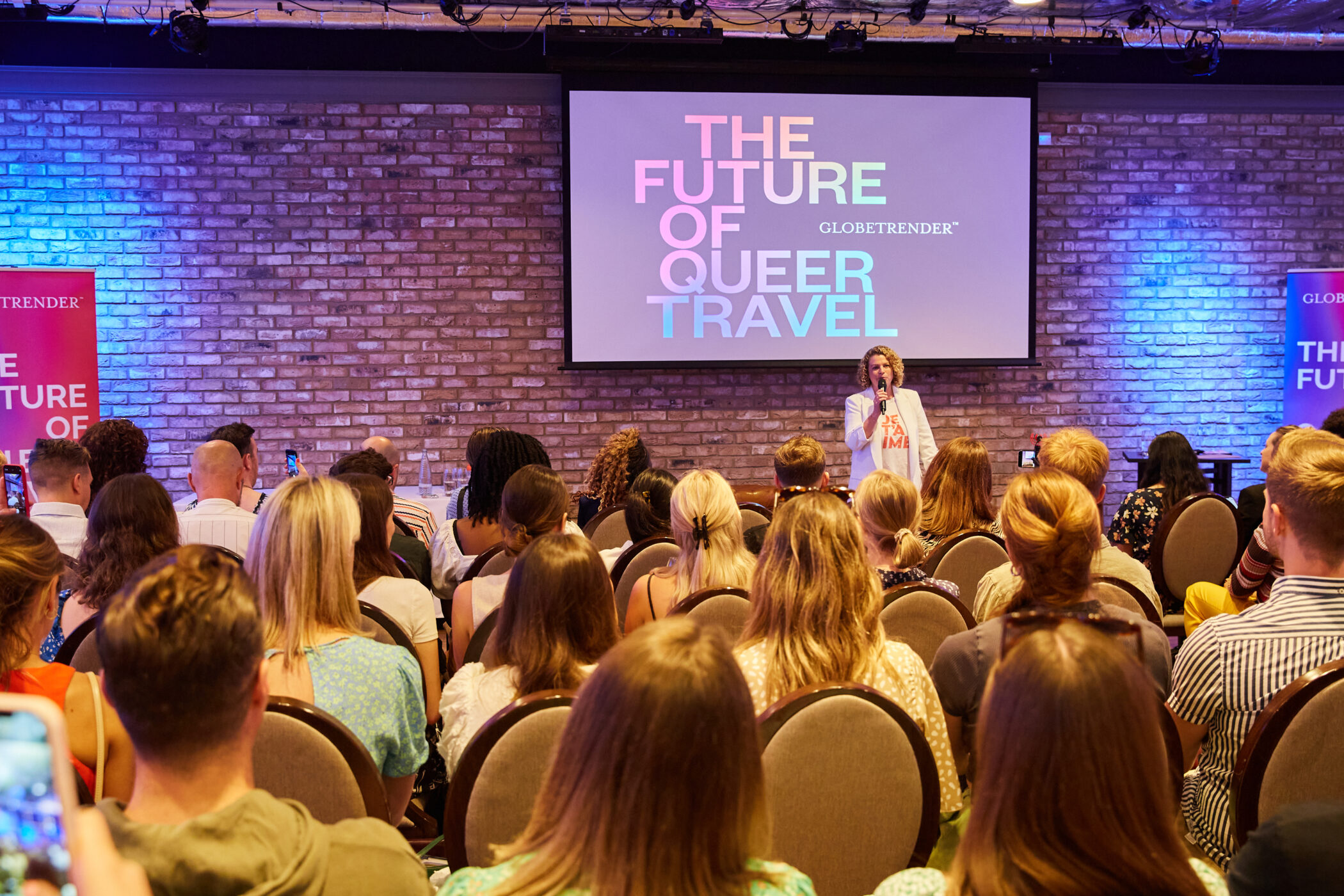 The trends were revealed on June 14 at a live event at the Mondrian Shoreditch hotel in London, which was attended by both press and senior figures from across the travel industry.
David Lockhart, general manager of the Mondrian hotel, said: “I have been with my husband for 13 years, we have children and we travel a lot, but I have had more than one or two complicated eyebrow raises. So this is something I am very passionate about. It is something we should all be very passionate about.
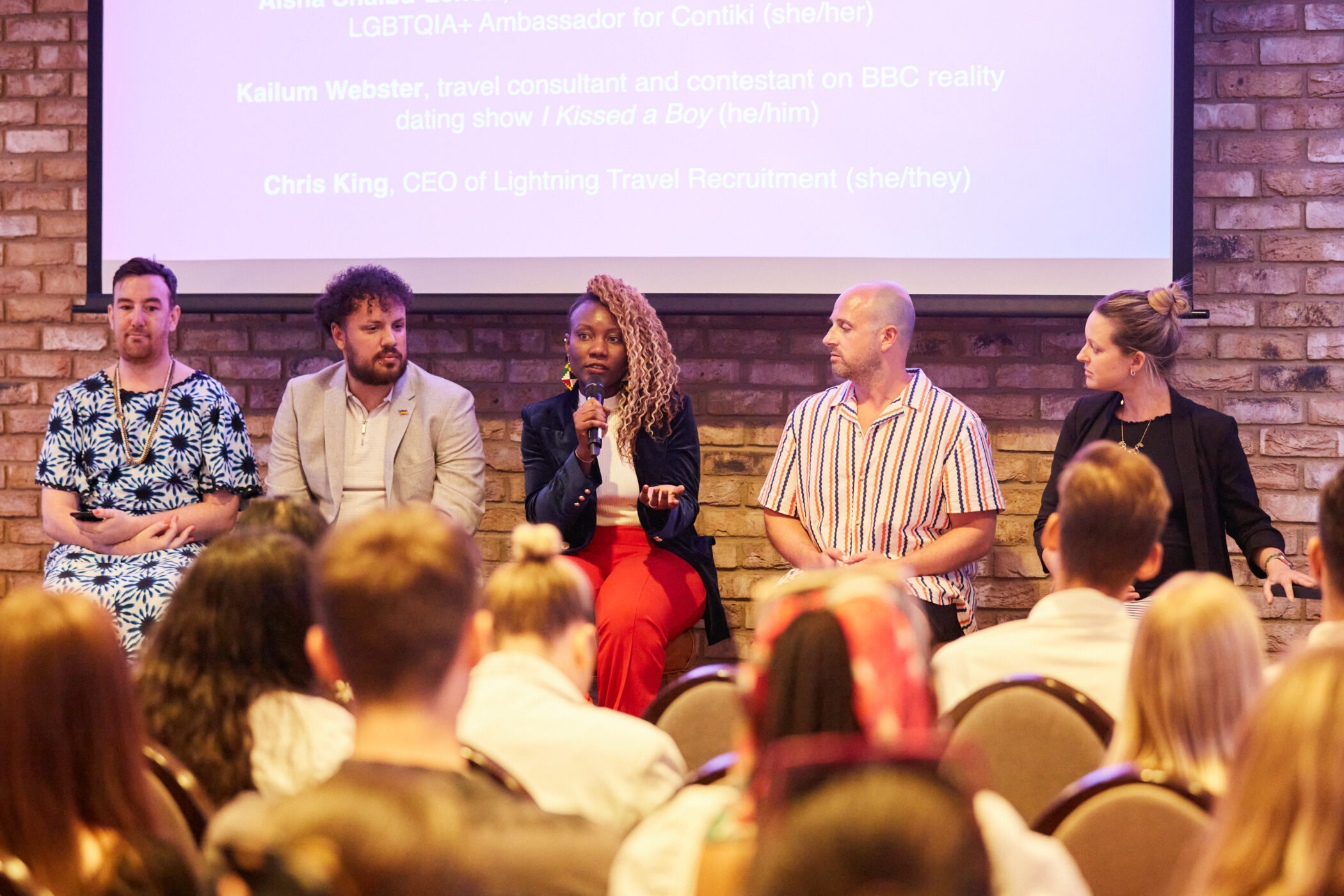
“Service and hospitality are all about discretion and humility. And it should always be about inclusion. This event is something we thought we should definitely be a part of. You can programme for Pride but it’s some important that corporations do it with some style and some substance.” During the event there was also a panel discussion between five diverse queer commentators, including a contestant from BBC Three’s new gay reality dating show I Kissed a Boy. Bobski and Vitor from the TV show were also in attendance.
- Kailum Webster, travel consultant and contestant on BBC reality dating show I Kissed a Boy
- Sophie Griffiths, editor and chief purpose officer for TTG
- Stu Oakley, founder of Assemble Publicity, and co-author of The Queer Parent. He is also the co-host of podcast From Gay to Ze
- Aisha Shaibu-Lenoir, founder of Moonlight Experiences and LGBTQIA+ Ambassador for Contiki
- Chris King, CEO of Lightning Travel Recruitment
 Southan said: “Globetrender’s Future of Queer Travel trend report is a project I have personally wanted to produce for about three years but it has taken considerable time to get off the ground.
“After I was selected as one of Attitude magazine’s “LGBTQ+ Travel Trailblazers” for 2023, I decided the moment was right, and managed to secure sponsorship from Contiki, Meet Boston and Discover New England who came on board as partners for this important piece of work.
“Globetrender has also launched a new ‘Queer’ section on its website for LGBTQ+ travel content to help consumers become better informed.”
THE REPORT FINDINGS
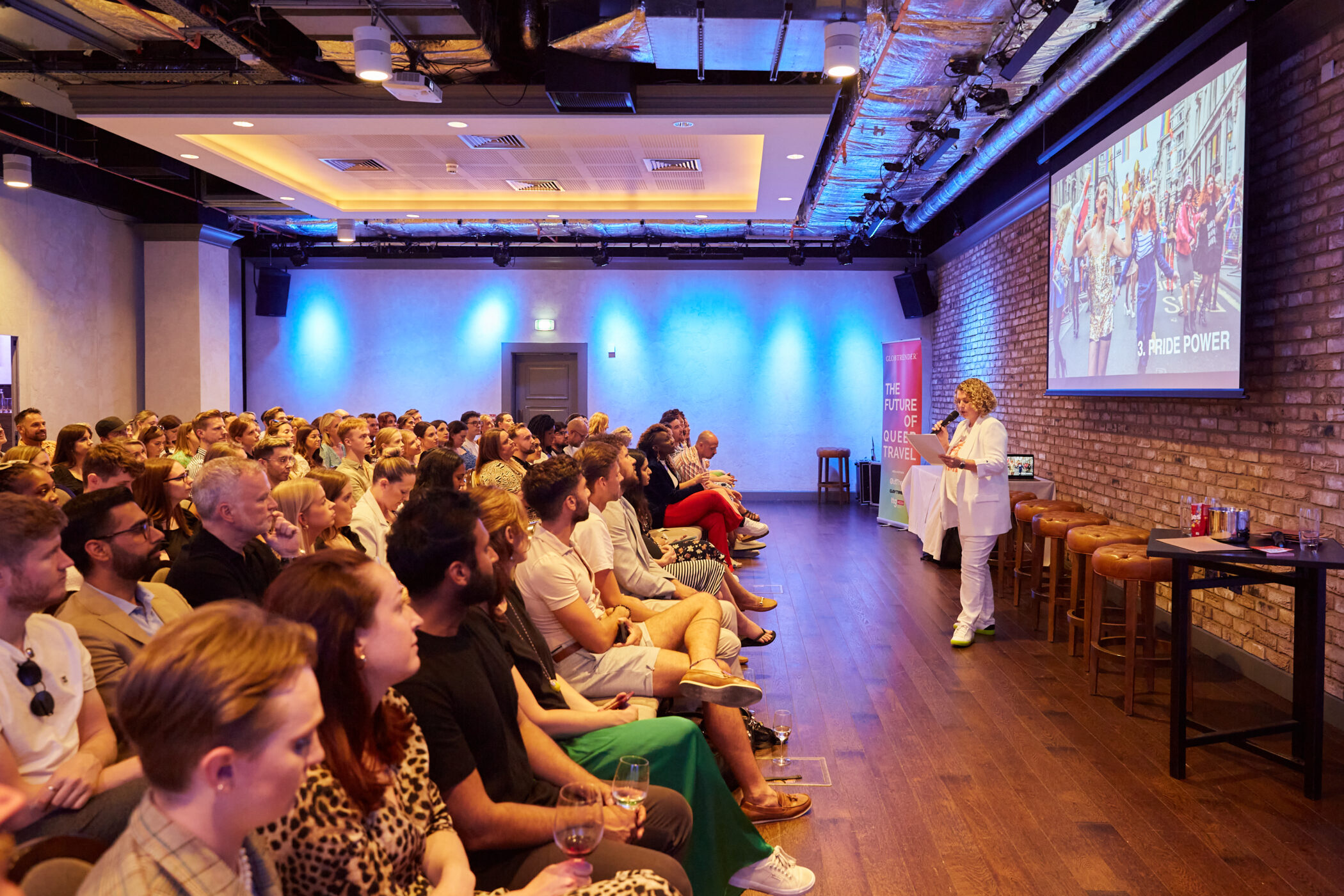 Southan said: “Over the past ten years, the queer travel market has grown enormously – when travel was at its peak before the pandemic, travel spending from queer people reached US$218 billion worldwide. By 2030, experts predict that travel spending by queer travellers could reach US$568.5 billion.
“Why? Firstly, queer travellers are more intrepid and hungry for travel than ever before. Secondly, in many cases they also have more disposable income. And thirdly, the population of people who identify as queer is increasing. In 2021, a landmark UK Census revealed that 6.9% of Gen Zs identified as LGB+ compared with 3.5% of Millennials, and 1.6% of Boomers.
“For the travel industry, this is a clear indication of distinct market opportunities (particularly among people under the age of 45). It is also an urgent call for better understanding and appreciation of this growing and richly varied consumer group.”
She added: “In terms of progress for LGBTQ+ human rights, there are steps forward and steps backwards. Gay marriage is legal in 34 countries (up from just one in 2001) but homosexuality is still illegal in 67 countries. In 2023, the president of Uganda signed one of the world’s toughest anti-LGBTQ laws, but at the same time, Latvia welcomed the modern world’s first openly gay president.
“At Globetrender, we are optimists. We strongly believe in travel as the ultimate expression of freedom, and a unifying force that brings people closer together.”
WHY IS GLOBETRENDER USING THE WORD ‘QUEER’?
Southan said: “Globetrender uses ‘queer’ as an umbrella term for people who are not heterosexual or are not cisgender. In the past, queer was used as a derogatory slur, but we feel the time is right to reclaim it, and use ‘queer’ as a simple, inclusive alternative to the ever expanding acronym of LGBTQIA+.”
FIVE QUEER TRAVEL TRENDS
1. QUEER FAMILY TRAVEL
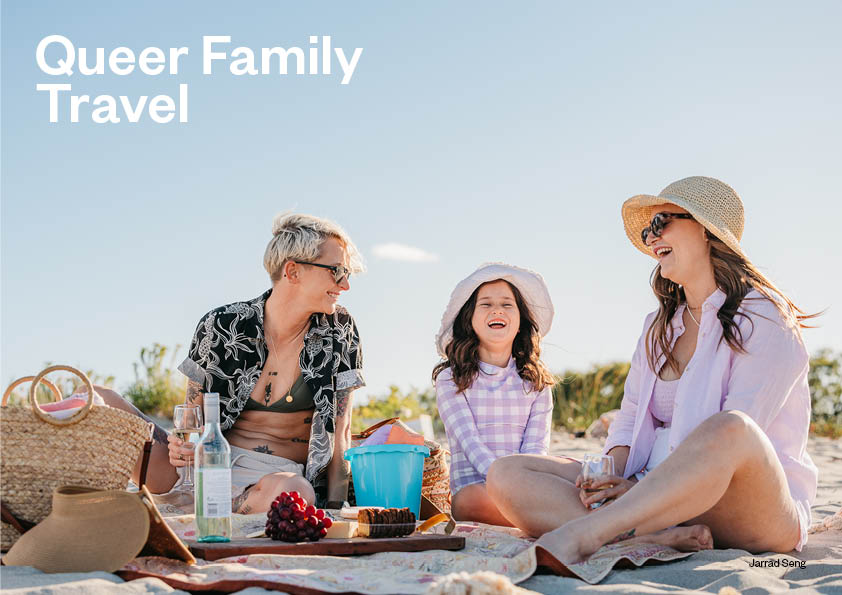 In the world’s most progressive countries, queer families have only been “legal” for about 20 years, meaning Millennials are the first generation to be able to embrace queer parenthood in a socially acceptable way, with the law on the side of them and their children. The first adoptions by same-sex couples in Finland didn’t happen until 2020. This year, Taiwan became the first jurisdiction in Asia to allow same-sex parents to adopt.
From surrogacy to IVF, there are many paths to parenthood, but for queer people the rules and rights within countries that support queer families remain complex. Popular holiday destinations that could be problematic for queer families to go to (due to the fact being gay there is criminalised) would be Barbados, Jamaica, Saint Lucia, Indonesia, Malaysia, Mauritius and Morocco.
However, as Stu Oakley highlights in The Queer Parent, even when you make a sensible choice about a queer-friendly destination (such as Cuba), you can’t always predict who the other guests at the resort will be. In his case, he encountered a group of Russian women who left in the middle of their meal when they found out he was gay. (They’d been admiring his three children and asked where their mother was.)
2. LIMELIGHT GAYCATIONS
 According to a 2023 survey by American Express, 64% of respondents said they made travel plans or were inspired to visit a specific country or destination after it was featured on a TV show or film. For the queer community, “Limelight Gaycations” will be particularly in demand, especially as there is so much more positive queer content appearing on screens.
Boosting Google searches for “masseria” rentals in southern Italy is reality show I Kissed a Boy, which is airing now on the BBC and is set in a stunning renovated farmhouse. Hosted by Danii Minogue, I Kissed a Boy brings together a diverse pool of young gay men with the aim of finding out if a single kiss can spark a long-lasting relationship.
Probably the hottest example of a TV show that has made headlines not only for its brilliant storytelling but for its cast of camp and queer characters is The White Lotus, Four Seasons Resort Maui at Wailea, and season two in Sicily, at the San Domenico Palace, Taormina, a Four Seasons hotel.
Bookings exploded to such an extent after it aired in autumn 2022 that the travel industry has been calling it “The White Lotus Effect” and there are high hopes for season three, which will be set in the queer-friendly country of Thailand.
3. RAINBOW REBELLIONS
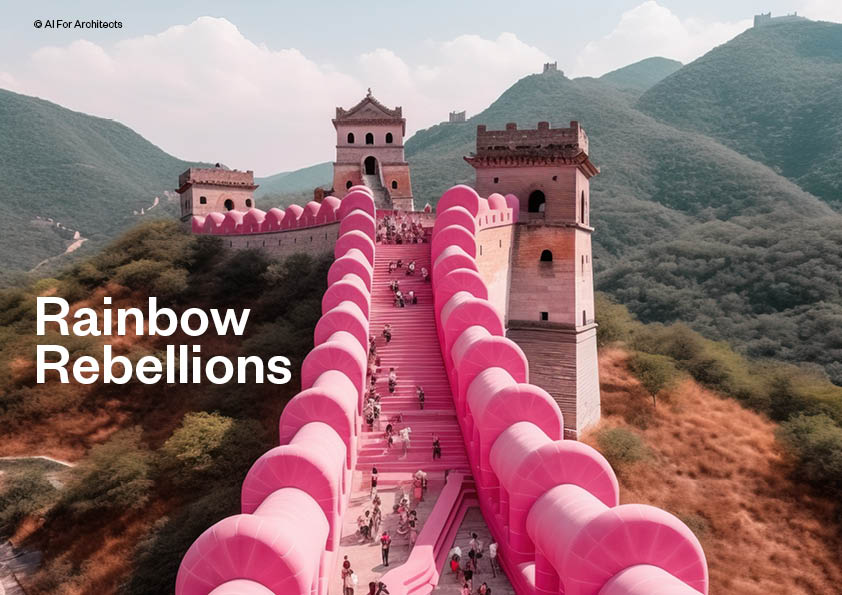 As every queer person knows, there are situations – often on a daily basis – where we know we have to modify our behaviour or protect our true identity in some way. While this is not an optimum way of living, this ability to “social camouflage” means that a rising number of queer people are willing to sacrifice personal liberties in favour of exploring destinations in spite of their anti-LGBT laws.
For a lot of privileged Westerners (especially Millennials) for whom travel has felt like a right, being queer is not enough of a reason not to go somewhere. A sense of defiance combined with entitlement motivates them to book “Rainbow Rebellions” to destinations such as the Middle East, Africa, Jamaica, Malaysia and China. Another reason is that local laws tend to be enforced more on local people than foreign tourists and so long as queer travellers “keep their heads down” they can avoid confrontations.
4. POLYDAYS
 Welcome to travel’s new “sharing economy”: polyamory, which is a form of ethical non-monogamy that sees individuals forming romantic connections with more than one partner at the same time. In years to come, polyamory will transform the way we think about everything from marriage and families, to dating and divorce (will break-ups go down if the pressure of monogamy is removed?).
Although the trend is occurring among straight people too, the queer community is already ahead of the curve. Looking at the corresponding emerging travel trend, when a “throuple” goes on holiday, Globetrender calls it a “Polyday”.
According to Newsweek, in 2021, one in nine Americans have been in a polyamorous relationship and one in six would like to try one. Meanwhile, data from dating app Feeld shows there was a 500% increase in searches for “polyamory” in 2022.
5. PRIDE POWER
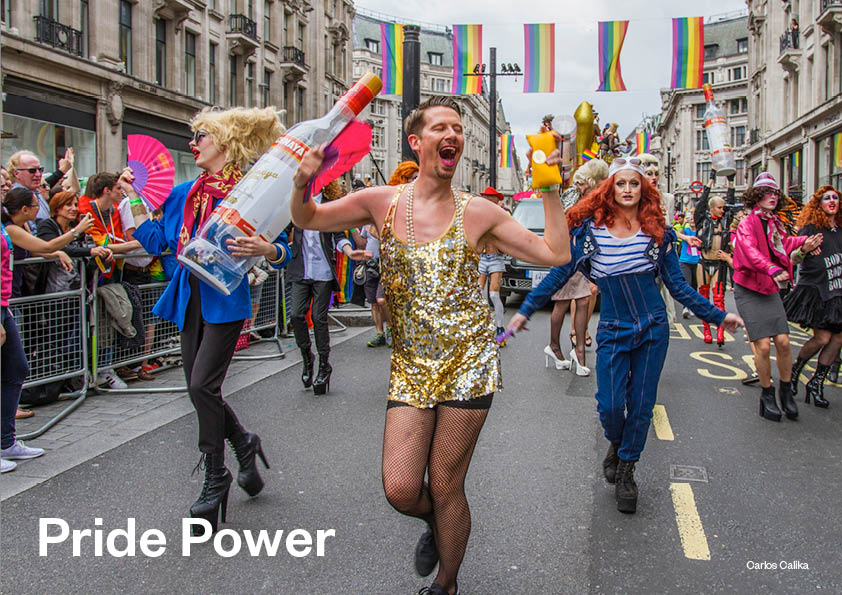 For many queer people, going abroad to take part in Pride parades and parties are a major event in the annual calendar. They're also a great way to meet new people, be more free to express yourself and experience cities at their most wild and fun.
Last year, Gay Times magazine revealed that 60% of the LGBTQ+ community seek out experiences such as Pride when away from home. Tapping in to the “pink pound”, Pride events can be really lucrative for the travel industry.
According to booking data from Airbnb, hosts collectively earned more than US$77 million during Pride celebrations last year. This likely comes down to the fact that, since 2017, the number of hosts around the world using queer-inclusive language on their rental postings has surged by nearly 90%.
Travellers booking flights with KLM can now select a gender-neutral form of address, with further airline processes to be added in the near future. Olivia Palamountain reports
KLM is joining airlines such as Delta and Virgin Atlantic in introducing gender-free forms of address in their booking channels.
The Dutch airline is now adding a gender-neutral option for non-binary customers in some of its key markets, namely the Netherlands, UK, Germany and the US.
Not only can adult travellers booking their tickets in these markets specify that they identify as non-binary but they can also opt to be addressed by name only without any title where possible. If a courtesy title is needed, the letter X will be used in greetings to these customers.
Alternative forms of address are being used in other settings as well. Some time ago, KLM started using “passengers” instead of “ladies and gentlemen” in its in-flight announcements, for instance.
Travellers with a KLM account or who are members of the Flying Blue loyalty programme can already choose a gender-neutral form of address. Other airline processes, including check-in, will also be adapted later this year. As reported by Simple Flying, the airline said that there had been a growing demand for a gender-neutral alternative, which has been well-received among customers. KLM believes that introducing this option aligns with efforts to become more inclusive and deliver a more personalized customer experience and follows similar moves from other airlines.
Boet Kreiken, executive vice-president of customer experience at KLM, says: “I’m proud that we’re now giving customers more choice in how they would like to be addressed. After all, there are few things more profound than our identity and, consequently, our name and how others address us.
“The fact that we immediately had hundreds of customers opting for this new feature, shows that we have indeed recognised and acknowledged them.
Elsewhere in the world, United and American Airlines are the only US passenger airlines that currently offer passengers the option to remain gender-neutral when booking their flights.
However, thanks to engagement from Airlines for America, more major US airlines will follow suit by the end of 2024, agreeing to update computer systems to allow travellers to purchase tickets with an "X" gender marker.
This organisation represents numerous passenger airlines including, United, Delta, Alaska, JetBlue, Southwest, American, and Hawaiian.
The Queer Parent is the first-ever UK guide to parenting through an LGBTQ+ lens, covering everything you need to know about navigating the world as a queer family – from Gay to Ze. Olivia Palamountain reports
A new book that celebrates the myriad realities of LGBTQ+ parenting is out now, complete with a detailed chapter on navigating modern family travel. (Download Globetrender's Future of Queer Travel trend report to learn more about Queer Family Travel.)
The Queer Parent: Everything You Need to Know From Gay to Ze is an essential parenting handbook for the LGBTQ+ community, their friends, families and allies, and the first of its kind to publish in the UK. The book costs £20 and is available to buy here.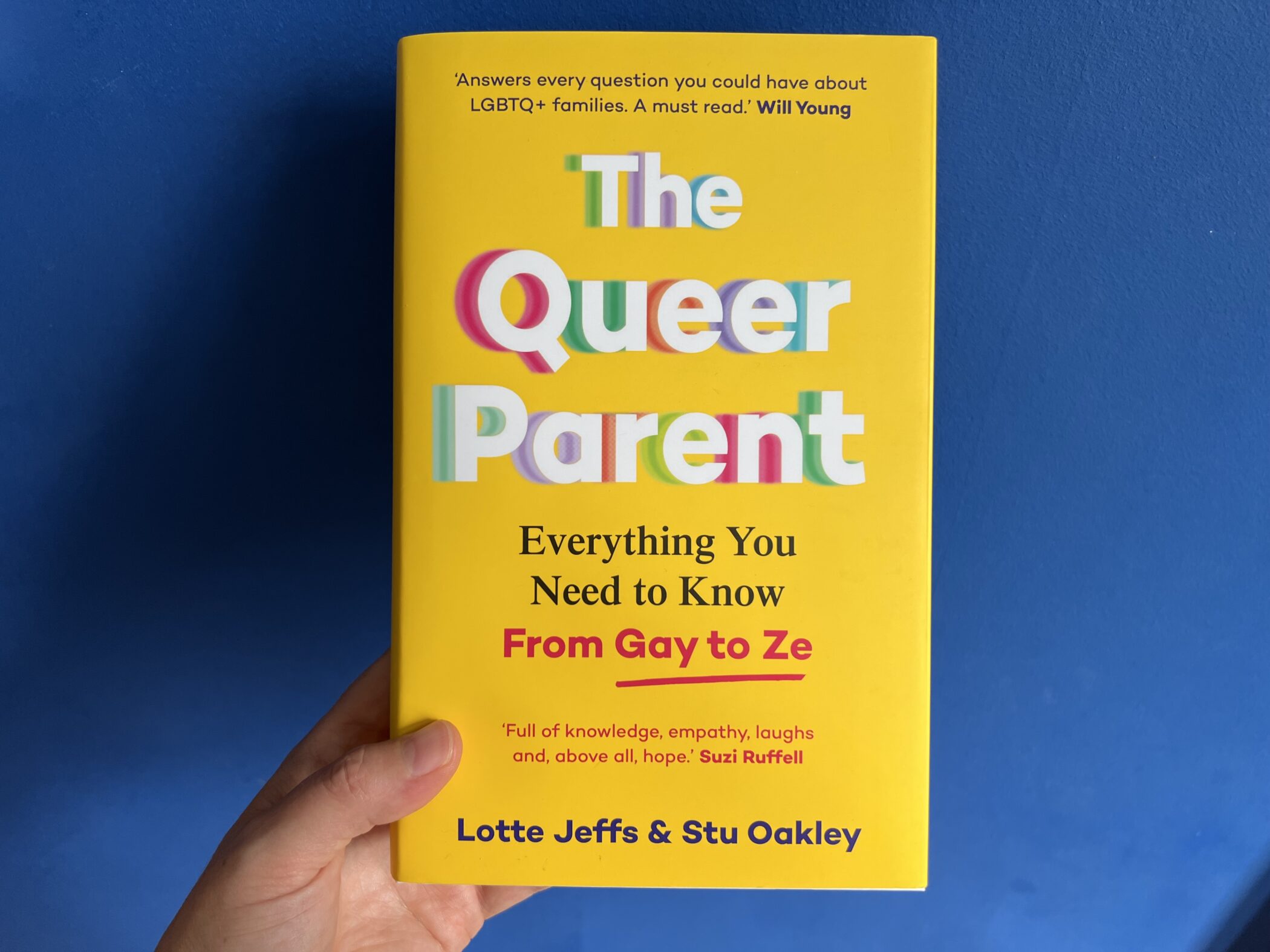 Written by the hosts of award-winning podcast “Some Families” (and subsquent follow-up podcast "From Gay to Ze"), Lotte Jeffs and Stu Oakley, this informative, funny, and empowering book is packed with expert advice and personal accounts covering from the first steps to starting a family right up to parenting teenagers and everything in between.
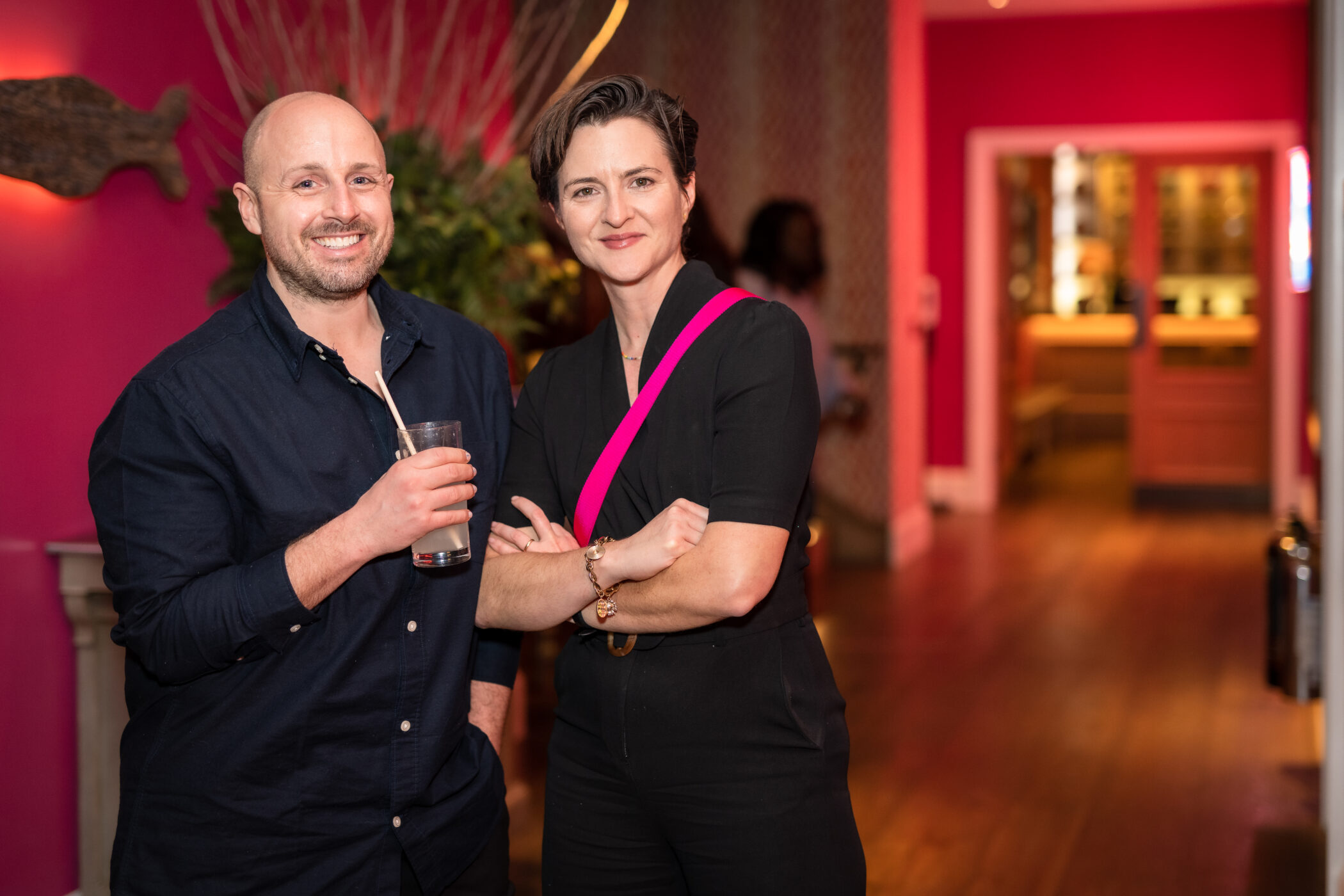 The Queer Parent uses first-hand accounts and an accessible, A to Z format to share key knowledge around everything there is to know about queer parenting, from fostering and fertility treatment to co-parenting, dealing with homophobia and, of course, queer family vacationing. This chapter also has tips and insights from Globetrender founder Jenny Southan, who is married to Lotte Jeffs (together they have a child).
An excerpt from the travel chapter written by Stu Oakley, reads: "When we first travelled with our children, we had not yet received their new passports. They did not yet have ‘Oakley’ as names on their passports. We were effectively two men travelling with two children that didn’t seem (on paper) to be connected to us.
"Heading to America, we imagined all sorts of questions or potential issues aka ‘Sir, are you trafficking these children?’ Let’s be honest, they ask you on your ESTA to confirm if you plan to commit genocide on your trip to Florida so this question wouldn’t seem too unbelievable...
"We made sure we had a letter from the local authority where we had adopted our first two children, plus copies of their adoption order. When we travelled with our youngest son, who again didn’t have Oakley at first on his passport, we again made sure we had all this paperwork.
"To date we’ve never been questioned or asked about our family situation but that doesn’t change the fact that every time we head abroad, we have this sense of dread that we are going to be asked, and we would rather be prepared, even when the children all share our name.
"It’s these things that add an extra element of stress and worry when travelling as an LGBTQ+ family. We shouldn’t have to, but having that documentation with us makes us feel more secure and gives us one less thing to stress about . . . unless we leave it at home!"
Lotte and Stu Oakley spoke to dozens of experts and queer families, and this hugely-needed book is the product of those conversations and their own experiences of becoming parents through IUI and adoption respectively.
As the authors tell PodBible: "We took a lot of the essence of a podcast into the book in the sense that whilst we rattle on a little about our own experiences we are a tiny, tiny representation of the full queer parenting spectrum so we speak to loads of different people to try and ensure we reflect our community, in the best way we can."
While irreverent and humorous, The Queer Parent does not shy away from the harsh realities of LGBTQ+ travel.
"As any queer traveller knows," Stu tells Condé Nast Traveller, "there is a certain amount of caution you take when in a location that you don’t feel 100 per cent comfortable in. I remember John and I travelling back from a holiday in Bali. Our connecting flight got delayed by 12 hours so they decided to put us up in a hotel in Malaysia, where it is a criminal offence to be a gay man, and 20 years’ imprisonment with a spot of whipping is implemented… it doesn’t matter how much you plan, you could, like our Malaysia experience, find yourself in a situation beyond your control that leaves you feeling uncomfortable or even potentially in danger."
Queer parenting is the next stage in the fight for LGBTQ+ rights and Lotte and Stu’s book is more than a guide to parenting; it’s a vital, landmark piece of work about all the different ways we create families.
For the second year running, United Airlines will be the headline sponsor and official airline partner for Pride in London 2023, demonstrating its commitment to the LGBTQ+ community globally. Jenny Southan reports
United Airlines employees will participate in this year’s Pride in London parade on July 1, 2023, and will be entering a lively, colourful float into the parade.
This is the second year United has been the official airline for Pride in London. United says it has a "proud history of supporting LGBTQ+ communities and has previously marched together in parades and attended festivals in the UK and around the world".
In the UK, United’s employee-run Business Resource Group, EQUAL, has previously honoured veteran campaigner, Peter Tatchell, by presenting an EQUAL award at London Heathrow in recognition of all the work he has undertaken over the decades to campaign for equal rights for LGBTQ+ communities and others. Mike Henning, United’s EQUAL president, says: “At United Airlines, we have a dynamic and diverse group of employees around the world and believe in equality for everyone. To be the official airline for Pride in London is an amazing moment for United. I am sure that all of our employees taking part will have an exciting day as together, we fly our United flag with pride.”
Will De’Athe-Morris, Pride in London’s director of communications, says: “Pride in London is very pleased to welcome United Airlines as the official airline and headline sponsor for 2023. Pride stands for visibility, unity and equality for all LGBT+ people, in London and around the world. We applaud United Airlines in working with us to make this powerful statement of commitment to these principles.”
This summer, United is offering up to 23 daily flights from London Heathrow to the United States. The airline operates nonstop daily services to its hubs at Chicago O’Hare, New York/Newark, Washington/Dulles, Denver, Houston, Los Angeles and San Francisco, as well as to Boston.
United creates a workplace where all employees feel included and empowered to make a measurable difference in the company’s success. The airline is committed to creating and implementing workplace policies that support LGBTQ+ coworkers. As a result, United has earned a 100% rating on the Human Rights Campaign’s Corporate Equality Index and has been named Best Place to Work for LGBTQ+ Equality for over a decade.
EQUAL is United’s employee-run Business Resource Group committed to building, developing, fostering, and promoting an inclusive organization that benefits all lesbian, gay, bisexual, transgender, and queer (“LGBTQ+”) coworkers and allies. With more than 4,800 members, multiple chapters, and employees from every labour group, division and hub airport, EQUAL continues to cultivate and promote United’s diversity and inclusion strategy.
EQUAL offers philanthropic, educational, professional development and networking opportunities for its members to become more well-rounded individuals, both at United and within the community.
EQUAL hosts a number of networking, seminar and guest speaker series throughout the year and has featured individuals like Rocco Claps, former Director of the Illinois Department of Human Rights, and Aditi Hardikar, former Director of Public Engagement for the White House.
Pride in London is a majority volunteer-led organisation responsible for delivering the capital’s flagship LGBT+ Pride parade and events since 2013. Pride in London’s mission is to promote visibility, unity and equality in society for all LGBT+ people and allies.
It does this by producing LGBT+ Pride events that inspire, celebrate, educate, and commemorate our diverse community. The annual event now welcomes over 1.5 million LGBT+ people and allies onto the streets of London.
Globetrender founder and CEO, Jenny Southan, has been listed as one of Attitude magazine's 2023 LGBTQ+ 'trailblazers who are changing the world'.
Sponsored by Bentley, the Attitude 101 has highlighted Globetrender founder and CEO Jenny Southan as one of 101 public figures from the queer community who are "changing the world". The announcement was made at a glittering event at the five-star Rosewood hotel in London.
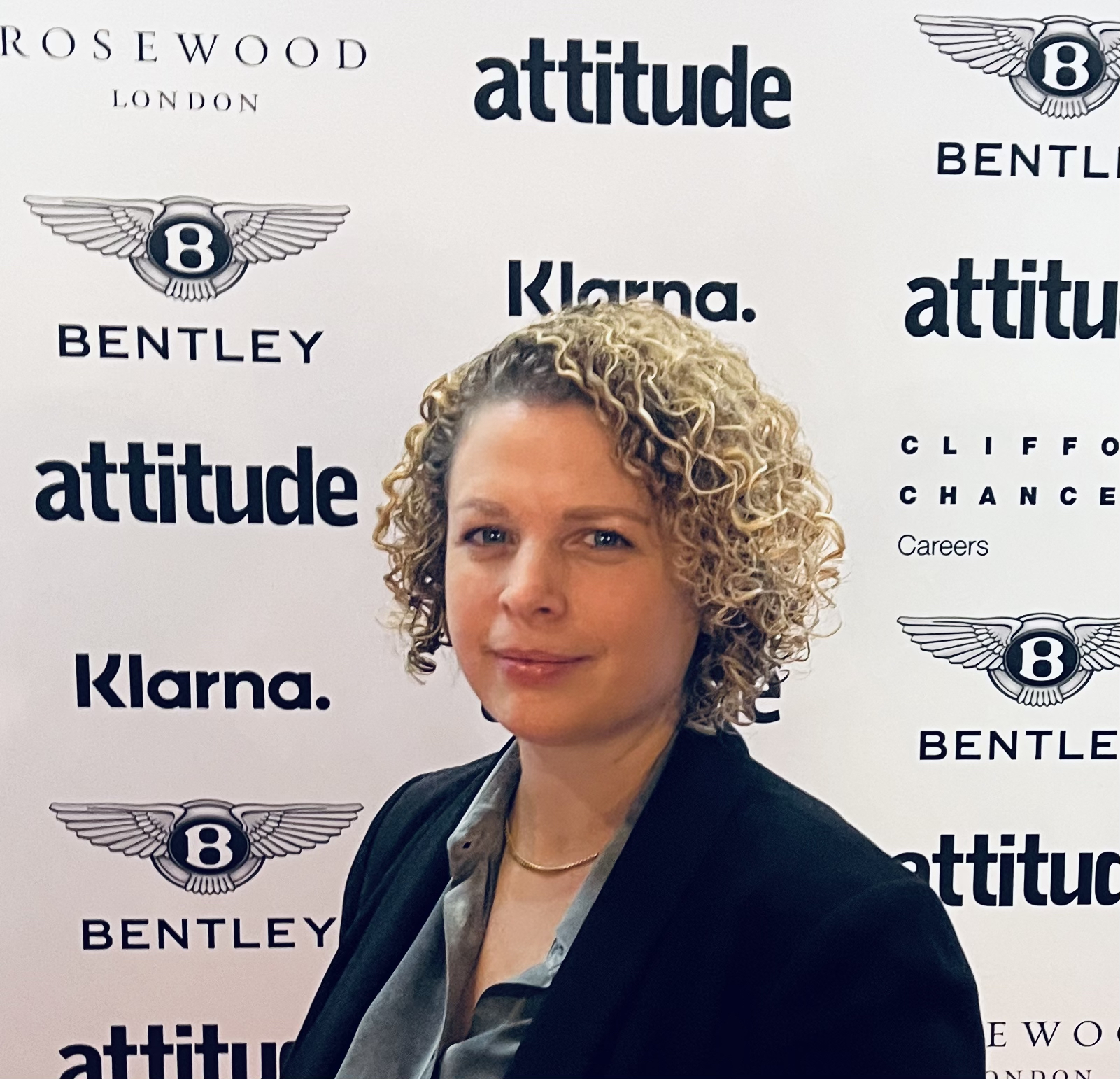
Jenny Southan, founder and CEO of Globetrender
Consisting of ten categories each with ten individuals who aren’t ranked in any way, Attitude magazine seeks to celebrate the achievements of "trailblazers" across the LGBTQ+ community, with an additional "Person of the Year" (in this case Alice Oseman, author, artist, screenwriter and Heartstopper creator) taking the total to 101.
The Attitude 101 categories are Film, TV, and Music; Politics; Travel; Sport; The Future, supported by Clifford Chance; Science, Technology, Engineering & Mathematics; Third Sector and the Community; Media and Broadcast; Fashion, Art, and Design, supported by Klarna; and Business, Financial, and Legal.  Southan told Attitude that in addition to running Globetrender, she freelances for a variety of publications, writing about travelling with her wife and their daughter, among many other topics. Projects for the year ahead include authoring a trend report on the future of LGBTQ travel and speaking on international panels about the need for “queer fluency” in the travel and hospitality industry.
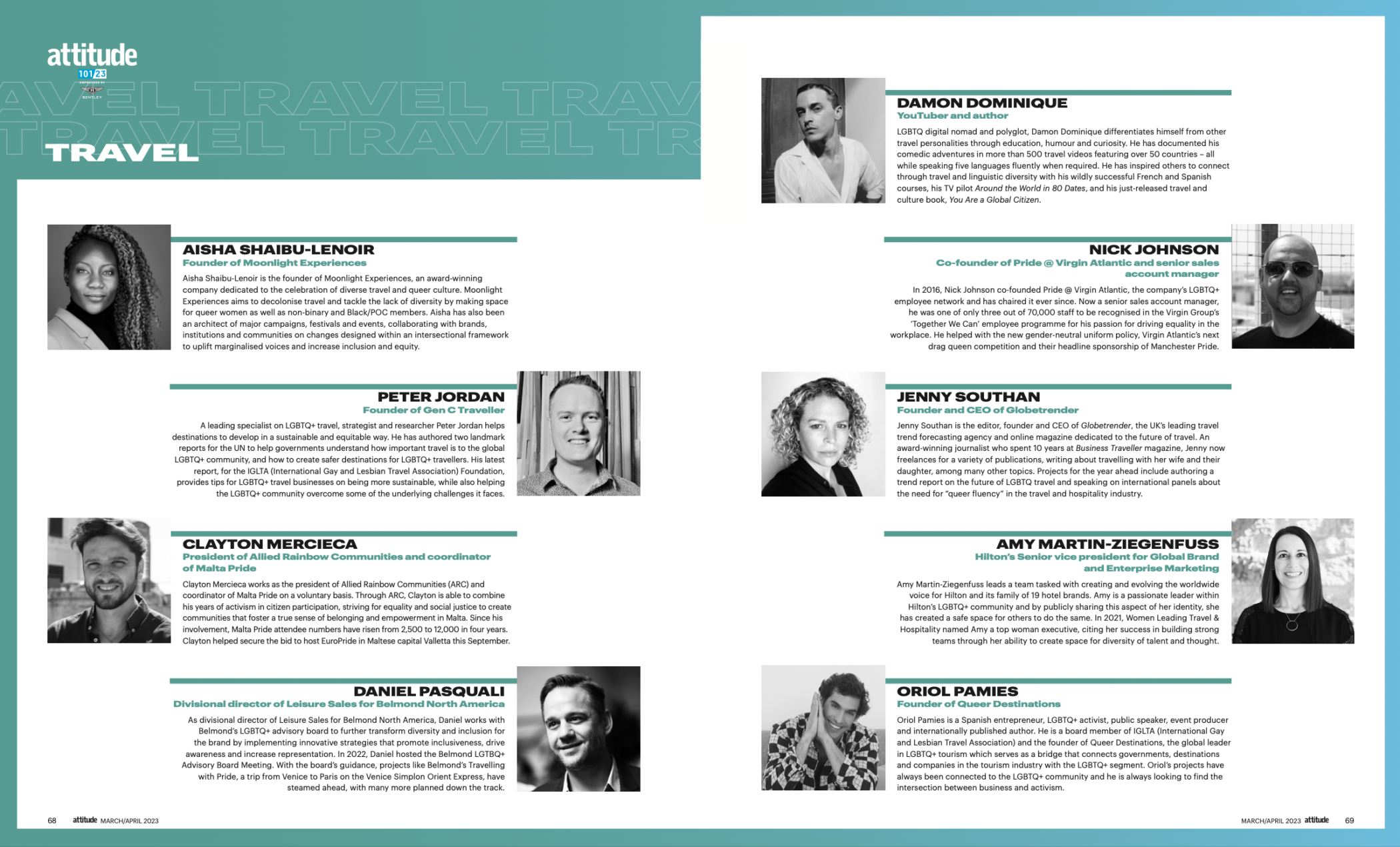
Attitude 101 travel trailblazers
Jenny Southan, Founder and CEO of Globetrender
Nick Johnson, Co-founder of Pride @ Virgin Atlantic and senior sales account manager
Amy Martin-Ziegenfuss, Senior vice-president for Global Brand and Enterprise Marketing at Hilton
Daniel Pasquali, Divisional Director of Leisure Sales for Belmond North America
Aisha Shaibu-Lenoir, Founder of Moonlight Experiences
Peter Jordan, Founder of Gen C Traveller
Clayton Mercieca, President of Allied Rainbow Communities and coordinator of Malta Pride
Damon Dominique, YouTuber and author
Oriol Pamies, Founder of Queer Destinations
Meg Ten Eyck, Travel writer
 Other trailblazers include White House press secretary Karine Jean-Pierre, former England footballer and broadcaster Alex Scott, comedian Suzi Ruffell, columnist and author Raven Smith, singer-songwriter Oliver Sim and actor Ben Aldridge.
Cliff Joannou, editor-in-chief of Attitude, says: “The LGBTQ+ community is broad and diverse, we are in every culture, nationality, ethnicity, class, religion. One thing that unites us is the process of coming out, both to ourselves and others, sometimes with ease and at other times with great difficulty.
"With the Attitude 101, empowered by Bentley, we celebrate those whose intersectional identities have helped them excel in their careers as openly LGBTQ+ scientists, lawyers, actors, musicians, politicians, engineers, designers and beyond in our annual list of LGBTQ+ trailblazers."
A survey of LGTBQ+ people from around the world has revealed that the majority of the travel experiences they’ve had so far have been welcoming. Jenny Southan reports
Digital travel platform Booking.com conducted a survey of 3,052 LGBTQ+ travellers from the UK, US, Canada, the Netherlands, Germany, France, Australia and New Zealand in Jun/July 2021, to learn more about their experiences when on vacation.
Here are the key findings – from a positive perspective…
- 87% of LGTBQ+ travellers surveyed believe that the "majority of the travel experiences they’ve had so far have been welcoming".
- 58% of LGTBQ+ travellers have felt welcomed "most of the time" during their stays.
- 24% have been offered LGBTQ+ specific advice or guidance on the area during their stay, with almost one in four (23%) receiving this at the time of check-in.
- 75% of respondents haven't had staff assume they would need separate rooms or beds when checking in as a couple.
- 76% haven't experienced staff or accommodation owners at check-in incorrectly assuming their relationship to their travel companion/companions.
- 77% have felt comfortable to ask for LGTBQ+ friendly local tips or recommendations.
- 42% don't believe being LGBTQ+ impacts the decisions they make when planning a trip.
- 50% say that being LGBTQ+ hasn't affected their destination bucket list.
- 46% report that being LGTBQ+ doesn't affect who they choose to travel with.
- 43% indicate that travelling as an LGTBQ+ person doesn't impact how they behave with their significant other when travelling together.
- 46% believe being LGTBQ+ doesn't impacts how they present themselves during their trip (for example, clothing, makeup choices etc)
Arjan Dijk, CMO and senior vice-president of Booking.com, says: “Everything we do at Booking.com is about enabling smoother and more enjoyable travel experiences for everyone – no matter where they come from, who they love or how they identify.
“As a gay traveller myself, I share some of these same concerns, but also equal amounts of optimism for a better future. One in five LGBTQ+ travellers say they are hopeful about being able to travel without restrictions or limitations in the next five years.
"We firmly believe we can get there together and that everyone should be able to experience the world as themselves, always.”
What’s coming next? Trend reports available to download HERE
